- Oil swings spike mining power 30%; 2 GW storage in ERCOT queues.
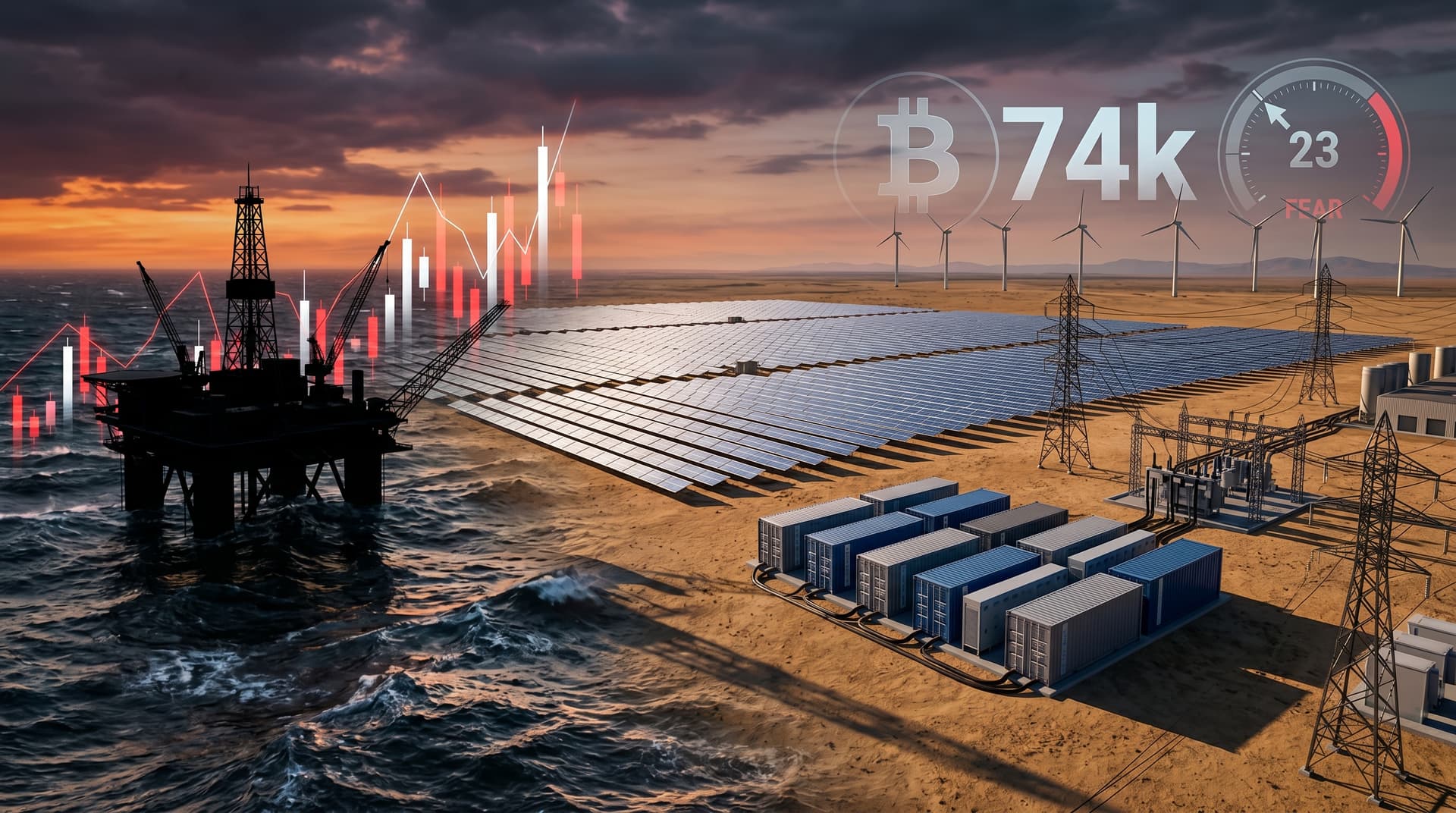
- BTC at US$75,071, Fear & Greed 23; 200 MWh/100 MW miner hybrids.
- Hybrids yield US$20M/year per 50 MW site at US$0.10/kWh LCOS.
By Finley Vance | April 16, 2026
Oil volatility energy storage deployments surge among Bitcoin miners hedging power costs. BTC trades at US$75,071. Fear & Greed Index hits 23, signaling extreme fear.
Miners use grid-scale batteries to capture cheap renewables and discharge during peaks, per Wood Mackenzie analyst Tom Konstantelos.
BTC Hits US$75,071, Sparks Miner Caution
Bitcoin reaches US$75,071, up 1.1% today according to CoinGecko data. Ethereum rises 1.6% to US$2,361.84. Alternative.me's Fear & Greed Index registers 23 points.
XRP gains 4.0% to US$1.41. BNB climbs 1.5% to US$625.07. USDT holds steady at US$1.00. Elevated energy costs exacerbate market stress.
Miners combat profit erosion from power bills averaging US$50/MWh spreads via storage arbitrage, per Aurora Energy Research.
Oil Swings Spike Mining Power Costs 30%
Oil benchmarks fluctuate 15% weekly, per US Energy Information Administration (EIA) reports. These shifts drive natural gas prices higher in Texas and Kazakhstan mining hubs.
Spot electricity peaks 30% during shortages, states Wood Mackenzie's Q1 2026 grid report. Cambridge Centre for Alternative Finance pegs Bitcoin mining at 160 TWh annually.
Batteries store low-cost solar (US$20/MWh) or wind, discharging at oil-driven spikes up to US$100/MWh. Lithium iron phosphate (LFP) systems deliver 80% round-trip efficiency (RTE) at 0.5C discharge rates, per NREL testing.
100 MW Mining Pairs with 200 MWh LFP Storage
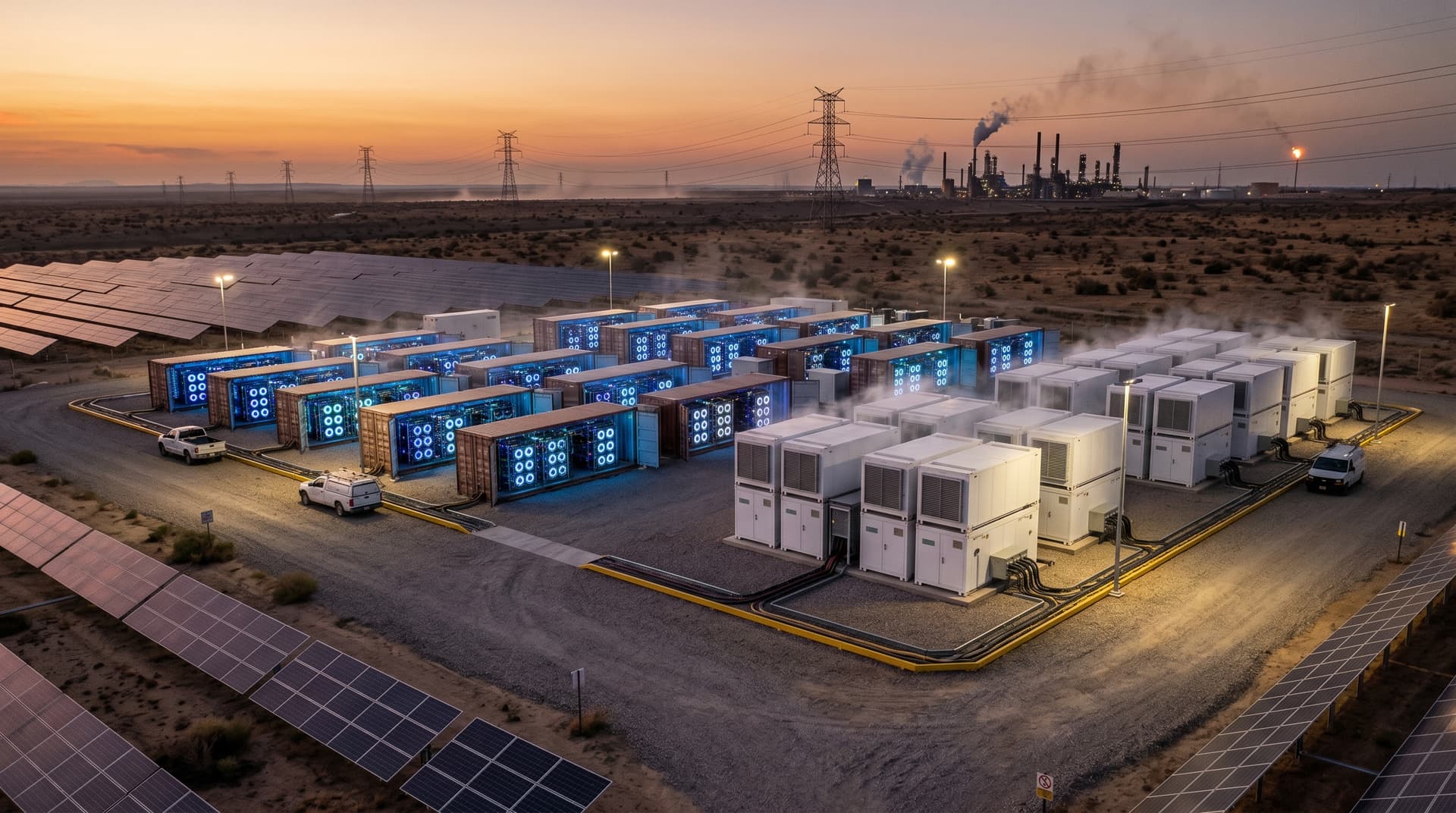
Typical projects colocate 100 MW mining loads with 200 MWh, 4-hour LFP systems at 160 Wh/kg energy density and 6,000 cycles to 80% capacity. This cuts transmission losses 5%, per BloombergNEF Q1 2026 analysis.
US developers deploy second-life EV batteries at US$150/kWh installed cost (BloombergNEF). Revenue splits 60% mining arbitrage, 40% grid services like frequency regulation under FERC Order 2222.
Inflation Reduction Act (IRA) Section 48 provides 30-50% investment tax credits. California mandates 5 GW storage procurement by 2026 under AB 2514.
ERCOT Queues List 2 GW Miner-Storage Hybrids
Texas operators build hybrids. ERCOT interconnection queues list 2 GW of miner-storage projects awaiting approval, representing commercial-scale deployments over 100 MW.
UAE adds 500 MWh iron-air batteries from Form Energy for baseload amid oil exports, targeting 100-hour duration at 150 Wh/kg. APAC miners, post-China ban, shift to storage-heavy models in Kazakhstan.
EIA data shows US utility storage added 15 GW in 2025. Mining drives 7% of behind-the-meter demand, per Aurora Energy Research.
FERC, IRA Enable Crypto-Storage Revenue Stacking
FERC Order 2222 enables distributed energy resource (DER) wholesale market participation. IRA credits stack with production tax credits up to US$25/MWh.
EU Battery Regulation mandates 16% recycled content by 2030. Miners use net metering for sub-5 MW setups, reducing levelized cost of storage (LCOS) to US$0.10/kWh at 85% RTE.
Supply chain pressures from lithium sourcing in Australia and cathode pricing volatility add 10-15% to upfront costs, per BloombergNEF.
Hybrids Generate US$20M/Year per 50 MW Site
NREL's 2026 Storage Futures study models 50 MW/200 MWh hybrids generating US$20 million annually at 85% RTE and US$50-100/MWh arbitrage spreads.
Oil volatility widens spreads further. BloombergNEF forecasts 2x hybrid capacity growth by 2030, driven by 15% internal rate of return (IRR).
Funds like Macquarie Asset Management target these assets.
Storage Eases Grid Strain from Mining Loads
Batteries curtail mining peaks during renewables lulls. This eases transmission constraints in ERCOT Zone 7, avoiding US$50 million curtailment costs annually.
Upfront costs hit US$300 million/GW for LFP. Sodium-ion alternatives from CATL cut lithium exposure at US$120/kWh and 4,500 cycles.
OPEC cuts sustain volatility. Miners lock US$10-15/MWh savings as storage scales to 10 GW globally by 2028, per Wood Mackenzie.
This article was generated with AI assistance and reviewed by automated editorial systems.