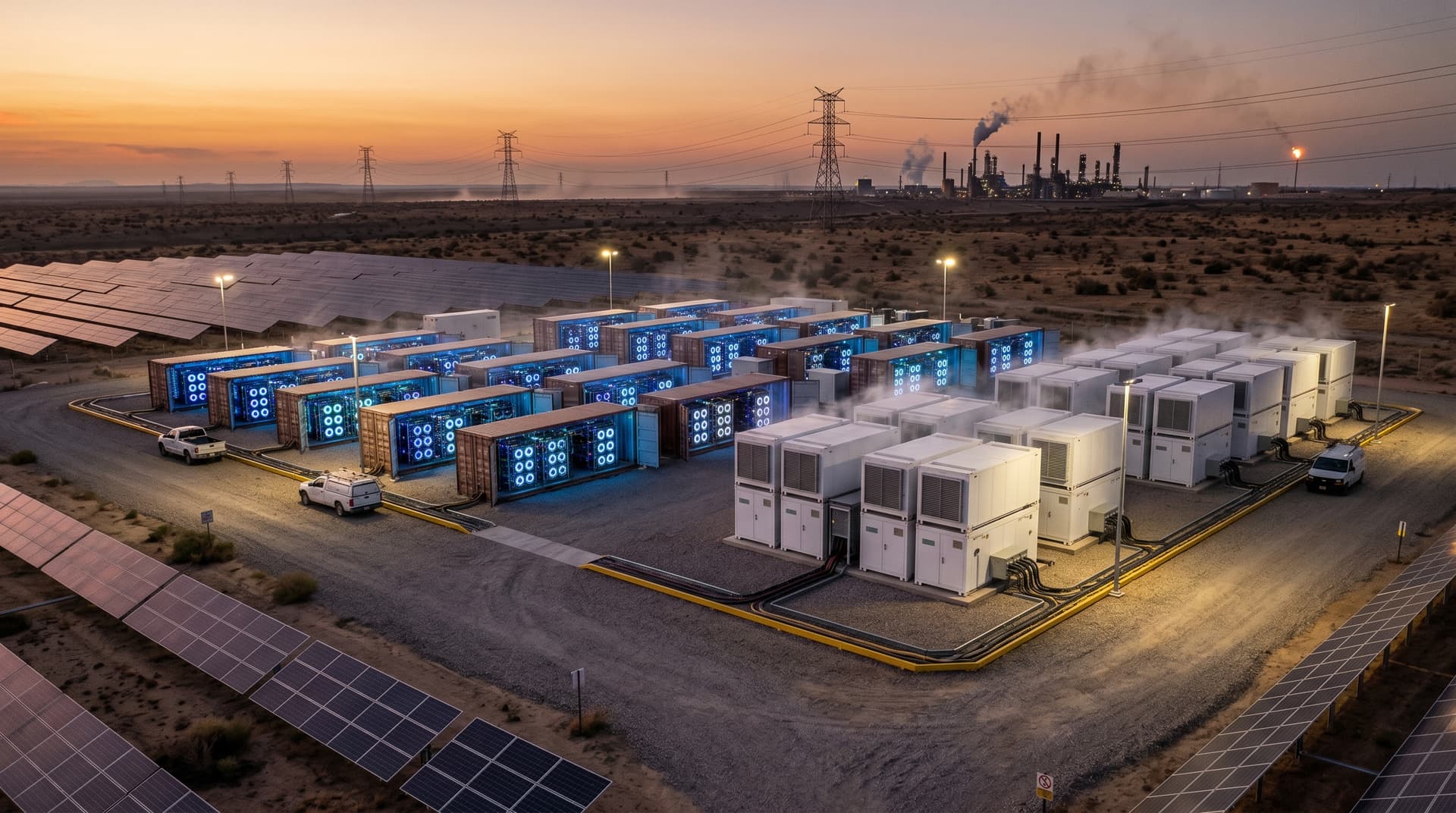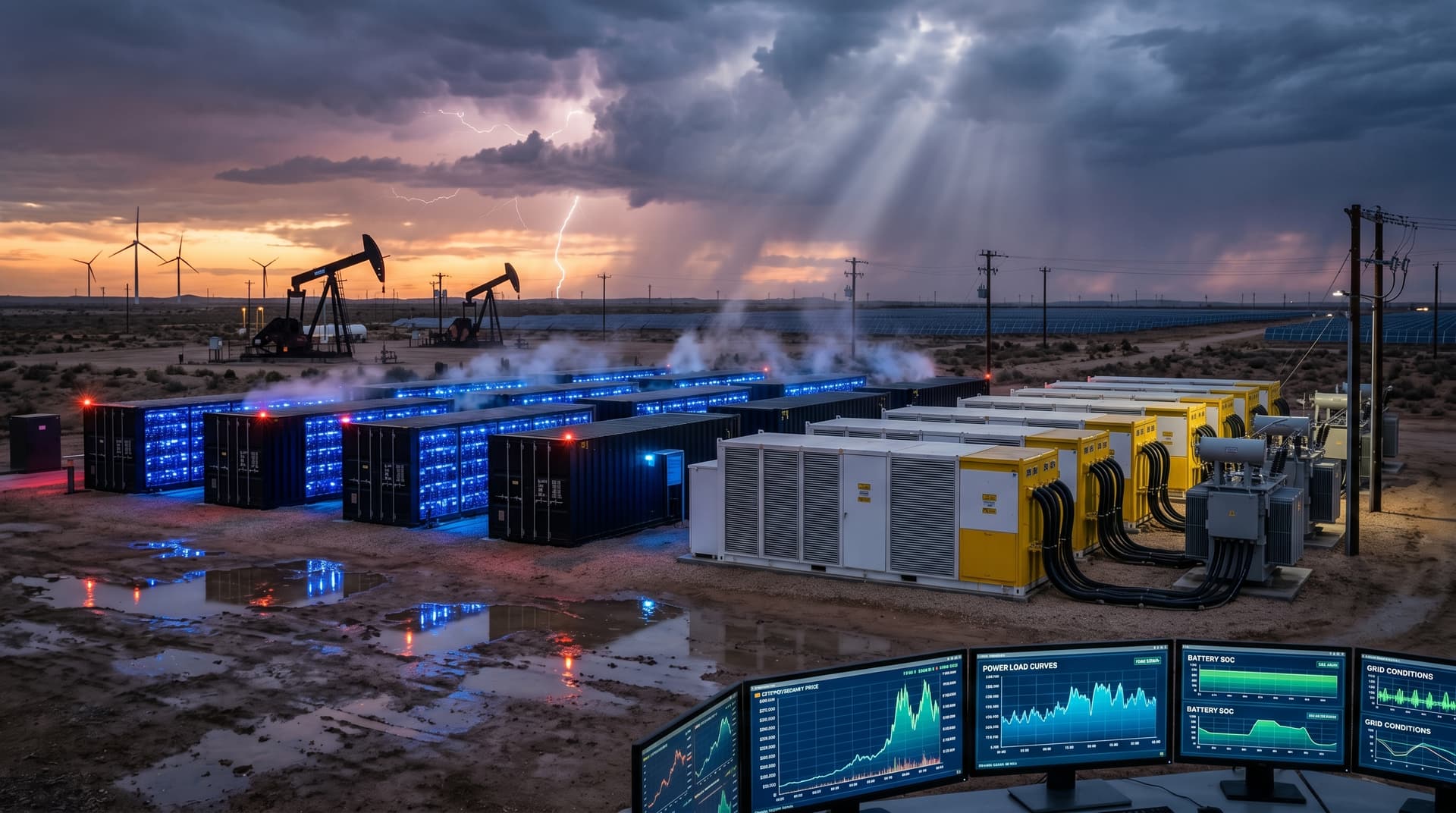
- FM Global Data Sheet 9-2 mandates 2m spacing, cutting fire risk to 0.1%.
- Swiss Re policies cover $500M liability with 2-5% TIV deductibles.
- Broker blueprint pre-places reinsurance, enabling $150/MWh LCOS for 100 MW sites.
By Philip Trask April 16, 2024
Energy storage insurance brokers secure coverage for hard-to-place risks like lithium-ion battery fires and cyber threats. One broker outlines a blueprint amid tight reinsurance markets and 25% premium increases. This coverage unlocks project financing for 100 MW-scale deployments.
Lithium-Ion Fire Risks Drive Energy Storage Insurance Demands
Lithium-ion batteries achieve 250 Wh/kg energy density and 5,000 cycles at 80% depth of discharge (DoD), stabilizing grids with solar and wind integration. Thermal runaway ignites at 200°C, propagating fires across modules.
FM Global's Data Sheet 9-2 specifies 2-meter spacing between containers, active cooling below 40°C, and inert gas suppression systems. According to FM Global engineers, these measures cut fire probability to 0.1% annually.
FM Global's loss prevention data sheet 9-2 enforces compliance during underwriting. Brokers reject non-compliant bids.
Reuters reports that battery fires have idled over 5 GW in hybrid renewables projects. Moss Landing's 2022 fire in California caused $100M uninsured losses, per PG&E disclosures.
Reuters reports highlight these insurance gaps.
Cyber and Supply Chain Risks Complicate Grid Technology Insurance
Vehicle-to-grid (V2G) systems discharge EVs at 80% DoD during peaks, exposing SCADA protocols to cyberattacks. Ransomware demands hit $10M per incident.
Brokers add cyber riders to policies. Supply chain disruptions delay 30% of nickel deliveries from Indonesia's 2020 export ban, per Benchmark Mineral Intelligence data.
Swiss Re's analysis covers physical damage and $500M off-site liability. Brokers set deductibles at 2-5% of total insured value (TIV), typically $200M for 100 MW sites.
Swiss Re risk knowledge quantifies these exposures with Monte Carlo simulations.
Long-duration vanadium flow batteries require 4,000+ cycles and 10-year warranties for viable quotes. Zinc-bromine alternatives face corrosion risks at 1.1 V cell voltage.
Broker's Energy Storage Insurance Blueprint for 100 MW Placements
One broker, profiled by Risk & Insurance, builds reinsurer relationships for 100 MW+ projects. Their models forecast 0.1% annual fire probability using IEC 62619 test data.
They distinguish 20-foot TEU containerized systems from distributed edge deployments. Co-located solar reduces airflow, raising hotspot temperatures by 15°C, per NREL airflow studies.
Risk & Insurance feature details pre-tender capacity placement and endorsements for sodium-ion pilots at 160 Wh/kg.
Insured projects achieve levelized cost of storage (LCOS) at $150/MWh, down from $200/MWh uninsured, according to broker projections.
Reinsurance Crunch Sparks 25% Hikes in Energy Storage Insurance Premiums
Reinsurers limit niche exposures after $50B California wildfire claims in 2023. Brokers tap EMEA capacity at 20% lower rates via Lloyd's syndicates.
US developers benefit from IRA tax credits up to $300/kWh for storage. FERC Order 2023 slashes interconnection queues by 50%, enabling 10 GW deployments.
Broker data shows 25% year-on-year premium rises to 1.2% of TIV. Insured assets secure $10B in debt financing, per S&P Global Platts.
Supply Chain Geopolitics Shapes Future Energy Storage Insurance
Lithium prices surged 400% in 2022 due to Australian mine floods and Chinese cathode dominance. Brokers now model 20% cost volatility in premiums.
Iron-air batteries promise 100-hour duration at $20/kWh system cost, with 70% capacity retention in second-life EV packs after 1,000 cycles.
Swiss Re forecasts 10 GW annual growth, driven by dispatchable assets with 15-minute blackstart capability.
Insured Hybrids Fuel 10 GW Renewable Storage Expansion
Solar-plus-storage hybrids deliver 4-hour duration, cutting California curtailment by 40%, per CAISO data. Energy storage insurance transforms risks into bankable returns.
Specialized brokers ensure coverage aligns with EPC warranties and offtake agreements, targeting LCOS below $100/MWh by 2026.
This article was generated with AI assistance and reviewed by automated editorial systems.