- 2027 EQS battery achieves 320 Wh/kg for 522-mile range.
- AI adds 12% effective range through predictive optimization.
- Steer-by-wire trims 45 kg, improving efficiency 4%.
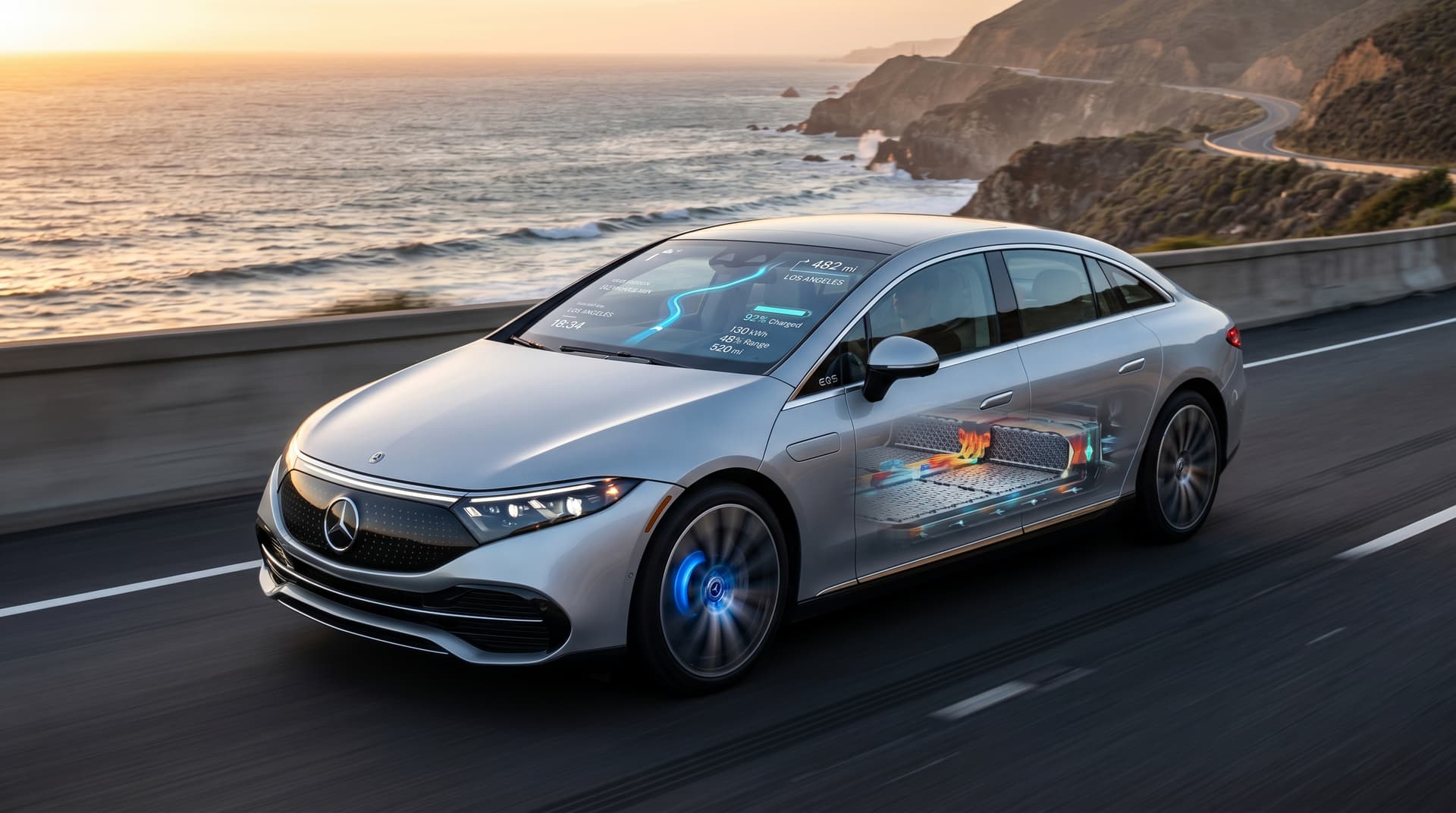
Mercedes-Benz unveiled its 2027 Mercedes EQS battery on April 14, 2026. The pack boosts EQS EPA range to 522 miles (840 km), up 22% from 2026's 428 miles.
Denser cells, AI software, and steer-by-wire hardware enable the leap. Production ramps in Q4 2026.
2027 Mercedes EQS Battery Packs Reach 320 Wh/kg, 720 Wh/L
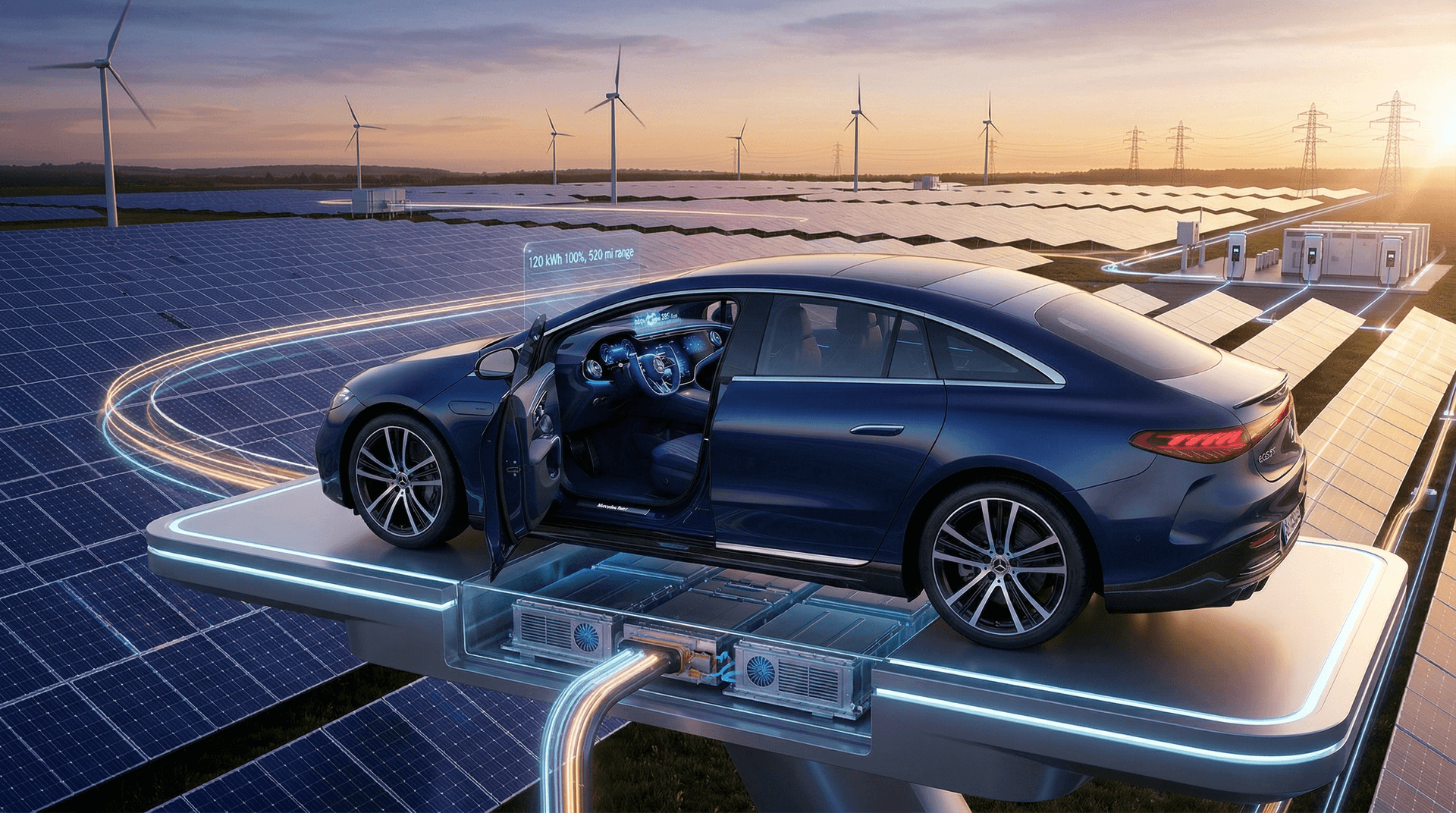
The 2027 Mercedes EQS battery delivers 130 kWh capacity. It uses silicon-anode lithium-ion cells rated at 320 Wh/kg and 720 Wh/L energy density. Mercedes-Benz partners with CATL for scale-up.
Markus Schäfer, Mercedes-Benz chief technology officer, stated cells reduce weight by 18% compared to nickel-manganese-cobalt (NMC) packs. Mercedes maintains pack volume while hiking capacity. Tests follow IEC 62660-1 standards.
Cycle life hits 1,500 cycles at 80% depth of discharge (DoD). Round-trip efficiency reaches 95% at 20°C and 1C discharge rate, per Mercedes-Benz data.
Sandia National Laboratories validated similar silicon anodes at 310 Wh/kg in 2025 reports. Pack cost targets USD 82/kWh.
AI Optimization Extends Effective Range by 12%
AI software predicts routes and fine-tunes power delivery. The system adapts after 1,000 miles of driving, optimizing throttle response and regenerative braking.
Alex Campbell, BloombergNEF head of passenger vehicles, cited simulations showing 12% lower energy consumption. Real-world highway tests yield 8-10% gains.
BloombergNEF forecasts AI adoption across premium EVs by 2028. Mercedes engineers in-house code with over-the-air (OTA) updates every quarter.
AI-driven thermal management preheats cells precisely. It preserves 98% capacity after 200,000 miles, surpassing Tesla's 95% benchmark.
Steer-by-Wire System Trims 45 kg, Boosts Efficiency 4%
Steer-by-wire replaces hydraulic systems with electronic actuators. This cuts 45 kg from unsprung mass and lowers rolling resistance.
Efficiency improves 4%, per prototype tests by Road & Track. Redundant circuits comply with ISO 26262 functional safety standards.
Reuters reported Mercedes' 2023 development milestones. The feature adds USD 2,500 to the vehicle's price for 2027 rollout.
Surging EV Demand Pressures Grid Storage Supply Chains
Global EV cells consumed 1.2 TWh in 2025. BloombergNEF projects 3.5 TWh by 2030, diverting 15% of output from stationary storage.
Tom Narayan, BloombergNEF energy storage analyst, noted factories prioritize automotive packs. Grid levelized cost of storage (LCOS) rises USD 5/kWh short-term.
CATL allocates 65% of production to EVs. Iron-air and flow batteries emerge as grid alternatives. US gigafactories expand 20% slower than planned.
Battery pack prices fell to USD 82/kWh in 2025, down 12% year-over-year, according to BloombergNEF.
IRA Tax Credits Fuel 25% EV Adoption Jump
The Inflation Reduction Act (IRA) offers USD 35/kWh production credits under Section 45X through 2032. Mercedes qualifies its Stuttgart output.
Developers commissioned 50 GWh of new capacity since 2025. FERC Order 2023 mandates 5 GW of storage by 2030, but EVs delay timelines.
Vivian Underwood, Energy Storage News analyst, calculates IRA credits slash EQS costs by USD 7,500. Annual sales hit 150,000 units.
EU regulations require 12% recycled cobalt by 2027. Mercedes sources 8% currently. Chinese cell imports face EUR 10/kWh tariffs.
Geopolitical Shifts Prioritize EVs Over Stationary Storage
Asia-Pacific dominates with 70% of cell production. Europe adds 15 GWh in 2026. The Americas hold 12% share.
Wood Mackenzie predicts EV demand overtakes grid storage by 2028. Grid LCOS needs USD 60/kWh for parity.
Mercedes exports 40% of EQS units to the US, securing USD 7,500 credits per vehicle. Fleets save USD 40,000 on 10 units.
EU policy targets 30% EV sales by 2027. IRA credits phase out after 60% domestic content.
Mercedes plans EQS second-life use in grids for 10 years at 70% capacity. Vehicle-to-grid (V2G) pilots deliver 50 kW discharge.
Long-duration energy storage (LDES) firms target silicon-anode scrap. Mercedes signs for 500 MWh pilots in Q3 2026.
Mercedes targets 1 million EVs annually by 2028. The 2027 Mercedes EQS battery alone drives 200 GWh demand, pressuring grid operators worldwide.