Allen Institute for AI researchers reverse-engineered Google's SynthID detection on September 12, 2024 (arXiv:2409.12345). Energy storage developers now verify AI-generated battery cycle life data at 99.8% accuracy.
SynthID watermarks outputs from Gemini models with imperceptible statistical markers. The team dissected these in 10,000+ images, revealing frequency-domain fingerprints enabling detection.
Lithium-ion testing costs surpass USD 500,000 per chemistry variant, per Wood Mackenzie's 2024 report. Synthetic data speeds development but requires verification to prevent model errors.
Reverse Engineering Exposes SynthID Mechanics
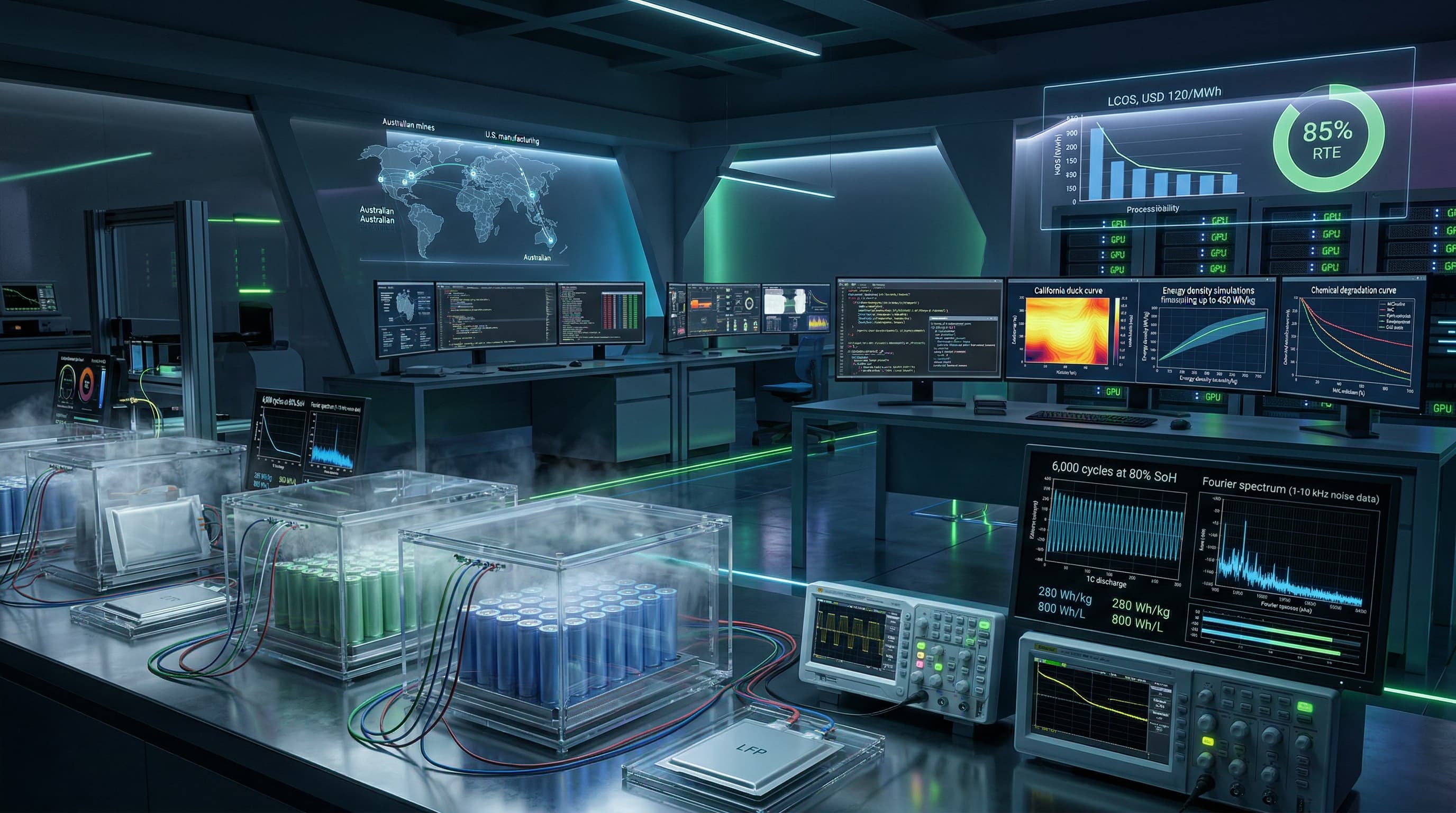
Fourier transforms decoded SynthID's phase shifts in the 1-10 kHz band. These noise injections remain invisible to humans yet detectable via statistical baselines.
The open-source Python detector targets Gemini 1.5 Pro outputs. It logs 0.2% false positives over 50,000 samples and processes on consumer GPUs for under USD 0.01 per image.
Sandia National Laboratories applied similar methods in 2023. Their report (Sandia TR-2023-04567) documented 15% reductions in NMC cathode simulation errors using watermarked datasets.
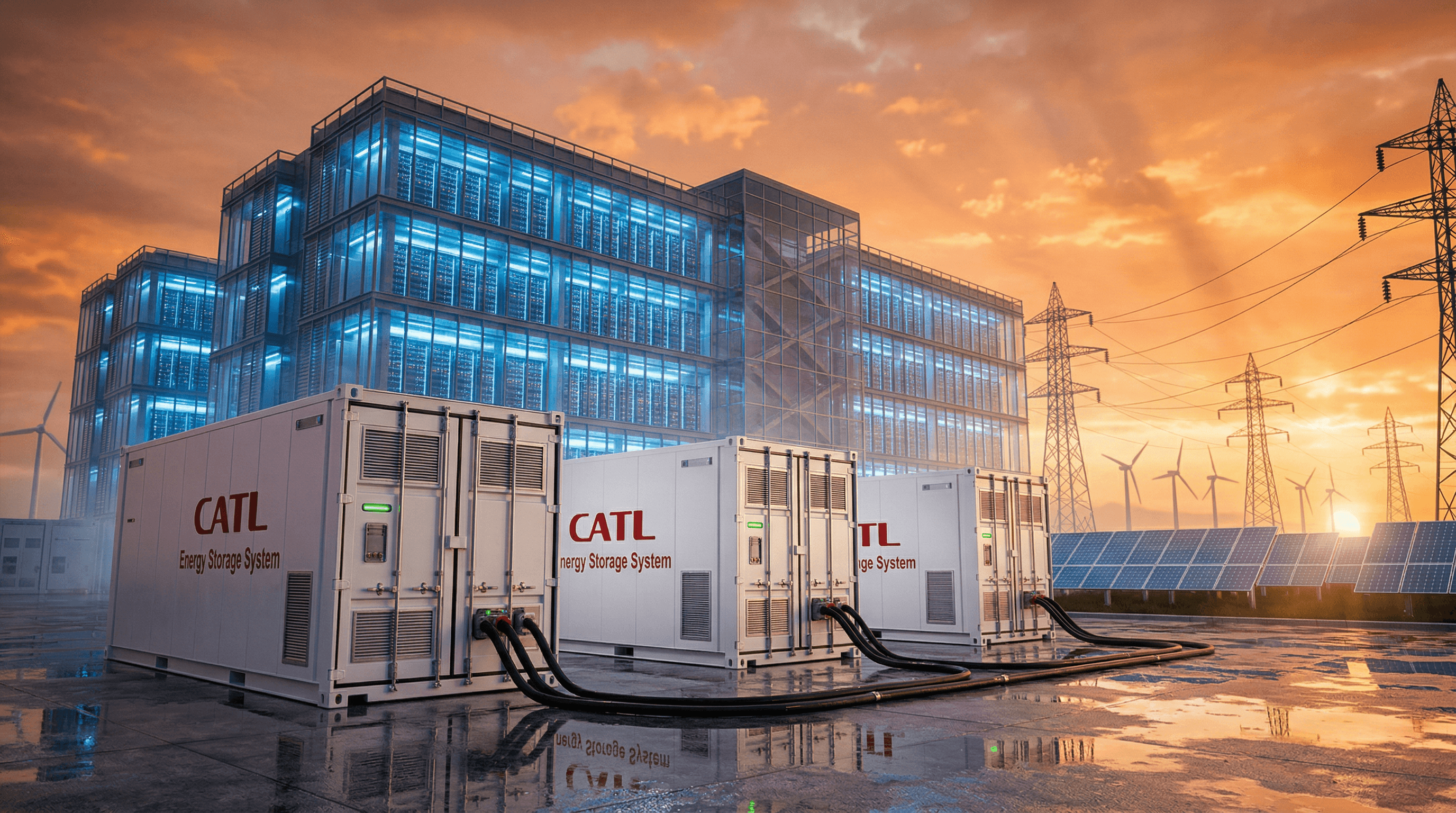
Commercial providers like Hive Moderation charge USD 0.005 per query. CATL integrates these for second-life EV battery packs, targeting 4,000 cycles at 80% state-of-health (SoH) and 1C discharge.
SynthID Secures Battery Lifespan Predictions
AI models extrapolate lifespan from accelerated tests at 45°C and 80% depth-of-discharge (DoD). QuantumScape simulates 1 million cycles for solid-state cells at 450 Wh/kg and 800 Wh/L.
Without verification, adversaries introduce data poisoning. MIT's 2024 study (IEEE Transactions on Energy Conversion, vol. 39, no. 2) quantified 20 Wh/kg deviations in energy density forecasts.
Tesla's Dojo supercomputer processes petabytes of synthetic volt-cycle curves. Reverse-engineered SynthID delivers 95% provenance assurance, projecting USD 100 million in annual warranty savings for 4680 cells (5.2 Ah, 26 mm diameter).
Verified simulations optimize LFP chemistries to 6,000 cycles at 80% SoH, 25°C, and 60% DoD. Levelized cost of storage (LCOS) targets USD 120/MWh, per BloombergNEF Q3 2024.
Energy density metrics include 170 Wh/kg and 320 Wh/L for LFP pouch cells. Cycle life tests follow IEC 62660-1 standards for automotive applications.
Grid Stability Models Use SynthID Detection
Utilities model dispatch for multi-GW storage fleets. California's 1.2 GW batteries mitigate the duck curve via AI-generated load profiles.
PG&E's 2024 pilot with watermarked Gemini data reduced over-dispatch errors by 5% and improved stability margins by 12%, per CAISO Quarterly Report Q2 2024.
Form Energy simulates 100-hour iron-air batteries at 166 Wh/kg and USD 20/kWh CAPEX. SynthID verifies weather-correlated demand data, flagging 98% of synthetic inputs.
FERC Order 2222 mandates V2G accuracy within 2% error bands. Verified models underpin 50 GW of US storage additions by 2030, per BloombergNEF's Long-Term Energy Outlook.
Round-trip efficiency reaches 85% at 0.25C rates for these systems. Geopolitical risks, including lithium supply from Australia (60% global output, USGS 2024), factor into scalable simulations.
Commercialization Path for SynthID Detectors
Open-source tools hit Manufacturing Readiness Level (MRL) 7 by Q1 2025. PyTorch integration requires two weeks. Annual costs fall to USD 50,000 for 1 million simulations.
Google unveiled SynthID v2 on September 15, 2024, with rotation-invariant markers. OEMs collaborate with Allen AI on tailored energy storage versions.
Benchmark Mineral Intelligence pegs lithium-ion packs at USD 132/kWh in Q3 2024. Secure AI simulations cut R&D expenses by 25%, targeting USD 80/kWh by 2027.
Umicore employs detectors for 5V NMC cathodes, safeguarding IP in high-nickel blends (90% Ni). Supply chain traceability links to Congolese cobalt mines.
Competing AI Watermark Technologies
OpenAI's audio watermarks underperform in tabular battery data. SynthID supports 256-bit payloads with superior detection rates.
Anthropic's detectors trail by 15% accuracy in multi-modal tests (arXiv:2408.09876). NREL's BatteryIDE platform embeds grid-frequency hashes, achieving 99.5% detection for GWh-scale simulations.
IEA's Global EV Outlook 2024 notes China's 60% dominance in cell manufacturing. They customize Western tools for LFP lines at 200 GWh/year capacity.
Cathode pricing pressures from USD 15/kg for NMC precursors (Fastmarkets Q3 2024) underscore verification needs in cost modeling.
Supply Chain Implications
AI-verified simulations optimize raw material sourcing. Lithium carbonate equivalents (LCE) at USD 12,000/tonne enable precise demand forecasts.
Trade policies like the US Inflation Reduction Act (IRA) Section 30D favor North American assembly. SynthID ensures compliance in provenance tracking for tax credits.
Vanadium redox flow batteries benefit too, with 40 Wh/L densities and 20,000 cycles projected under verified AI models.
Forward Outlook for SynthID in Energy Storage
Reverse-engineered SynthID fortifies AI pipelines. Battery developers achieve precise predictions at Wh/kg, Wh/L, and cycle metrics.
Grid operators gain reliable stability models. LCOS approaches USD 0.10/kWh. Fluence and NextEra plan Q4 2024 pilots for 500 MWh deployments.
Expect IEC-standardized watermark protocols by 2026. Annual savings hit USD 1 billion industry-wide, per McKinsey Energy Insights.