By Emma Richardson, April 10, 2026
Grid-scale battery storage demand surges in China after ShengShu’s US$293 million Series B on April 10, 2026. Hillhouse Capital led the round, per Reuters. The funding targets artificial general intelligence (AGI) data centers amid rising power needs.
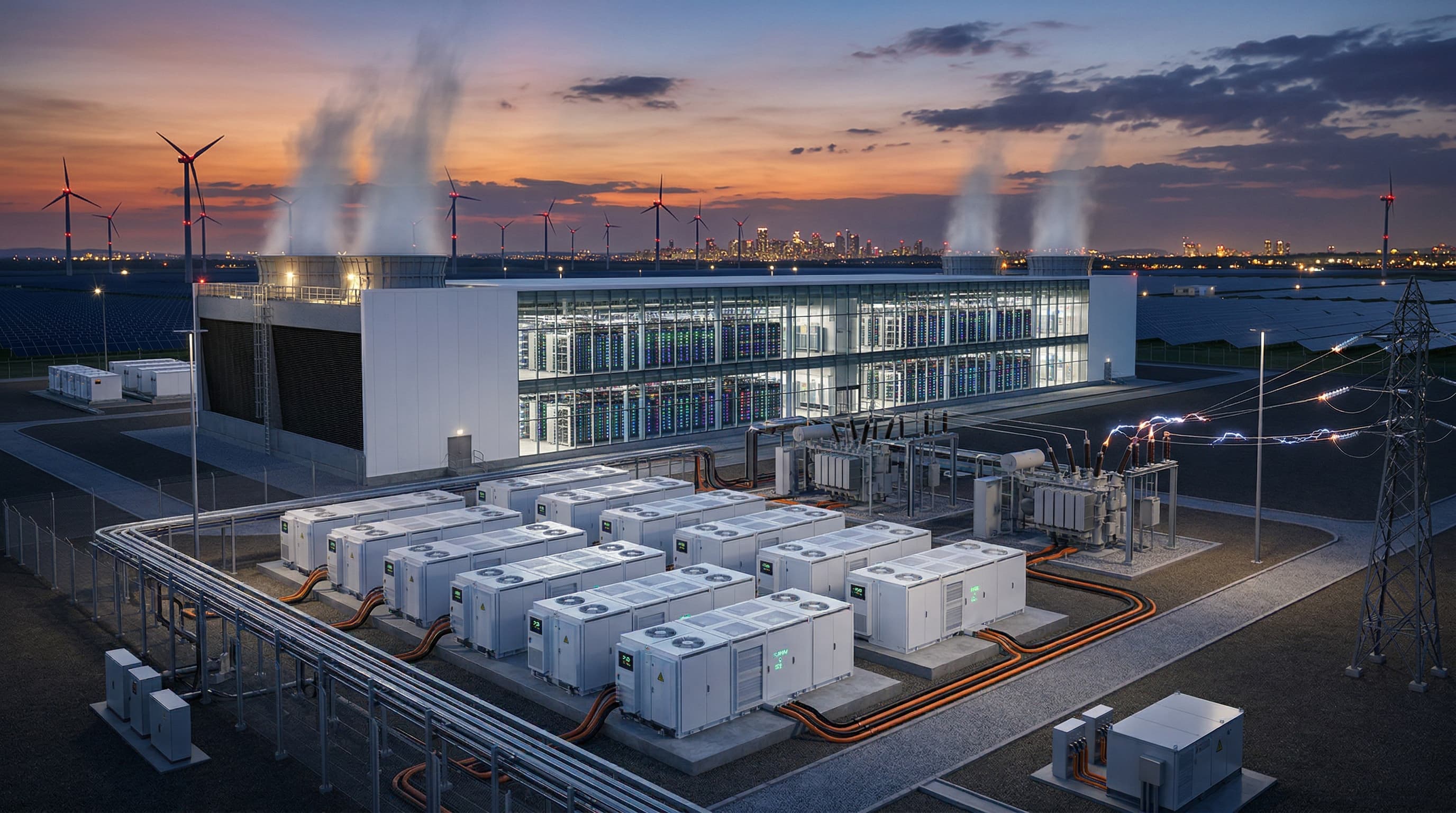
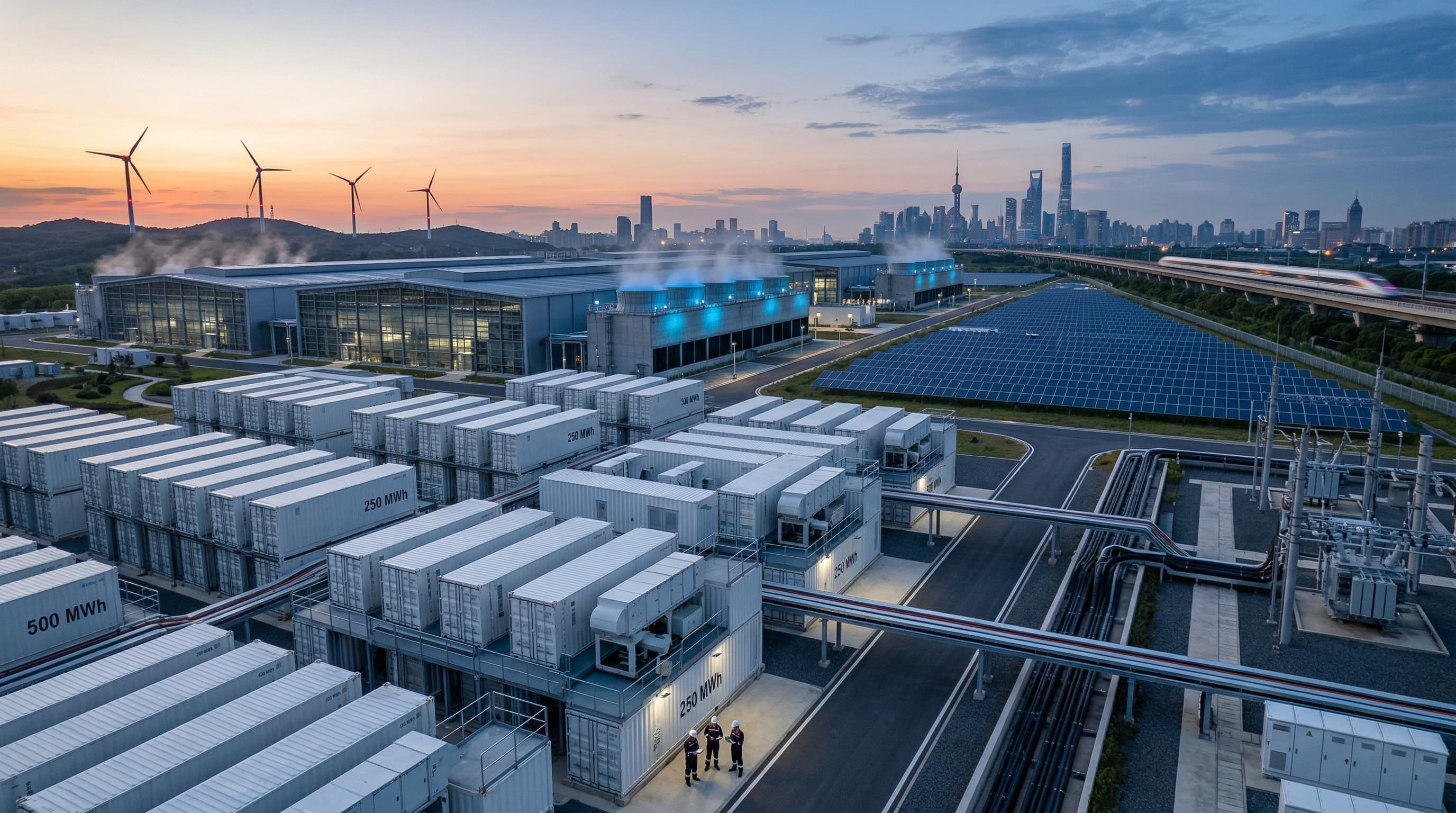
China’s AI sector consumes 4.5% of national electricity, per BloombergNEF data from April 10, 2026. AGI models demand even higher loads. Grid-scale batteries mitigate intermittency from solar and wind integration.
Funding Fuels Hyperscale Data Center Expansion
Hillhouse Capital led the US$293 million round. Tencent and Sequoia China joined. ShengShu allocates funds to GPU clusters and cooling systems.
The firm targets 10 EFLOPS compute capacity by 2027. Each data center needs 500 MW peak power. State Grid Corporation of China (SGCC) reports 25% annual data center load growth.
Developers plan 100 GWh battery deployments by 2028. Costs drop to US$120/kWh, per Wood Mackenzie’s April 2026 forecast. ShengShu eyes sites near Shanghai and Shenzhen with high-voltage grid access.
Local policies require 20% storage for data centers over 100 MW, per Jiangsu province regulations.
Grid-Scale Battery Storage Stabilizes AI Loads
AGI model training consumes 1 GWh per run on advanced clusters. One facility matches a small city’s demand. China added 2 GW of data center capacity in Q1 2026.
Renewables supply 35% of electricity, SGCC data shows. Solar peaks midday, mismatches AI operations. Batteries shift energy at 85% round-trip efficiency.
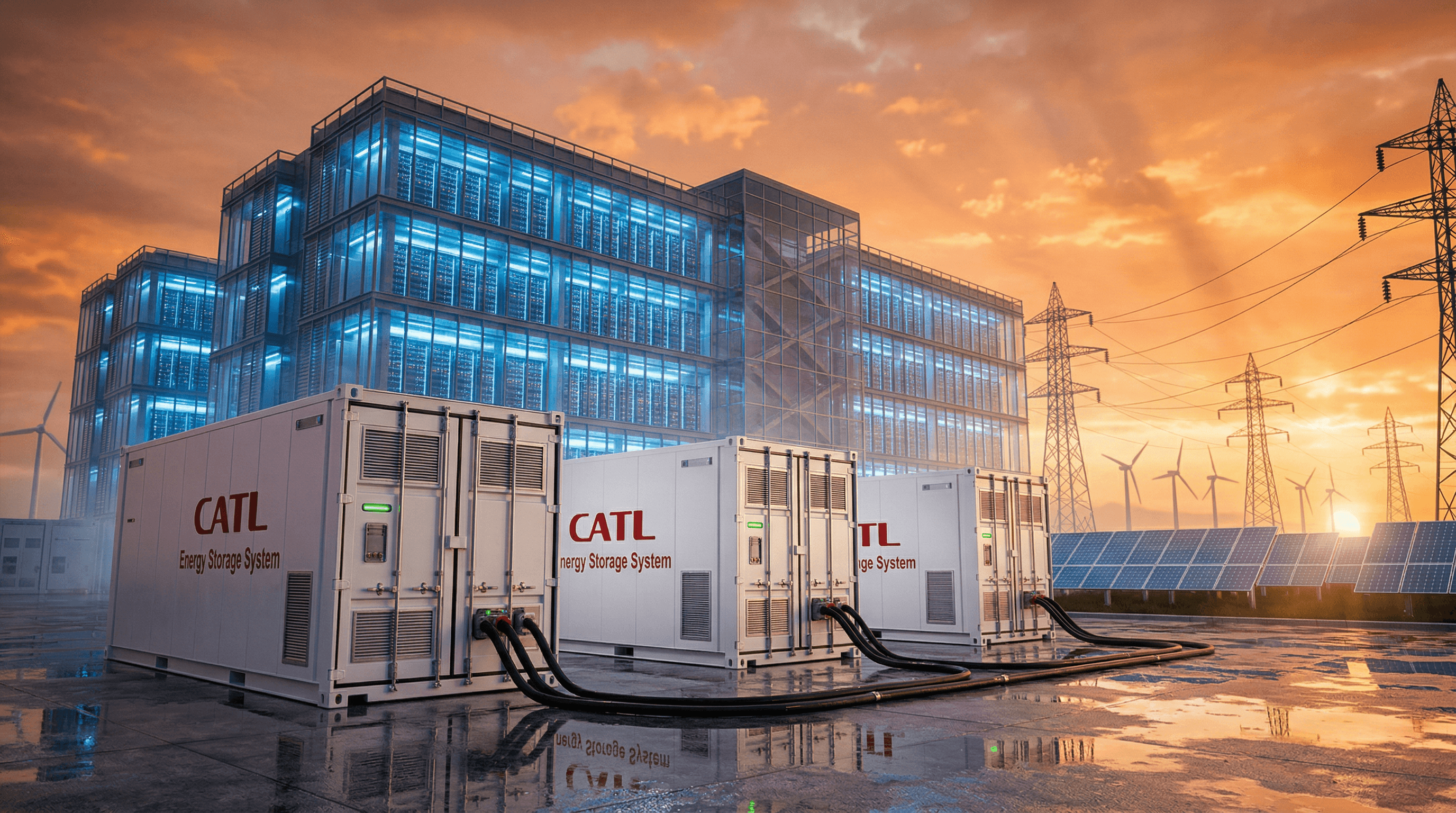
Lithium iron phosphate (LFP) batteries lead. CATL supplies 80% of systems, offering 6,000 cycles at 90% depth of discharge (DoD). Energy density hits 160 Wh/kg and 300 Wh/L at C/3 rate per IEC 62660 standards.
Alibaba and ByteDance run 200 MWh pilots. These cut curtailment by 15%. ShengShu’s builds follow suit.
State Grid Accelerates Multi-GWh Projects
SGCC launched 5 GWh procurement on April 10, 2026. Bidders include BYD and EVE Energy. Contracts demand four-hour discharge at 250 MW.
Jiangsu approves 1.2 GW/4.8 GWh battery farm near data hubs. CATL supplies modules at US$110/kWh. Deployment starts Q3 2026.
Flow batteries target long duration. Rongke Power’s 200 MW/2 GWh vanadium redox system offers 20,000 cycles with zero degradation over five years.
Vehicle-to-grid pilots connect 50,000 EVs. Second-life LFP packs deliver 4 MWh each at US$50/kWh. China EV Association notes 70% capacity retention after 200,000 km.
Advanced Chemistries Meet AI Peaks
LFP handles high C-rates, cycling twice daily with 92% state-of-health after 5,000 events. Sodium-ion emerges at US$90/kWh.
HiNa Battery ships 100 MWh sodium-ion units. Density reaches 140 Wh/kg and 250 Wh/L with 4,000 cycles. Lower fire risk fits data centers.
Solid-state prototypes hit 300 Wh/kg and 650 Wh/L. Qingdao University tests show 800 cycles at 80% DoD. Tsinghua projects US$150/kWh scaling in 2028.
Hybrids pair LFP with supercapacitors for 5C surges. Levelized cost of storage (LCOS) falls to US$0.08/kWh over 10 years, per NREL models adapted for China.
Forecasts Show Explosive Grid-Scale Growth
China’s grid storage market reaches 50 GWh in 2026, Wood Mackenzie estimates. AI drives 30% growth. Costs decline 15% yearly to US$100/kWh by 2028.
The US adds 10 GW via FERC Order 2023. China holds 60% global share.
CATL raises US$5 billion for LFP lines. EVE Energy secures US$1.2 billion debt for sodium-ion fabs.
Lithium prices stabilize at US$12,000/tonne, S&P Global data from April 10. Domestic mining meets 70% demand.
Competition and Policy Propel Deployments
ShengShu rivals Moonshot AI and Baichuan with 1 GW data centers each. Total demand nears 5 GW.
Iron-air batteries test 100-hour discharge. China licenses Form Energy tech for 500 MW pilots.
The National Development and Reform Commission (NDRC) targets 100 GWh by 2030. Subsidies cover 30% capex for AI-linked projects.
Tesla deploys 2 GWh Megapacks in Guangdong at US$130/kWh.
The Bottom Line
ShengShu’s US$293 million raise ignites China’s AI data center boom. Grid-scale battery storage enables it, led by LFP and sodium-ion. Players target a US$20 billion market by 2030. Monitor Q2 2026 procurements.