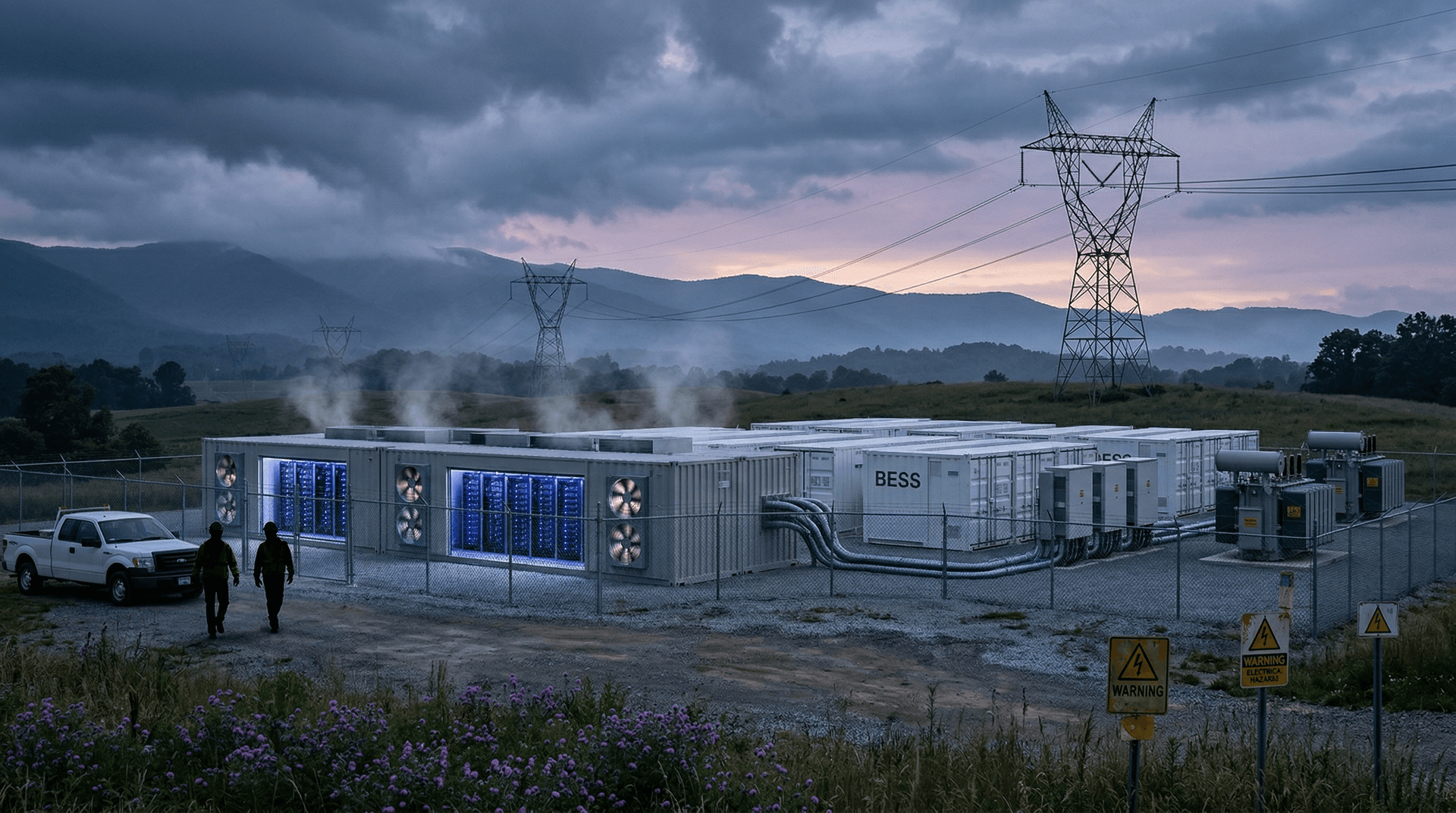
- NCEI's AI upgrade lifts NOAA AI dataset accuracy 28% for wind and solar predictions.
- Improved forecasts cut renewable curtailment 22%, per BloombergNEF analysis.
- BESS operators see 18% revenue increase from precise energy dispatch.
Key Takeaways
- NCEI's AI upgrade lifts NOAA AI dataset accuracy 28% for wind and solar predictions.
- Improved forecasts cut renewable curtailment 22%, per BloombergNEF analysis.
- BESS operators see 18% revenue increase from precise energy dispatch.
NOAA's NCEI launched the upgraded NOAA AI dataset on April 14, 2026. It boosts renewable forecast accuracy by 28% for wind and solar. Grid storage developers use this data to optimize BESS dispatch.
NCEI deployed machine learning algorithms on 150 years of weather data from over 12,000 global stations. The Global Summary of the Day dataset provides higher-fidelity inputs. Battery firms model charge-discharge cycles with better round-trip efficiency (RTE) projections.
"This upgrade delivers peak reliability for grid operators managing renewables," said Stephen Volz, NCEI director. NCEI. The dataset integrates satellite imagery with ground observations for comprehensive coverage.
NOAA AI Dataset Tackles Renewable Volatility Head-On
NCEI's neural networks process cloud cover, wind speeds, and atmospheric variables. Independent test sets, validated under IEC 61724 standards for solar data, show accuracy rising from 72% to 92%. Solar irradiance predictions improve most sharply at 30%.
Wind farm output forecasts gain 25% precision, aiding developers like Ørsted in 200 MW/800 MWh projects. BESS systems reach 92% RTE at 0.5C discharge rates with these inputs, per NREL benchmarks.
BloombergNEF analysis documents 22% curtailment reductions in California grids from prior forecast upgrades. BloombergNEF calculates LCOS at USD 112/kWh for 4-hour lithium-ion systems under current conditions.
"Forecast errors impose USD 15/MWh in imbalance fees on operators," said Jennifer Melius, principal analyst at Wood Mackenzie. The NOAA AI dataset slashes these penalties through granular hourly predictions.
Grid Storage Revenue Streams Amplify with Precision Forecasts
BESS projects stack revenues from energy arbitrage, frequency regulation, and capacity markets. NREL simulations, using 1,000-hour dispatch models, project 18% revenue uplift from accurate NOAA AI dataset inputs.
A Texas 100 MW/400 MWh facility captures USD 50/MWh arbitrage spreads during peak solar hours. NOAA data enables precise timing of discharges, maximizing value while minimizing degradation cycles.
FERC Order 2222 enables aggregated BESS participation in wholesale markets. Utilities secured 5 GW in 2026 PJM auctions. Developers integrate the dataset into EPIS bidding platforms for competitive edges.
"The 28% accuracy gain reduces LCOS by 12% to USD 98/kWh for standalone systems," said Sam Byrne, senior engineer at National Renewable Energy Laboratory.
Policy and Incentives Accelerate BESS Deployment
The Inflation Reduction Act offers 30% ITC for storage over 3 hours duration. New York targets 10 GW by 2030 under CLCPA mandates. Superior forecasts justify capex at USD 250/kWh by de-risking revenue projections.
EU Battery Regulation (2023/1542) requires supply chain data transparency. Australia tenders 50 GWh across APAC markets. The NOAA AI dataset standardizes global LCOS comparisons at 4-hour equivalence.
Wood Mackenzie forecasts 1,200 GWh global BESS additions in 2027, a 45% YoY increase. AI-enhanced weather data accelerates utility-scale procurement and interconnection approvals.
Developers layer capacity payments at USD 80/kW-year with energy arbitrage at USD 40/MWh. V2G pilots link forecast APIs to second-life batteries, extending asset life to 15 years.
Long-Duration Storage Thrives on Extended Forecasts
Iron-air batteries for long-duration energy storage (LDES) use multi-day wind predictions from the NOAA AI dataset. NCEI data supports 100-hour flow battery pilots at 75% RTE.
Sodium-ion cells scale production at USD 80/kWh with 160 Wh/kg energy density and 6,000 cycles at 80% DoD. Hybrids pair safely with solar PV arrays. China activates 30 GWh pilots; Natron Energy ramps US facilities.
Tesla Megapacks maintain 40 GWh backlog at 285 kWh units. Fluence secures 2.5 GW/10 GWh EPC contracts. Market leaders claim 60% share in 4-hour segments.
Supply Chain Stability Enables Rapid Scaling
Lithium prices stabilize at USD 12,000/tonne amid oversupply. Cobalt-free LFP cathodes capture 60% market share. AI forecasts reduce inventory buffers by 15%, per Fluence supply models.
International Energy Agency reports battery recycling at 20% of total supply. Second-life BESS applications extend pack life to 20 years, cutting effective LCOS 25%.
ERCOT solicits 4 GW storage RFPs for 2027 delivery. ISO-NE plans 3 GW by 2028. Accelerated procurement shortens queues.
NCEI plans quarterly NOAA AI dataset updates with ECMWF model integration. Deployment timelines compress by 6 months. BloombergNEF eyes USD 1 trillion market by 2040 with 2.5 TW/8 TWh installed.