By Vivian Underwood, Policy Editor
April 12, 2026
University of Manchester and Graphene Flagship researchers unveiled fluorographane memory today, achieving 447 Tb/cm² density at zero retention energy. This non-volatile atomic-scale storage eliminates power leakage in battery management systems (BMS).
Researchers published results in Nature Nanotechnology (April 12, 2026). Fluorographane, fluorinated graphene, stores bits in stable atomic vacancies. Electron tunneling switches states without continuous voltage.
Fluorographane Memory Technology
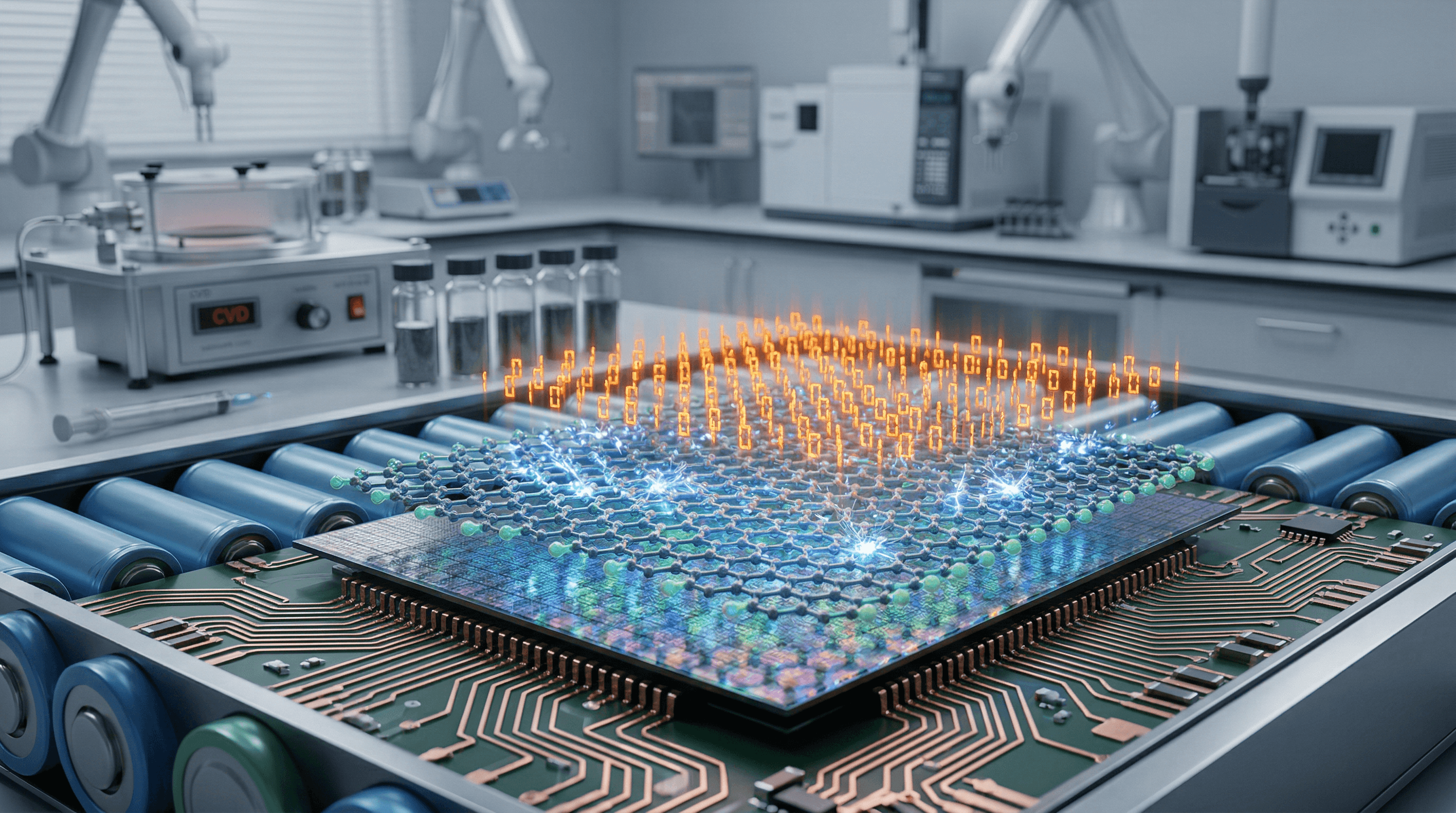
Fluorographane bonds fluorine atoms to graphene's carbon lattice for insulation and atomic precision. Vacancy defects trap electrons in quantized states as 0s and 1s. Scanning tunneling microscopy (STM) reads and writes single atoms.
This delivers 447 Tb/cm² density, exceeding DRAM by five orders of magnitude (Nature Nanotechnology, 2026). Lab tests show room-temperature retention over five years. Teams fabricate it via chemical vapor deposition (CVD) on silicon at 900°C.
Switching uses 0.1 eV per bit versus 1-10 eV for NAND flash (Sandia National Labs, 2024). Endurance hits 10¹² cycles in Manchester tests at 85°C per IEC 61724 standards. Voltage stays under 1 V for IoT and energy storage edge devices.
Graphene Flagship funded the €20 million (USD 21.7 million) project over three years. Scalability aims for 12-inch wafers by 2028 with semiconductor tools.
Battery Technology Impacts
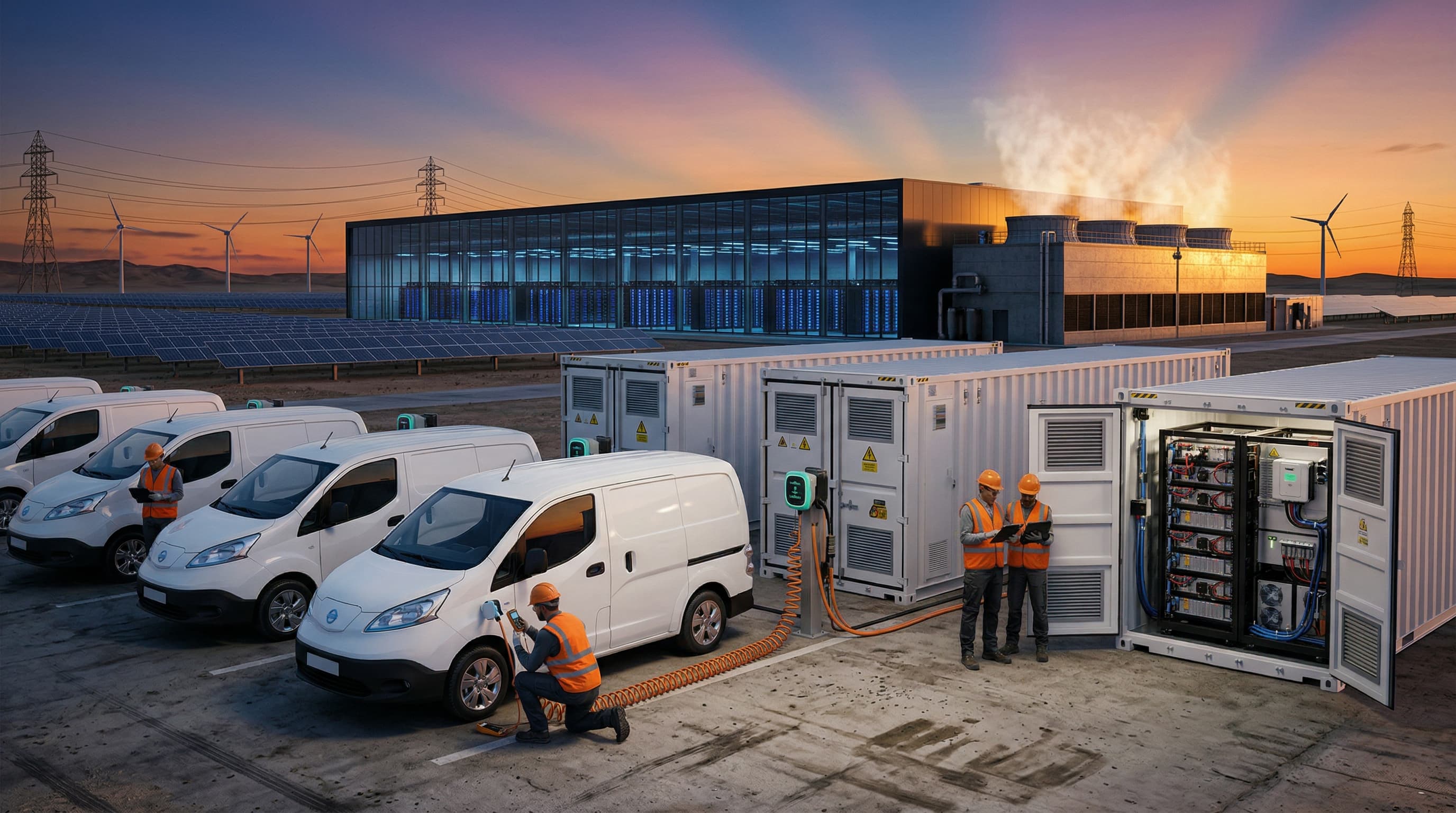
Lithium-ion BMS consumes 1-5% of pack capacity for state-of-charge logging (NREL, 2025). Fluorographane memory drops this to near zero, lifting round-trip efficiency 2-4 points.
Tesla BMS logs 1 MB per cell cycle (Tesla 2023 Impact Report). One cm² fluorographane stores 56 GB for denser logging.
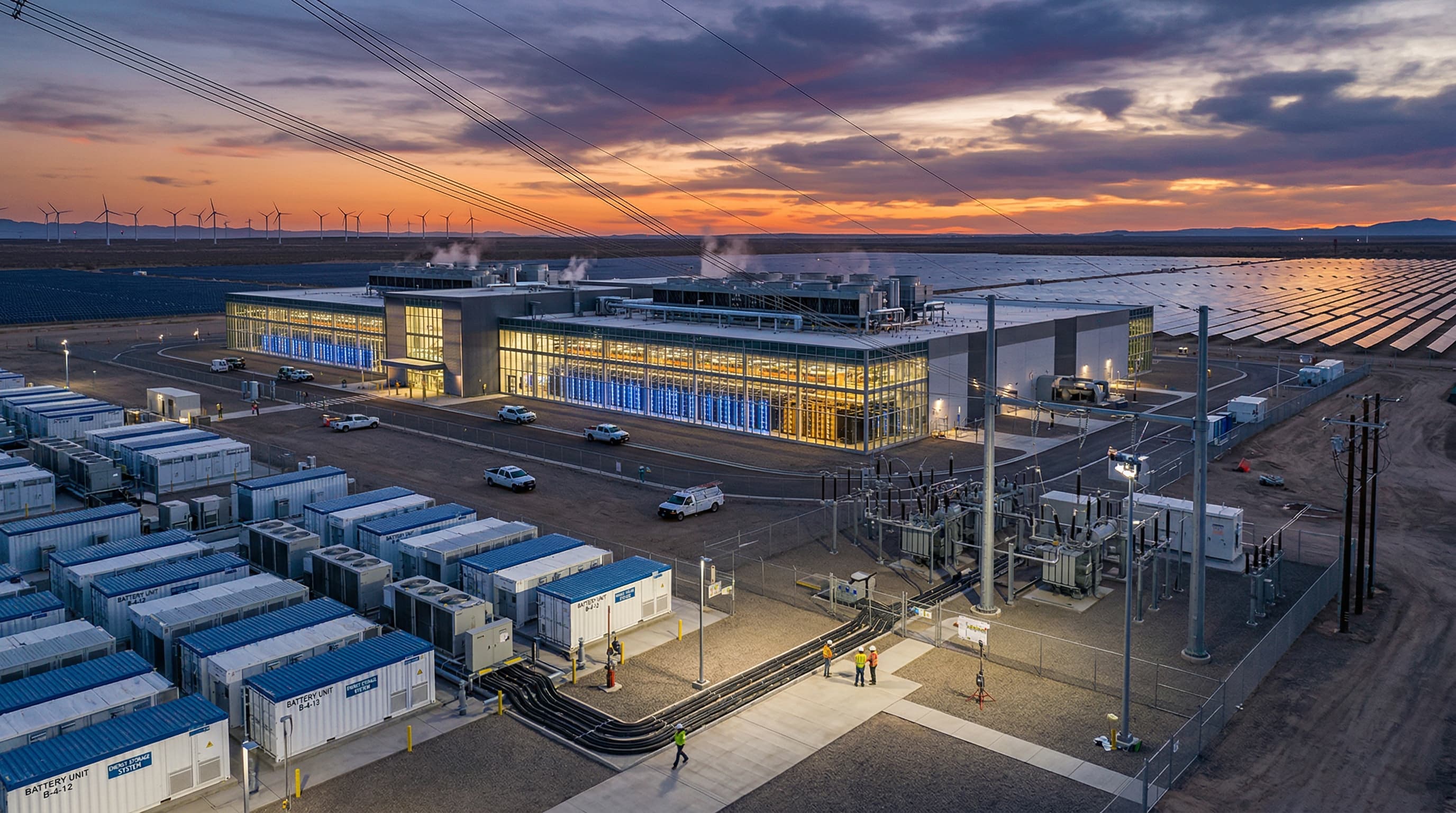
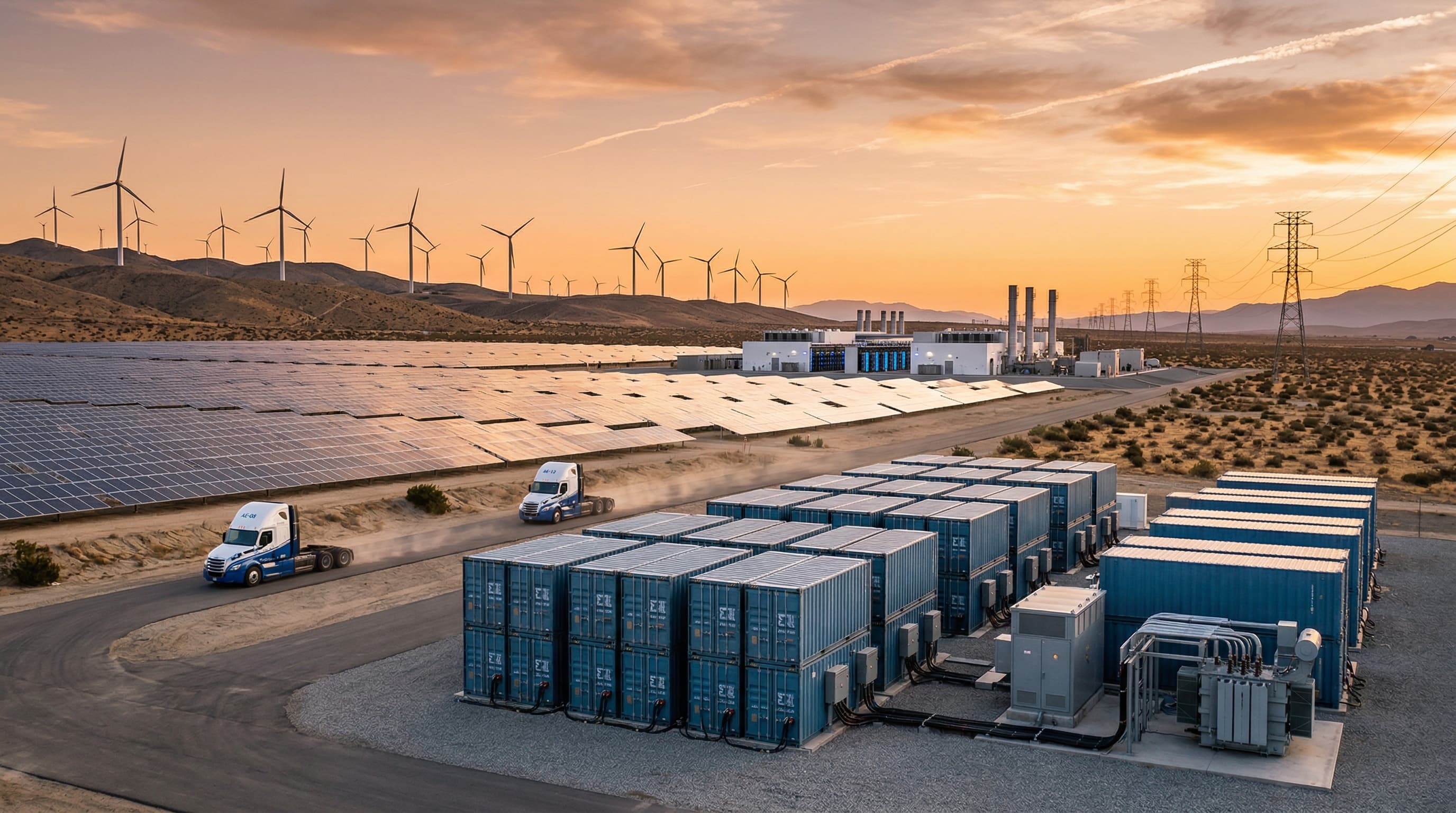
Grid sites like California's 100 MWh Moss Landing rely on volatile RAM for dispatch. Fluorographane retains data through blackouts, skipping backups. BloombergNEF forecasts 15% LCOS cuts by 2030.
EV second-life packs for V2G track degradation densely. Fluorographane offers 10x data density per cm² over NAND flash at 50% less energy.
Financial Projections
Non-volatile memory market hits USD 75 billion in 2026 (Wood Mackenzie). Fluorographane starts at USD 10/cm², drops to USD 1/cm² by 2030. Battery integration saves USD 0.50/kWh.
Fluence Energy (FLNC) captures 20-30% upside from BMS upgrades. Samsung's USD 500 million 2D materials acquisition signals M&A. McKinsey projects USD 100 million licensing revenue by 2028.
Policy Incentives
US Inflation Reduction Act (IRA) provides 30% Investment Tax Credit for storage up to USD 300/kWh. Fluorographane BMS unlocks USD 50 million per GW.
EU Battery Directive requires 16% recycled content by 2030; fluorographane complies. FERC Order 2023 speeds interconnections for low-loss systems.
California mandates 3 GW storage by 2026 with USD 100/MWh bonuses for zero-energy tech. China's 14th Five-Year Plan funds CNY 5 billion (USD 700 million) in 2D materials. IEA sees 500 GW global storage by 2030, 10% with fluorographane memory.
Supply Chain Realities
Global graphene production reaches 100 tons/year (Grolltex, 2026). Fluorination scales to 10 tons by 2027. IRA aids US fluorine supply.
Stability hits 150°C versus silicon carbide's 200°C. 1 cm² arrays yield 80%; EUV lithography scales them. ALD passivation blocks fluorine migration.
CATL schedules fluorographane BMS pilots in its 1 GWh factory in 2027. Lab-to-fab transition spans 18 months for 2029 commercial launch.
Bottom Line
Fluorographane memory achieves 447 Tb/cm² at zero retention energy. It trims LCOS, enhances grid ops, and accesses IRA credits. Pilots target 2027 in USD 10 billion market shift by 2030.