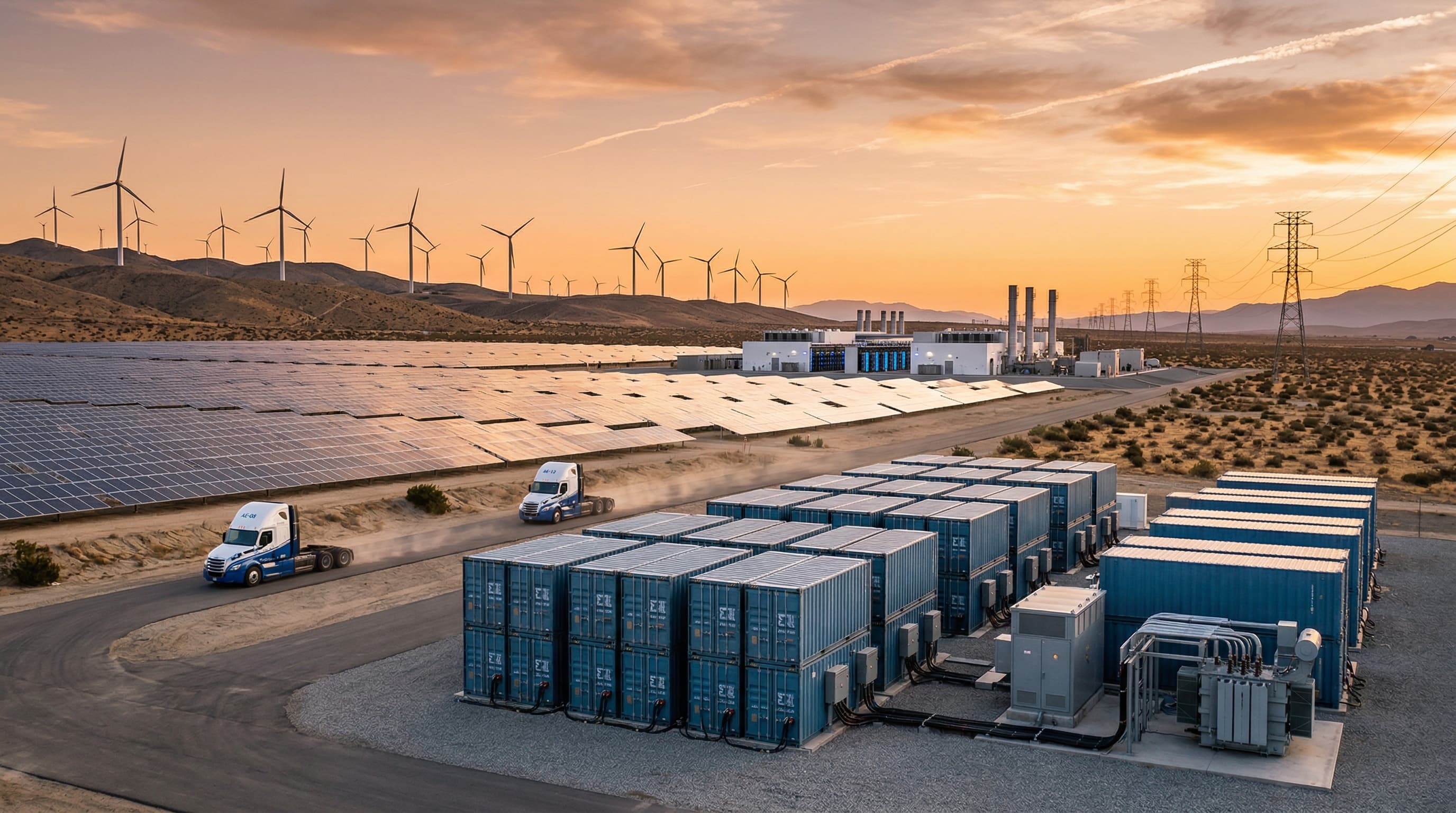
Mindmatters.ai's Artificial Intelligence Review Part 5, released April 12, 2026, projects AI data center power demand reaching 1,000 TWh annually by 2030 from 460 TWh in 2025. This matches Japan's annual electricity use (IEA data).
The analysis uses International Energy Agency (IEA) data and hyperscaler filings. Data centers consume 2% of global electricity today. AI training accelerates this trend sharply.
Escalating Demand from AI Workloads
Large language models demand massive compute power. Mindmatters.ai cites Nvidia's H100 GPUs, each drawing 700W under load. A single GPT-scale model training run consumes 1 GWh (OpenAI estimates).
Hyperscalers plan 100 GW of new data center capacity by 2028 (BloombergNEF). US data centers added 20 GW in 2025 alone. Growth targets Virginia, Texas, and Oregon for their grid capacity.
Utilities face peak loads spiking 30% during AI inference peaks. PJM Interconnection reports 15 GW demand jumps in Q1 2026. Grid operators deploy demand response programs to manage surges.
Solar and Wind Ramp Up Capacity
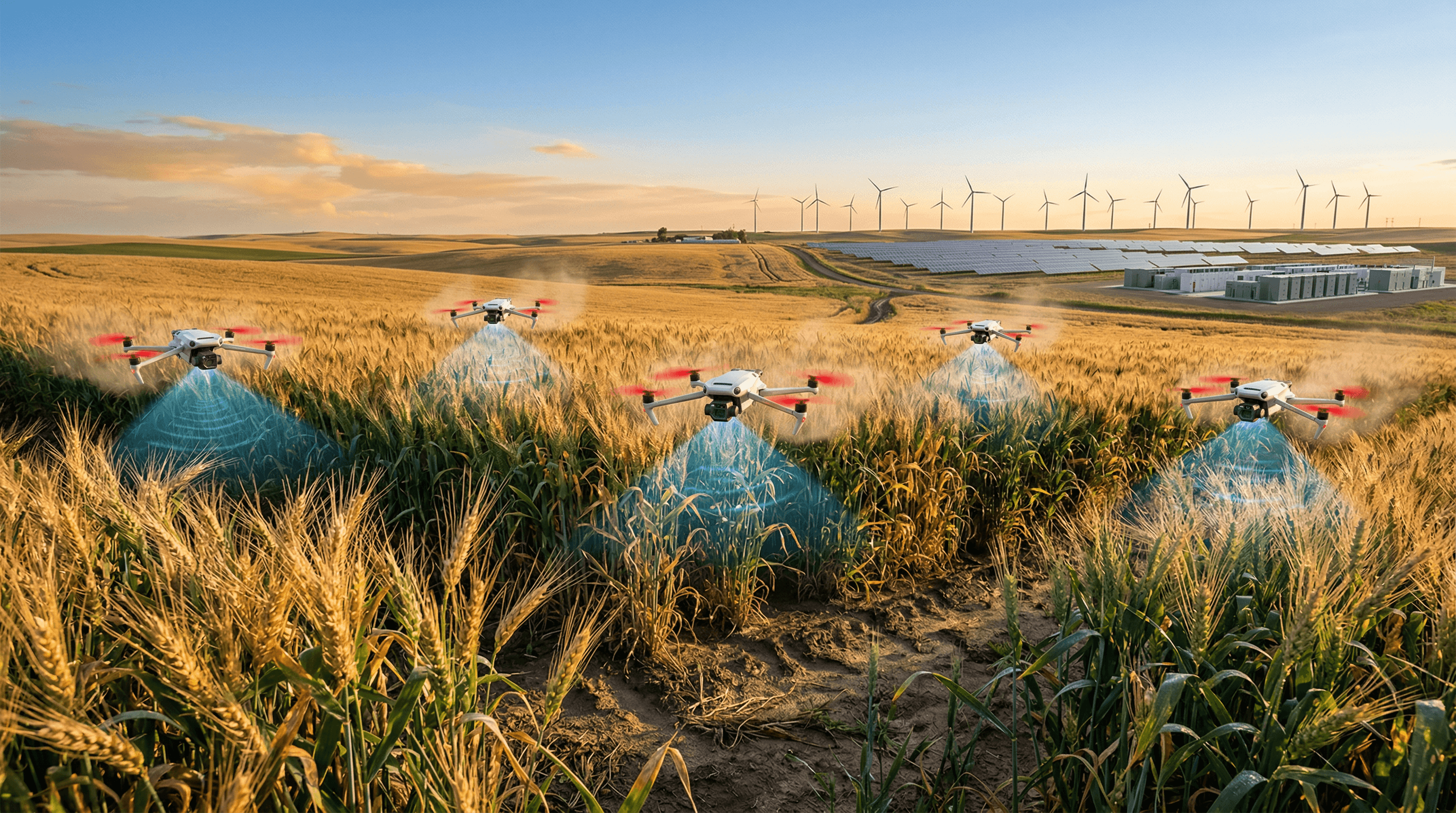
Solar capacity hit 1.6 TW globally by end-2025 (Wood Mackenzie). The Americas added 200 GW of solar in 2025. Data center developers co-locate panels onsite to secure supply.
Microsoft signed 10.5 GW solar PPAs in 2025. Google targets 24 GW renewables by 2030. These pair with 5 GW wind projects in Texas and Oklahoma for hybrid output.
Wind delivers baseload power at USD 30/MWh LCOE (Lazard's Levelized Cost of Energy Analysis 2025). North Sea offshore wind adds 20 GW by 2027, serving European hyperscalers.
Storage Mitigates Renewable Variability for AI Data Center Power
Battery storage counters solar and wind intermittency. Global deployments reached 250 GW/750 GWh by Q1 2026 (IRENA), averaging 3-hour duration. Lithium-iron-phosphate (LFP) batteries claim 90% market share.
LFP offers 160 Wh/kg gravimetric density and 400 Wh/L volumetric density (CATL datasheets). It achieves 6,000+ cycles at 80% depth of discharge (DoD), per UL 9540A testing.
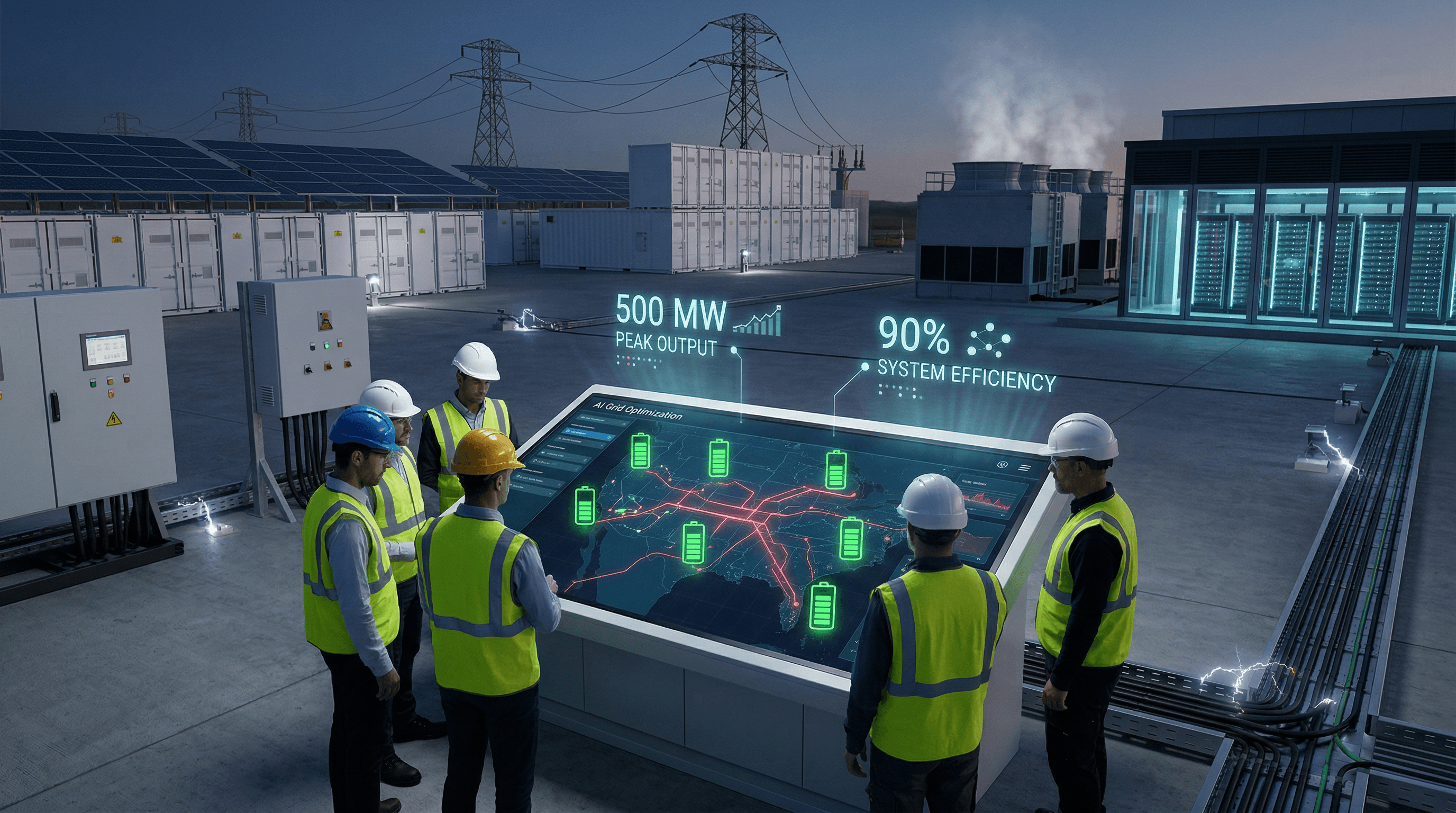
Data centers deploy 100 MW/400 MWh systems (4-hour duration). Tesla Megapacks power Meta's 300 MW/1.2 GWh facility in Arizona. These deliver over 90% round-trip efficiency (RTE) at 0.25C discharge (Tesla specs).
Form Energy's iron-air batteries target 100-hour duration commercially. Their 1 GW/100 GWh pilot launches in California in 2026 at USD 20/kWh system cost (Form Energy filings). Iron-air provides 30 Wh/kg and 40 Wh/L but excels in multi-day discharge.
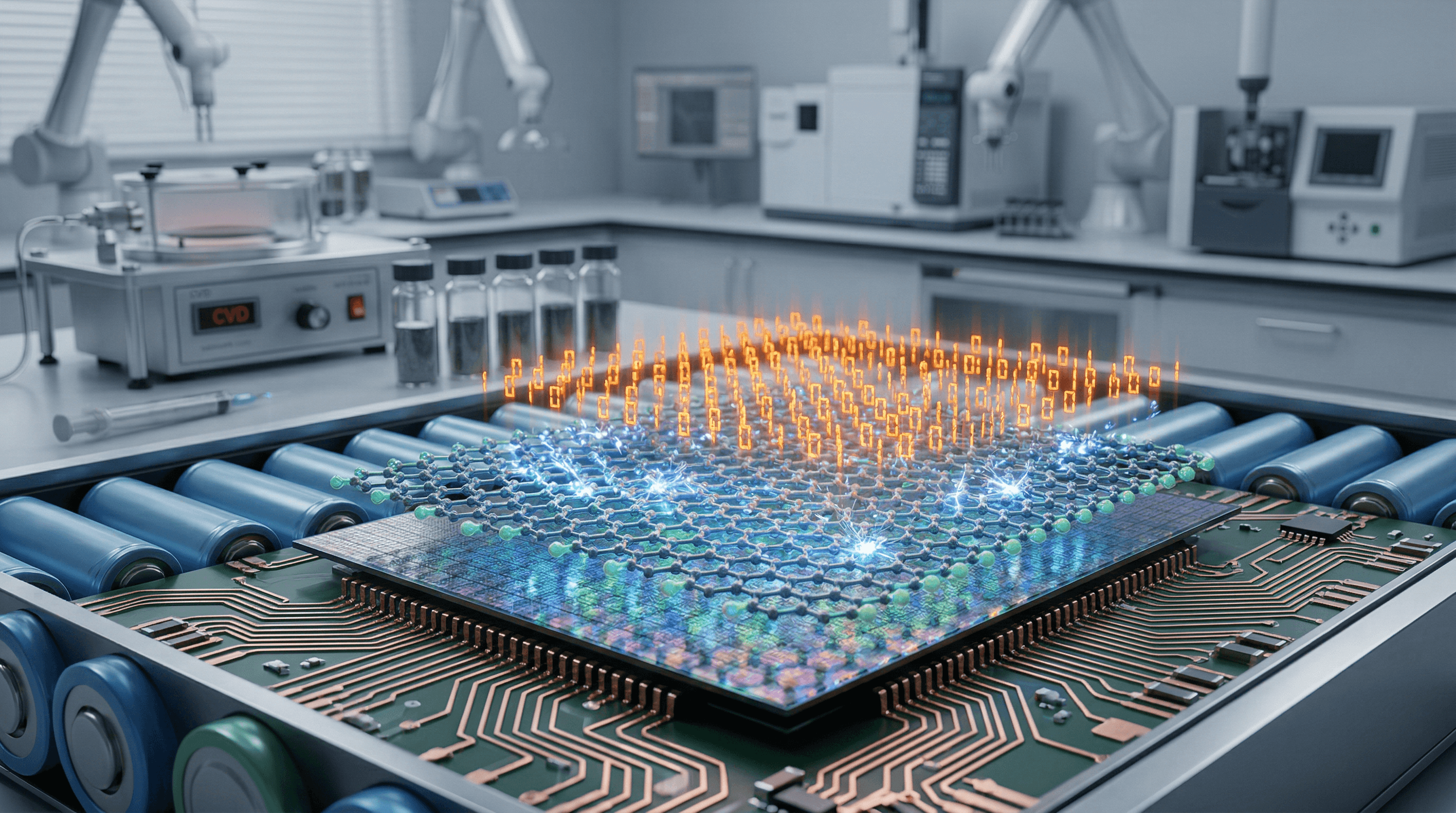
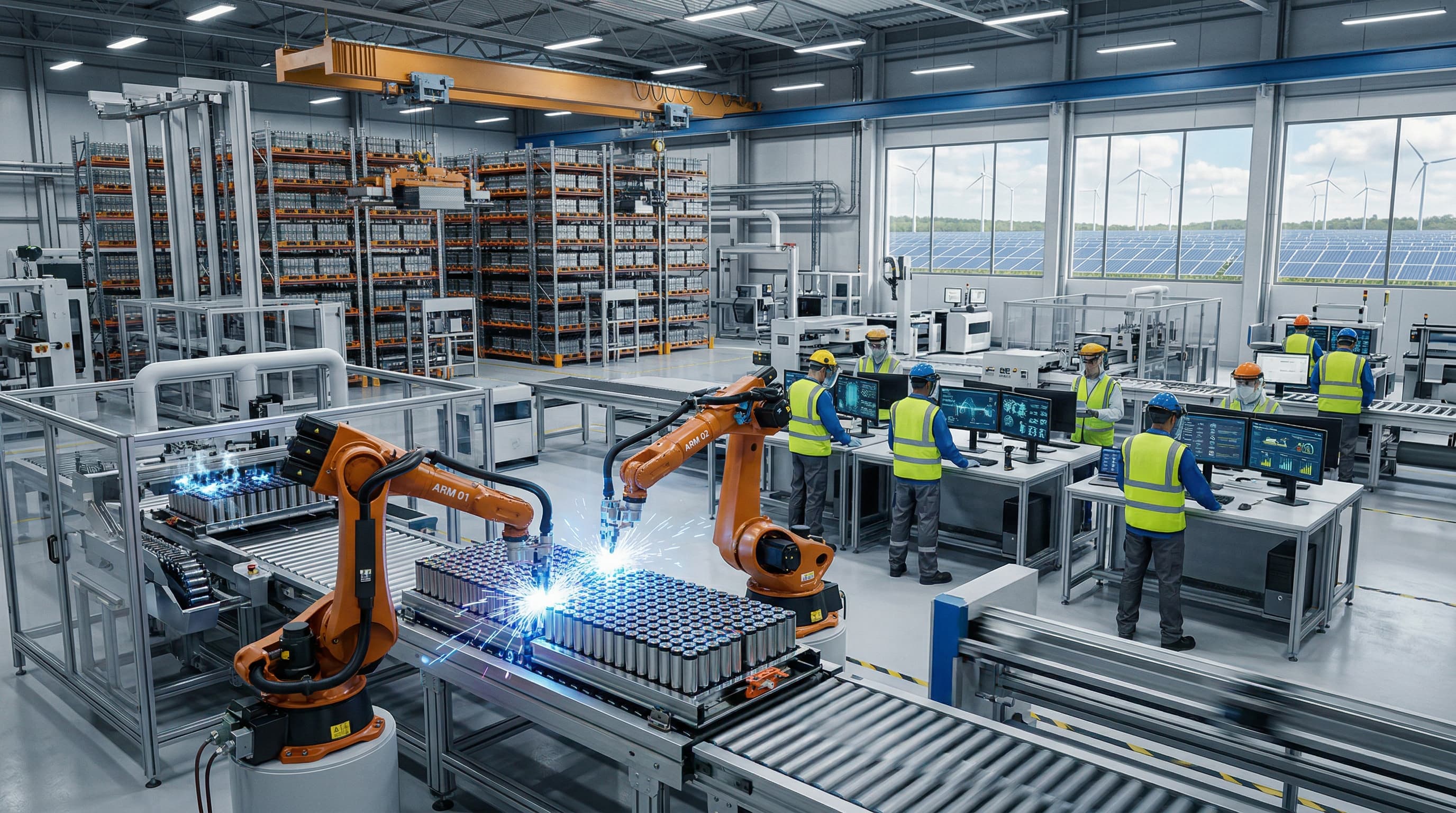
LFP dominates supply chains with cobalt-free chemistry, cutting risks from Democratic Republic of Congo mines. CATL and BYD supply 80% of cells from China, with new US plants in Georgia and Nevada dodging tariffs (S&P Global).
NMC batteries trail at 5% share, offering 200 Wh/kg but USD 120/kWh costs due to nickel from Indonesia (Benchmark Mineral Intelligence). Iron-air scales via abundant iron, targeting USD 10/kWh by 2030.
| Chemistry | Wh/kg | Wh/L | Cycles (80% DoD) | System Cost (USD/kWh) | |-----------|-------|------|-------------------|-----------------------| | LFP | 160 | 400 | 6,000 | 100 | | NMC | 200 | 500 | 2,000 | 120 | | Iron-Air | 30 | 40 | 5,000+ | 20 |
(Source: Aggregated from CATL, Tesla, Form Energy 2026 specs; Lazard 2025)
Grid Upgrades Keep Pace
FERC Order 2023 mandates transmission planning for renewables integration. The US invests USD 200 billion in grids through 2030. HVDC lines link Midwest wind to coastal data centers.
ENTSO-E forecasts 500 GW European grid expansion by 2030. China deploys 100 GW ultra-high-voltage lines. These enable desert solar exports to load centers.
Siemens Energy's AI forecasting predicts solar output within 5% accuracy (IEC 61724 standard). This cuts curtailment by 20%, per field trials.
Cost and Market Outlook
Solar LCOE falls to USD 25/MWh unsubsidized (NREL 2026 data). Wind ranges USD 30-40/MWh onshore. Storage adds USD 10-15/MWh but shaves peaks effectively.
Renewables-plus-storage PPAs average USD 45/MWh for data centers. This beats gas peakers at USD 100/MWh marginal cost. Hyperscalers secure 50 GW contracts already.
BloombergNEF sees renewables supplying 70% of AI data center power by 2030. Hybrid plants achieve 60% capacity factors with storage dispatch.
Regional and Policy Drivers
Texas ERCOT integrates 50 GW solar and 20 GW storage by 2026. Data centers take 15% of load growth. California pursues 100% clean energy by 2045 with 30 GW storage bids.
India targets 500 GW renewables, including 100 GW storage for AI hubs. Australia's Snowy 2.0 adds 2 GW/350 GWh pumped hydro. Policies accelerate utility-scale builds.
Inflation Reduction Act offers USD 40/kWh production tax credits for storage through 2032. EU Net Zero Industry Act fast-tracks 40 GW solar and 20 GW storage permits.
Implications for AI Data Center Power
Mindmatters.ai's review spotlights renewables' role in meeting AI data center power demand. Solar, wind, and storage stabilize 1,000 TWh annual loads. Utilities plan 300 GW new capacity online in 2026 (IEA). Clean technologies overtake fossils, with storage enabling 24/7 dispatch.