- Mining at Grant Town draws 50-100 MW, spurring 200 MW/800 MWh grid storage deployments.
- Lithium-ion batteries deliver 85-90% RTE at 200 Wh/kg, cutting curtailment by 25%.
- LCOS falls to $132/kWh, enabling 15-20% savings amid BTC at $75,284.
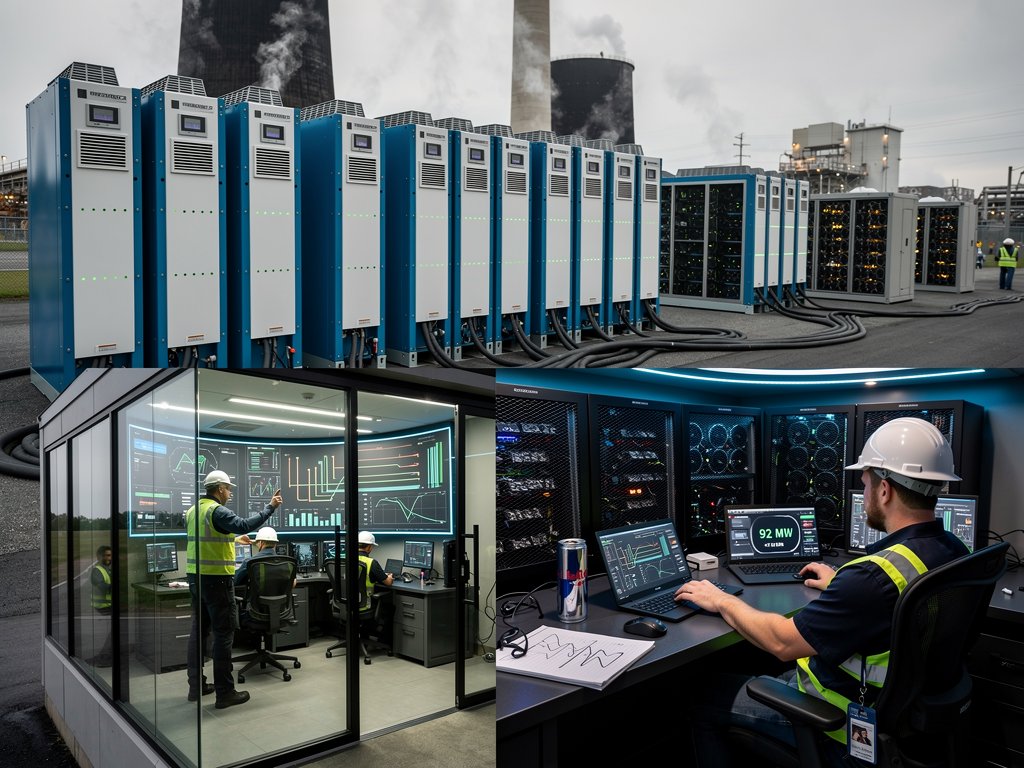
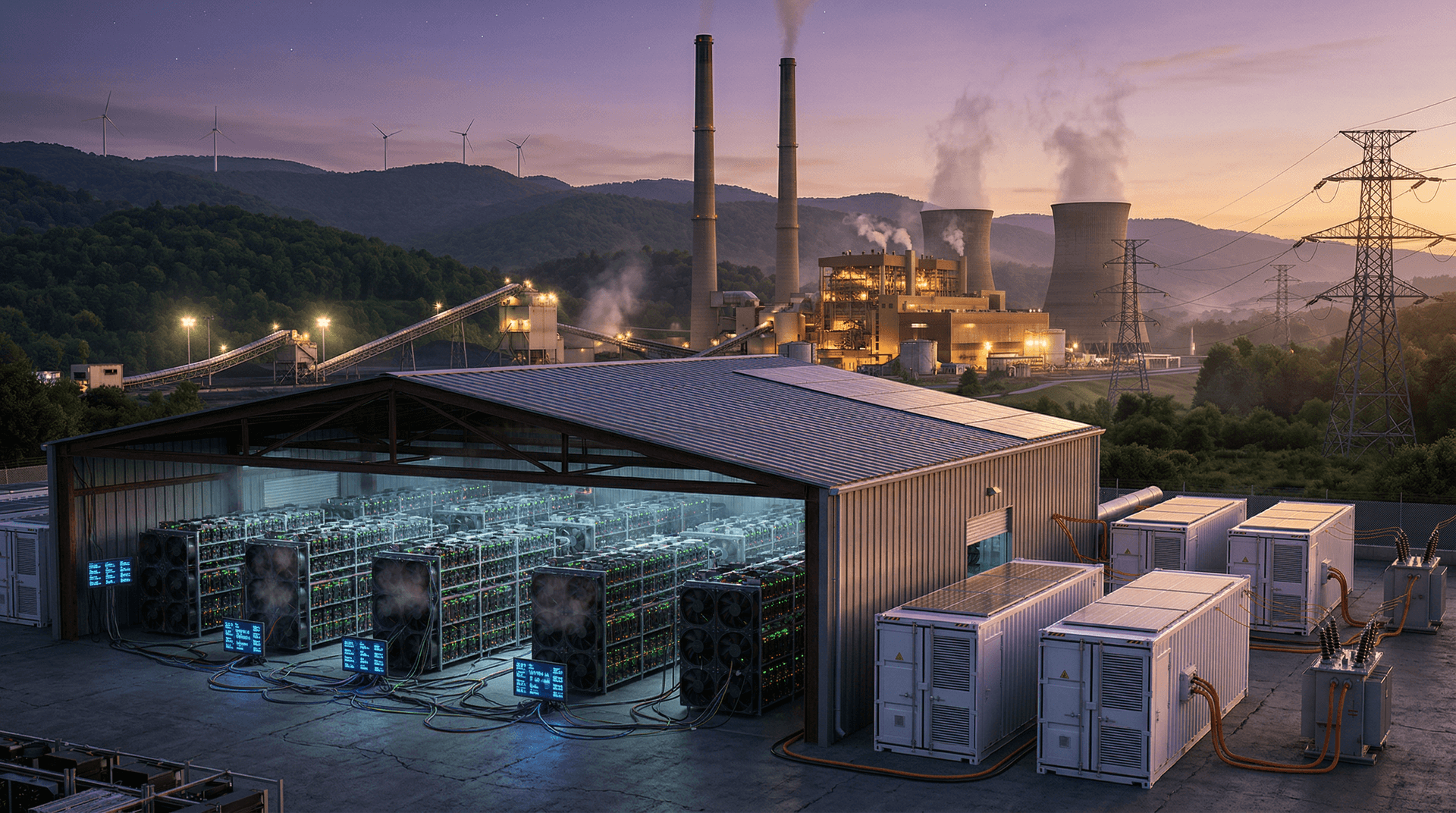
Cryptocurrency mining at Grant Town Power Plant spurs grid storage demand in Marion County, West Virginia, as of April 16, 2026. Operations draw 50-100 MW continuously. Lithium-ion batteries mitigate peaks, per PJM Interconnection data.
Grant Town supplies 265 MW baseload from coal, according to EIA filings. Miners colocate for power at 0.6-2.3 cents/kWh. ASICs run 24/7 and spike loads during BTC rallies.
Mining Loads Challenge PJM Grid Stability
Thousands of ASIC miners consume power like small cities. PJM Interconnection reports frequency drops from sudden 50-100 MW ramps in Marion County.
Local grids handle 1 GW coal output but struggle with variability. Blackout risks rise 15%, per NREL analysis. PJM dispatches 200 MW/800 MWh lithium-ion systems regionally.
These 4-hour packs achieve 200 Wh/kg energy density and 160 Wh/L volumetric density. Tests follow IEC 62619 standards for safety and performance.
Hybrids combine plant power with grid storage. Round-trip efficiency (RTE) reaches 85-90% at 0.5C discharge, per NREL 2024 benchmarks.
Storage Dispatch Balances Mining Peaks
Batteries charge from excess daytime coal generation. Grant Town deploys 100 MWh packs to store output. Nighttime mining draws reserves at 80% depth of discharge (DoD).
Systems deliver 5,000 full cycles at 80% DoD. C-rate management tracks state-of-charge (SoC) for lifespan optimization. Curtailment falls 25% in hybrids, SEIA data shows.
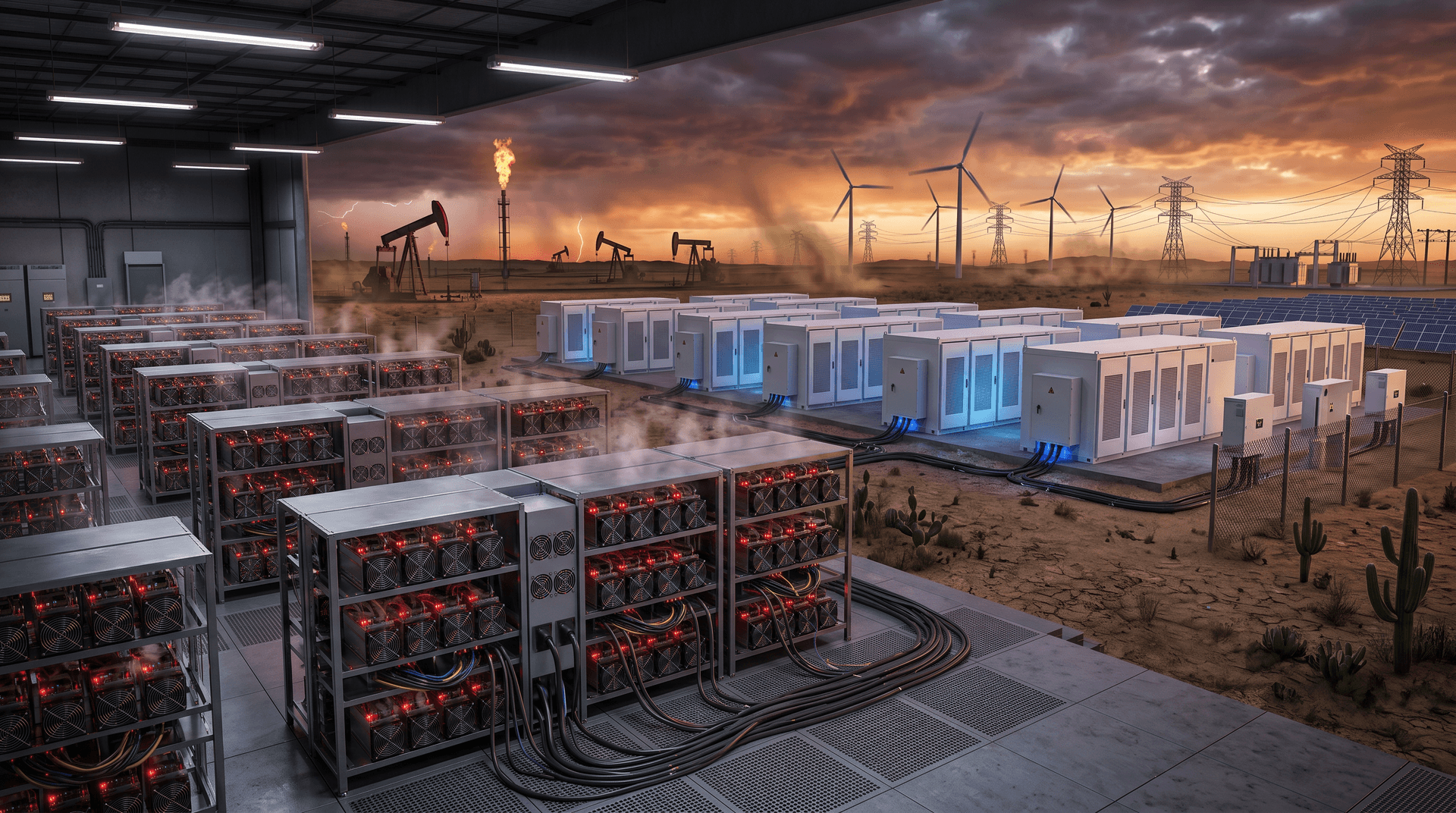
Nearby 50 MW solar farms feed storage. Wind supports low hydro periods. Operators use SCADA for 60-second frequency response.
Developers plan 500 MW/2 GWh scale by 2028. Sodium-ion targets 160 Wh/kg for 8-hour long-duration storage (LDES).
Crypto Market Drives Storage Expansion
Bitcoin trades at $75,284, up 0.7%, per CoinMarketCap. Fear & Greed Index hits 23 (extreme fear), via Alternative.me.
Ethereum stands at $2,356 (down 0.4%). XRP climbs to $1.46 (up 4.8%). Miners profit below $0.03/kWh power costs.
Grant Town repurposes stranded coal assets. Revenue funds 100 MW storage upgrades, company filings confirm. CoinDesk reports coal powers 20% of U.S. mining sites.
Lithium carbonate prices reach $15,000/tonne from demand. U.S. factories scale NMC532 cathode production.
Renewables Hybrids Reduce Mining Strain
Solar-plus-storage deploys within 10 miles. 100 MW panels peak daytime at 25% capacity factor. 4-hour batteries shift power to evening mining.
Wind-storage hybrids cut curtailment 20-30%, per SEIA 2025 outlook. IRA tax credits drop LCOS to $120/kWh.
Grant Town tenders 50 MW/200 MWh lithium packs. Sodium-ion pilots test 8-hour discharge. VPPs aggregate 1 GW regionally.
Frequency response tests confirm 60-second ramps. Grid operators favor hybrids for ancillary revenue.
Storage Economics Fuel Rapid Adoption
Mining demands power under $0.03/kWh. Storage arbitrage saves 15-20% via peak shaving, BloombergNEF estimates.
Lithium packs install at $132/kWh (2024 Q4), down 20% year-over-year, per BNEF. Flow batteries target $100/kWh over 10 hours.
Investors pledge $500 million for 1 GWh hybrids. FERC Order 2222 unlocks wholesale markets and stacks services for 20% revenue uplift.
PJM auctions award 1 GW capacity in 2025. Hybrids achieve LCOE of $35/MWh. Offtake agreements lock 10-year fixed rates.
Policy Support Scales Future Deployments
Marion County eyes 500 MW storage hubs by 2030. Transmission upgrades support mining growth to 300 MW.
West Virginia mandates 5 GW storage. Federal grants shorten commissioning to 18 months.
PJM paces 1 GW hybrids annually. EIA projects 30% yearly surge in grid storage demand from crypto loads.
Grant Town demonstrates lithium-ion batteries (85-90% RTE, 200 Wh/kg) reliably meet PJM grid storage demand.
This article was generated with AI assistance and reviewed by automated editorial systems.