- AI cuts Stellantis plant downtime 20-30% via Azure ML.
- V2G achieves 90% round-trip efficiency, 4-hour duration per NREL.
- California targets 5 GW storage by 2026; V2G fills gaps.
Stellantis-Microsoft AI deal, announced April 16, 2024, deploys Azure tools across factories. Stellantis optimizes electric vehicle (EV) manufacturing and vehicle-to-grid (V2G) storage services.
Engineers access real-time analytics for assembly lines. Stellantis targets lithium-ion packs at 250-300 Wh/kg energy density and 3,000-cycle life with 80% capacity retention, per its 2023 technical roadmap.
Stellantis produced 1.4 million EVs in 2023, per its annual report. The AI partnership reduces defects and waste in high-volume plants across Europe and North America.
AI Boosts Manufacturing Precision and Battery Quality
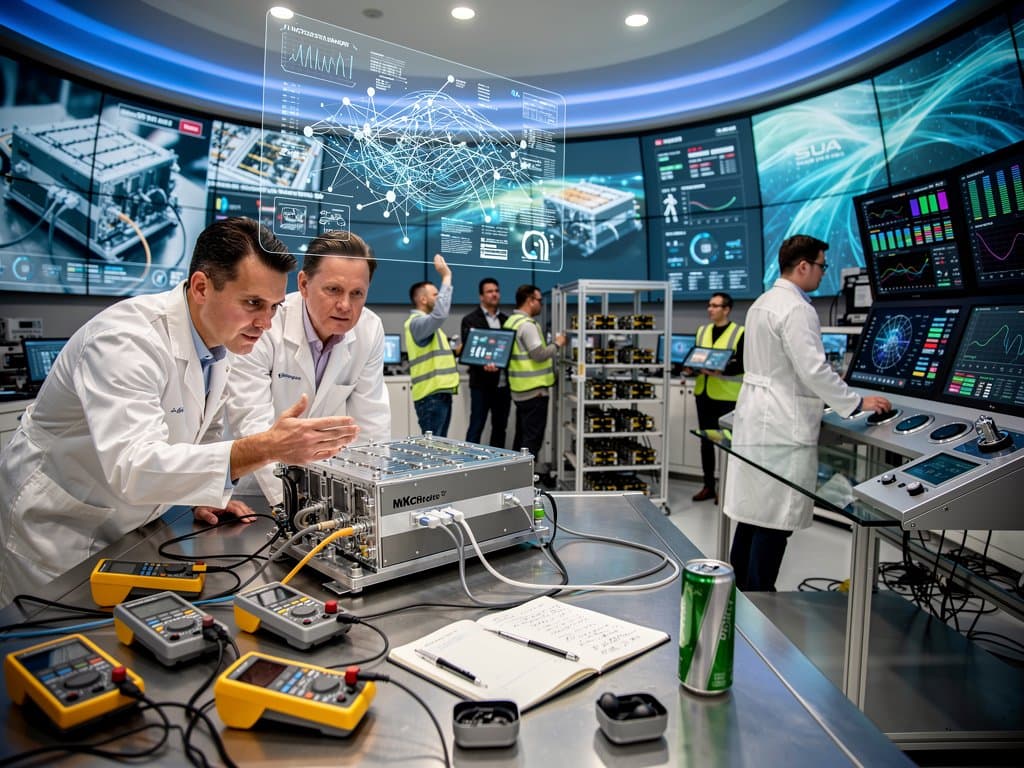
AI algorithms predict equipment failures. Stellantis deploys them in plants from Turin to Windsor. Machine learning cuts downtime 20-30%, per Microsoft Azure case studies.
Microsoft Azure Machine Learning powers Stellantis operations. The platform analyzes sensor data from robotic arms and conveyors. Production ramps to C/2 discharge rates under IEC 62660 standards.
AI forecasts demand for lithium, nickel, and cobalt. Stellantis navigates US-China trade tensions. Vision AI inspects welds and cell seals for 95% depth of discharge (DoD) uniformity. Cathode costs fall 15%, per Benchmark Mineral Intelligence.
Battery lines hit 99.5% yield rates. Azure links to ERP systems for just-in-time inventory. This slashes holding costs 10-15%.
V2G Turns EV Batteries into Grid Assets
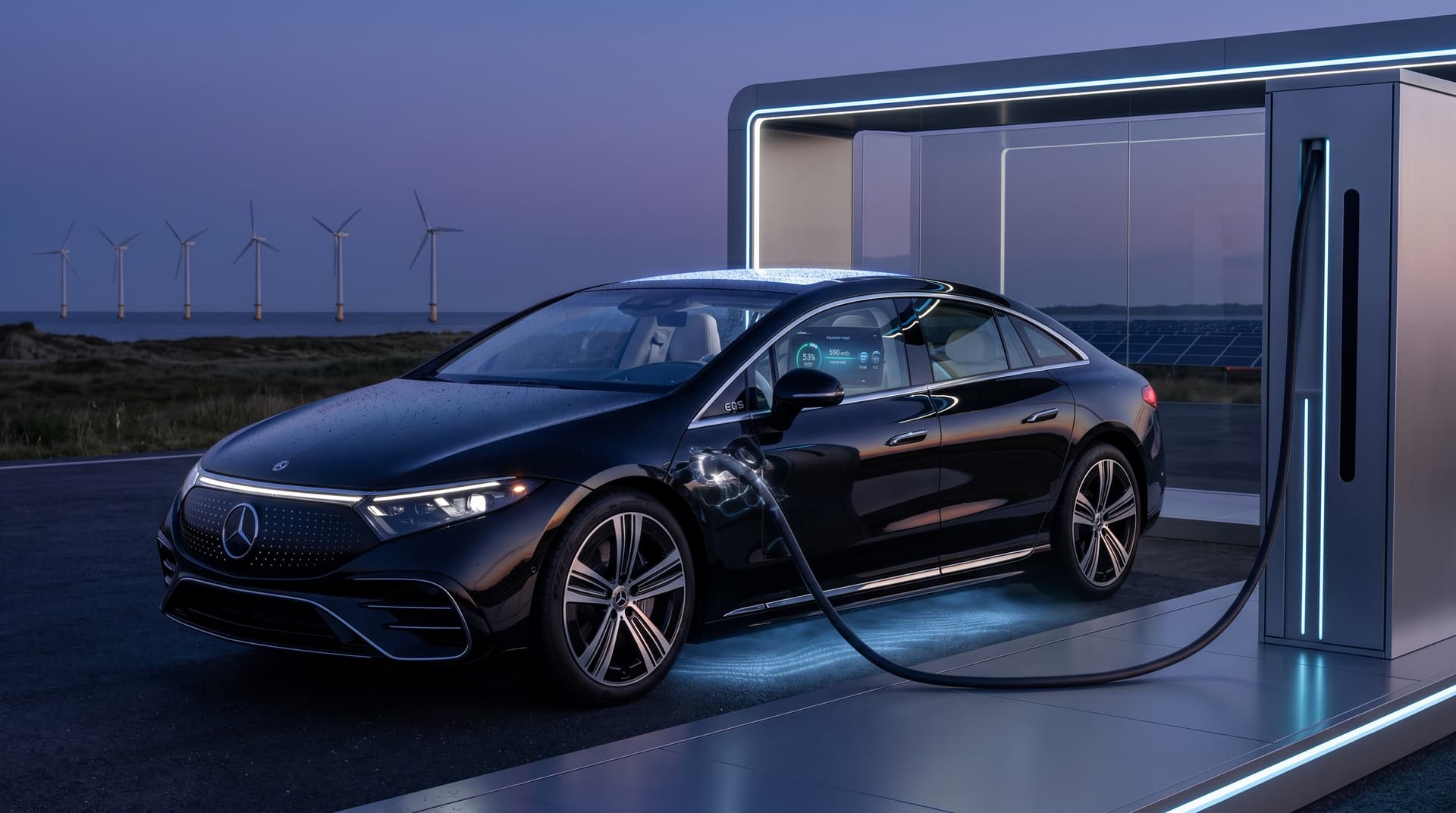
EV fleets support second-life V2G applications. Stellantis advances bidirectional charging. Microsoft AI optimizes cycles for 90% round-trip efficiency (RTE) at 0.5C rates.
V2G aggregates 10,000 vehicles for megawatt-scale dispatch. AI schedules discharges at peak demand. Systems provide 4-hour storage duration, matching NREL tests.
NREL outlines V2G grid benefits. Researchers equate urban fleets to 100 MWh stationary plants.
Behind-the-meter V2G balances rooftop solar and EV charging. Stellantis delivers over-the-air (OTA) firmware for power management. Pilots generate $50-100/kW-year in frequency regulation revenue, per early data.
Policies Accelerate V2G and Battery Deployment
US Inflation Reduction Act (IRA) offers 30% tax credits on bidirectional chargers up to $7,500 per unit. Stellantis taps DOE pilots.
EU Battery Regulation requires digital product passports by 2027. AI tracks from gigafactory to grid across EMEA.
FERC Order 2222 opens markets for distributed resources. Stellantis aggregates EV capacity for ISO/RTO bids, eyeing 500 MW by 2028.
California mandates 5 GW storage by 2026 via AB 2514. V2G addresses solar duck-curve gaps at $120-150/MWh LCOS.
Stellantis electrification roadmap details V2G focus. Stellantis invests €50 billion through 2030.
Supply Chain Shifts Enable AI Scale-Up
Lithium carbonate prices dropped 80% in 2023 to $15,000/t, per Benchmark Mineral Intelligence. AI aids hedging and Australian sourcing.
Nickel sulfate hits $16,000/t from Indonesian supply. Stellantis adopts LFP cathodes for 160 Wh/kg packs in entry EVs.
BloombergNEF Electric Vehicle Outlook tracks fleet growth. BNEF forecasts 200 million EVs by 2030, doubling V2G to 1 TWh daily flexibility.
Utilities face 5-year grid queues. The Stellantis-Microsoft AI deal speeds hybrid projects. Arbitrage and ancillary services enter PJM RFPs soon.
Stellantis-Microsoft AI partnership positions V2G for a $10 billion market by 2030, per BNEF.
This article was generated with AI assistance and reviewed by automated editorial systems.