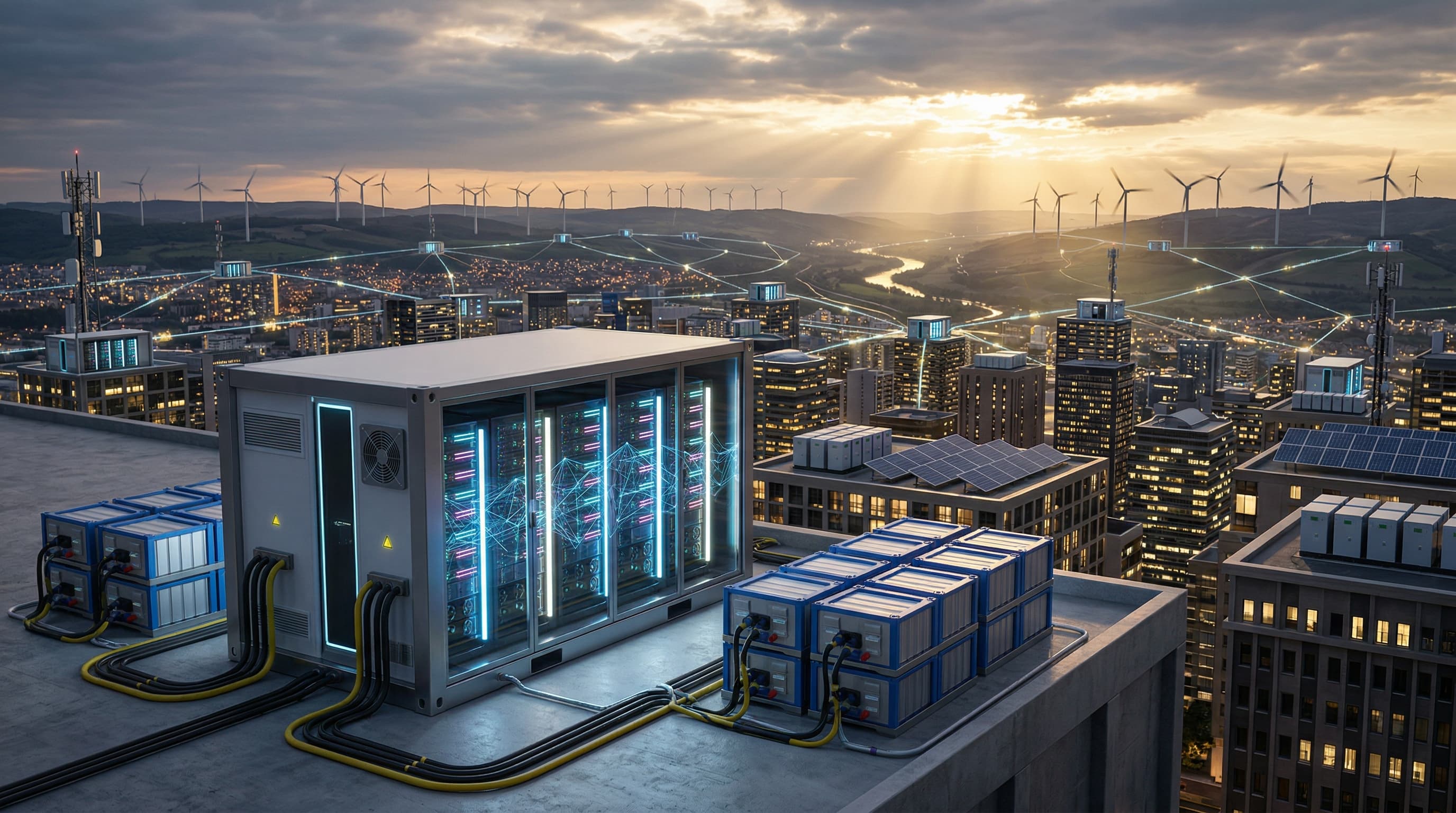
Cloudflare AI revenue shift propelled AI products to 28% of USD 479 million Q1 revenue on April 10, 2026, up from 8% in Q1 2025 (Investor's Business Daily). This growth intensifies power demands at distributed edge sites.
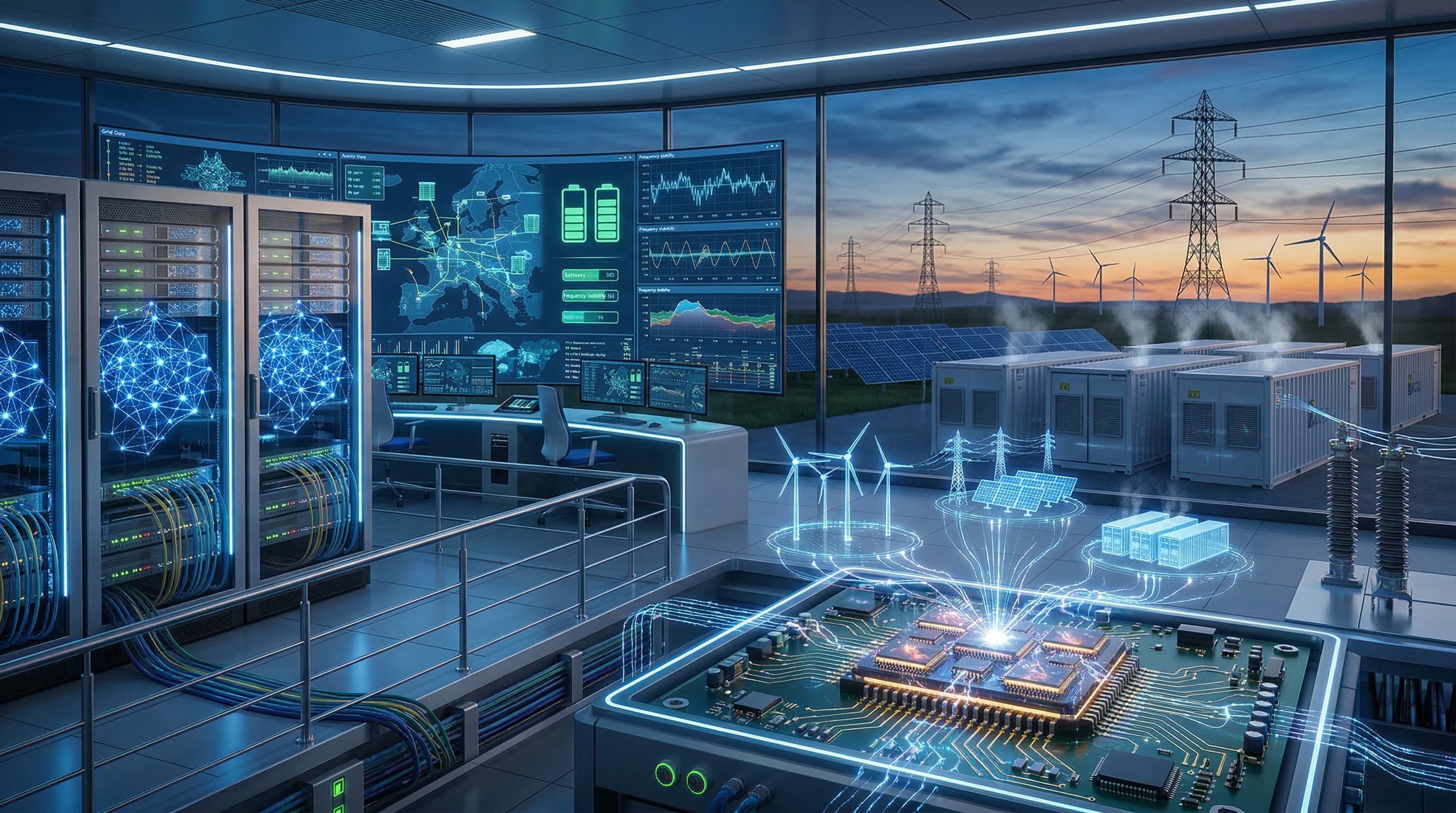
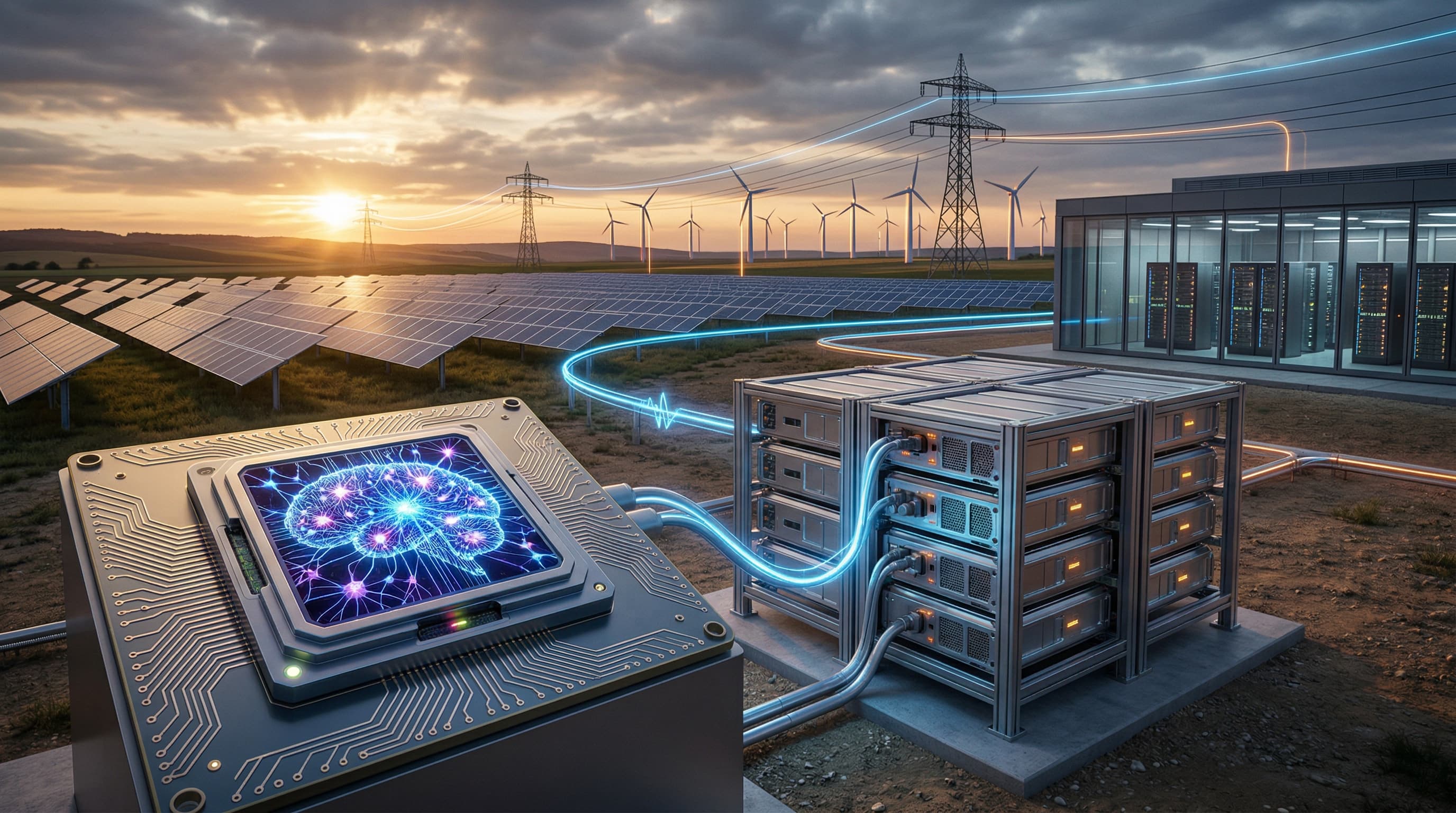
Cloudflare's Workers AI platform runs inference at network edges, enabling low-latency applications. BloombergNEF forecasts edge computing will consume 15% of global data center power by 2030, up from 5% in 2025.
Edge Computing Power Surge Accelerates
Cloudflare's AI inference services grew 150% year-over-year. CEO Matthew Prince noted edge AI deployments doubled in Q1 2026 (Investor's Business Daily). Telecoms and retailers lead adoption.
Edge nodes reach 50 kW peak loads during AI tasks, according to Wood Mackenzie. Analysts project 500,000 nodes worldwide by 2028, creating 25 GW total power demand.
Lithium-ion batteries address these loads with 4-hour discharge capability at 95% round-trip efficiency (RTE) under IEC 62619 standards. Operators pair them with rooftop solar for hybrid systems.
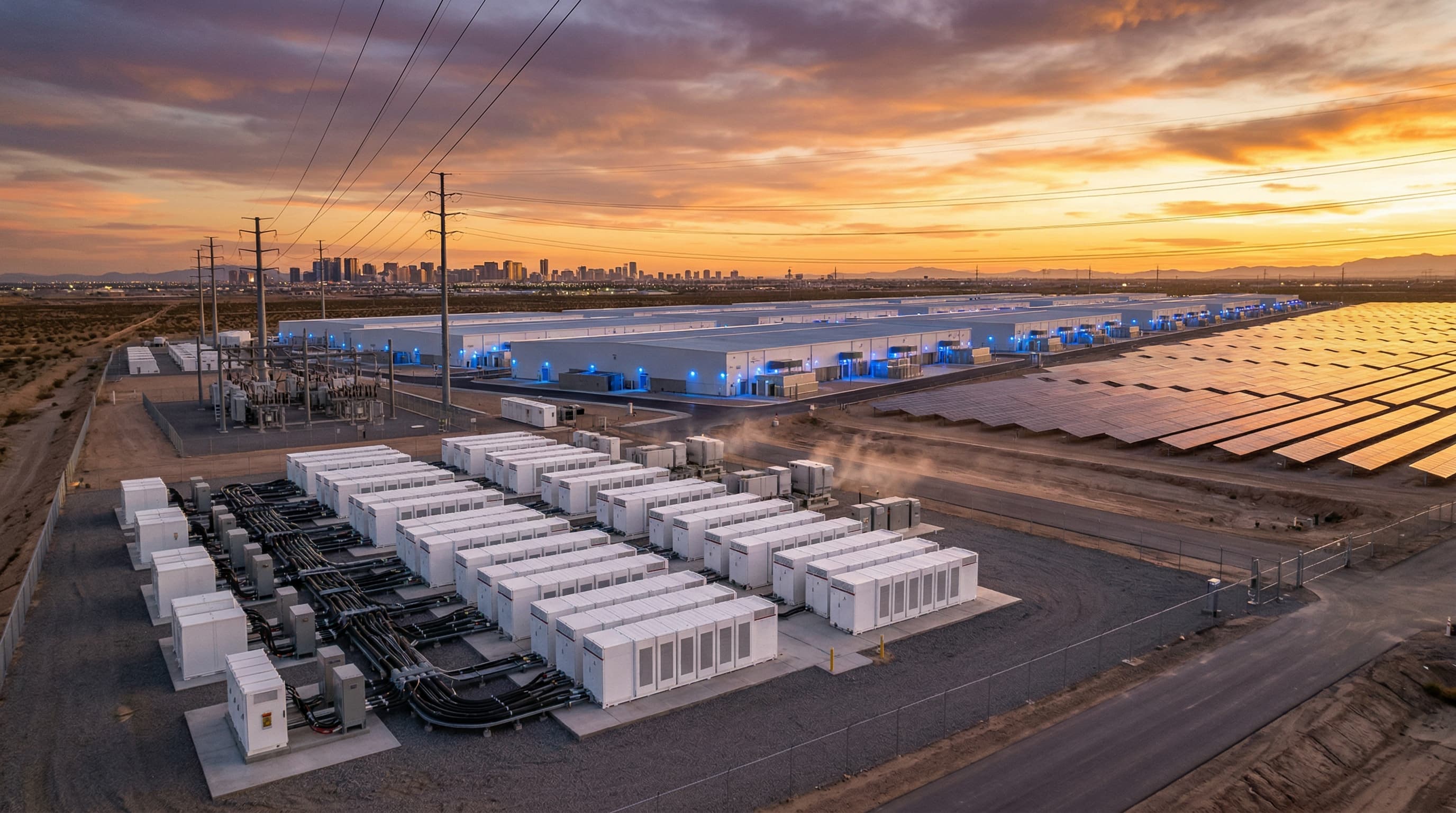
Fluence Energy installed a 10 MW / 40 MWh system at a European edge hub in March 2026. Installed costs fell to USD 150/kWh (Fluence data), down 20% from 2025 levels.
Distributed Battery Storage Scales Rapidly
Deployments span 100 kW / 400 kWh behind-the-meter units to 5 MW clusters. Sodium-ion batteries reduce costs to USD 80/kWh, versus lithium-ion's USD 120/kWh.
Contemporary Amperex Technology (CATL) delivered 2 GWh of sodium-ion packs to APAC edge sites in Q1 2026. These packs deliver 85% RTE over 5,000 cycles at 80% depth of discharge (DoD), per Sandia National Labs tests. Sodium-ion specs include 160 Wh/kg and 320 Wh/L energy density, behind lithium-ion's 250 Wh/kg and 650 Wh/L, but with superior safety (no thermal runaway risk).
Tesla's 2026 Powerpack offers 210 kWh capacity at 250 Wh/kg and 650 Wh/L. It supports vehicle-to-grid (V2G), yielding USD 50/kW-year in ancillary services revenue.
Guidehouse Insights projects a USD 12 billion edge storage market by 2030, with 40% CAGR tied to AI workloads. Lithium-ion LCOS drops to USD 0.08/kWh for 4-hour systems.
Battery Chemistry Comparison
| Chemistry | Energy Density (Wh/kg) | Energy Density (Wh/L) | Cycle Life (80% DoD) | Cost (USD/kWh) | RTE (%) | |-----------|-------------------------|-----------------------|----------------------|----------------|---------| | Lithium-ion | 250 | 650 | 4,000 | 120 | 95 | | Sodium-ion | 160 | 320 | 5,000 | 80 | 85 | | Iron-air | 45 | 100 | 100/year | 20 | 75 |
Data from Sandia Labs and IRENA (April 2026). Lithium-ion leads density; sodium-ion wins on cost and supply.
Grid Resilience Technologies Advance
US FERC Order 2222 enabled wholesale market access for batteries since 2025. Utilities aggregate 1 GW of distributed storage across the Americas.
EU Battery Regulation requires 20% storage in new data centers from 2027. Cloudflare's EMEA revenue rose 35% (Q1 filing). Flow batteries provide 10-hour duration at USD 200/kWh LCOS and 75% RTE.
Form Energy's iron-air batteries target long-duration energy storage (LDES). A 100 MW / 5,000 MWh Texas pilot serves edge clusters at USD 0.02/kWh over 100 cycles annually, with 45 Wh/kg density and multi-day discharge.
Supply Chain and Geopolitical Pressures
Lithium supply tightens from Australian and Congolese mines. Recycled packs cut costs 30% (IRENA, April 2026). China controls 80% of cathode production (Benchmark Mineral Intelligence).
Solid-state batteries reach 400 Wh/kg at TRL 6. QuantumScape plans 2028 edge pilots with 500 Wh/L density.
US Inflation Reduction Act (IRA) tax credits cover 30% of storage costs through 2032. California mandates 5 GW distributed capacity by 2030.
Cloudflare allocates USD 100 million for 2026 edge hardware. Fluence targets 500 MW co-deployments by 2028.
Western scaling faces hurdles from trade policies and raw material pricing volatility.
Investment Outlook Amid Cloudflare AI Revenue Shift
Cloudflare AI revenue shift underscores edge computing dominance. Distributed power solutions drive battery adoption. BloombergNEF sees USD 50 billion opportunities by 2030.
Grid resilience supports AI growth. Q2 2026 deployments signal commercial scale-up. Developers focus on hybrid solar-storage-V2G for 99.99% uptime.