Kansas State University researchers unveiled AI-driven crop resilience technology on April 11, 2026, via EurekAlert. Drones and AI select wheat varieties yielding 28% more biomass per hectare for energy storage feedstocks. The method targets drought-prone regions.
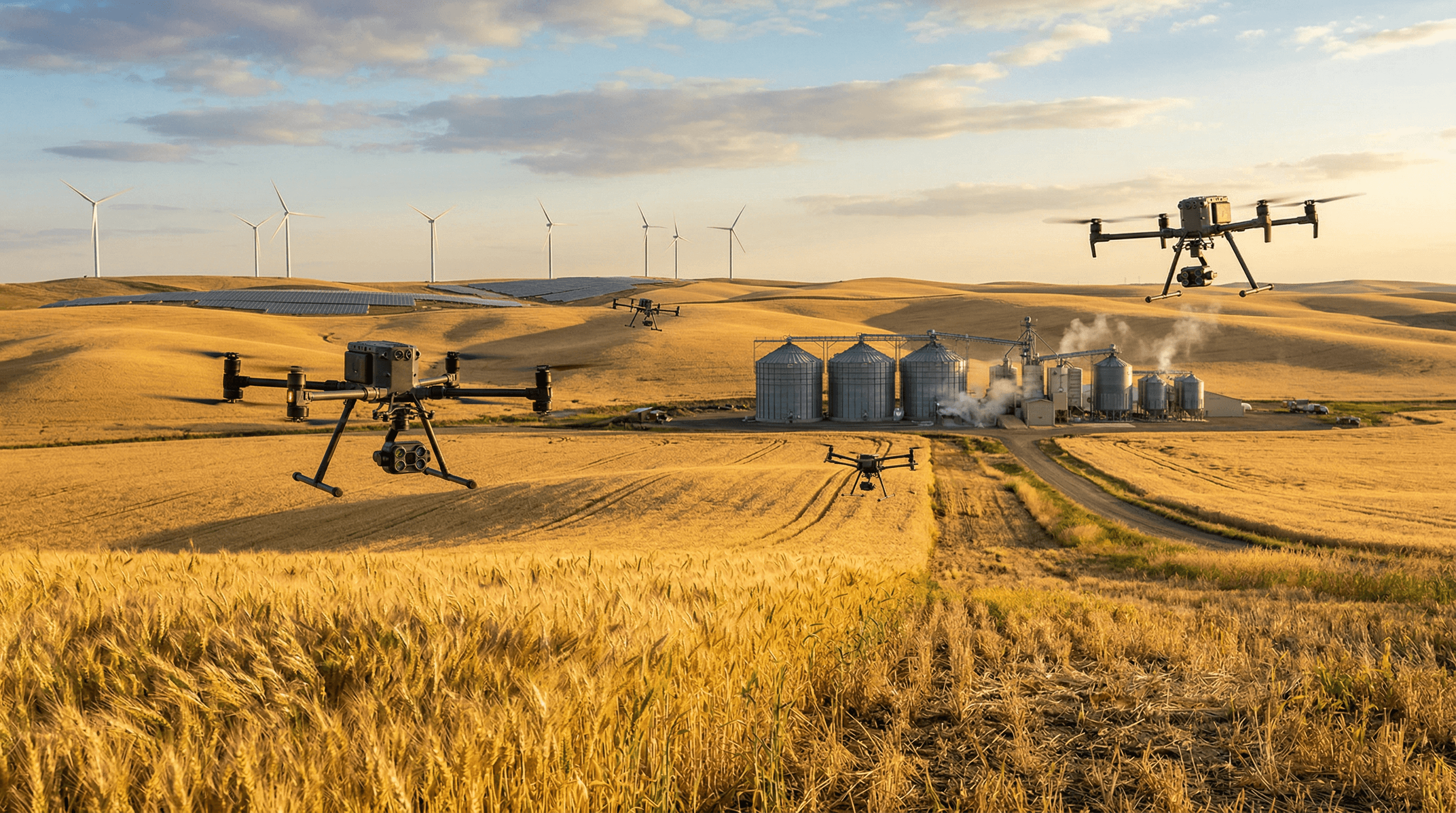
Drones capture hyperspectral imagery across Kansas test fields. AI algorithms score plants for resilience traits at 92% accuracy, Kansas State University reports.
Researchers ran field trials over 150 hectares. Selected wheat endured 40% less water stress than controls. Dry biomass hit 15 metric tons per hectare.
Drone-AI Phenotyping Mechanics
Drones operate at 50 meters with multispectral cameras. They scan fields daily through growth stages. AI models trained on 10,000 images using TensorFlow detect chlorophyll loss and stress markers.
The system identifies top performers for seed banking. It slashes processing from weeks to hours. Project lead Dr. Maria Gonzalez says it shortens hybrid cycles from five to two years.
Resilient wheat fuels biomass pellet production. Pellets serve as dispatchable storage in hybrid renewables.
Biomass Yield Gains and Energy Potential
Selected varieties delivered 28% higher biomass than baselines over three drought seasons, Kansas State University data shows. Yields reached 15 metric tons per hectare at 12% moisture.
This generates roughly 270 GJ per hectare thermal energy (15 t/ha × 18 GJ/ton), or 75 MWh equivalent, per standard conversions. Pellets offer 18 GJ/ton content, BloombergNEF confirms, with six-month shelf life.
Production costs drop to USD 120/ton at scale. Wheat biomass powers combustion turbines to bridge solar/wind gaps. Combined heat and power reaches 35% round-trip efficiency, NREL benchmarks state.
Iowa's 50 MW biomass plant runs similar feedstocks. It meets 10% of local grid firming needs yearly.
Grid Integration and Storage Synergies
Biomass pellets complement lithium-ion batteries in hybrids. They dispatch power at peaks. Wood Mackenzie projects 15% lower LCOS (levelized cost of storage).
Droughts slashed US biomass output 20% in 2025, USDA reports. AI selection holds yields to 5% variance.
Pilots add on-farm pellet storage. Drones track crops and silos. Trials extend to vehicle-to-grid biofuel integration.
Economic models forecast USD 2.5 billion in biomass storage investments by 2030. Kansas State ties 40% growth to resilient feedstocks. Farmers earn USD 250/hectare premiums.
Supply Chain and Financial Rigor
Wheat biomass cuts reliance on wood pellets, leveraging US grain infrastructure for supply chain security amid logging disruptions, USDA notes. Cathode makers eye stable cellulosic inputs.
AI licenses cost USD 50,000 upfront per farm. Drone ops run USD 10,000 yearly. Trials show 18-month payback via premiums.
Ag-tech firms raised USD 30 million last month. Investors target LCOS at USD 0.08/kWh.
APAC scales drones over 500,000 hectares by 2028. EMEA accesses EU Battery Directive funds.
Nebraska co-op deploys 20 drones on 5,000 hectares. Biomass climbed 22%. It feeds a 100 MWh thermal storage site.
Scale-Up Hurdles and Policy Support
Full scale demands 1,000-drone fleets. Current batteries cap flights at 45 minutes. Lithium-sulfur batteries promise two hours.
Teams rotate 50 varieties annually to maintain diversity, genomic analysis confirms.
US Farm Bill funds USD 500 million for AI ag-tech to 2028. States favor biomass in grid RFPs.
Australia aims for 20 t/ha yields with CSIRO trials next month. California pilots reduce curtailment 12% via wheat storage.
The Bottom Line
AI-driven crop resilience locks in biomass feedstocks for energy storage. It trims costs and lifts grid reliability. Hybrids drive adoption by 2030.