- Forbes 30 Under 30 AI Europe 2026 honors three innovators boosting LFP cycles 25% via ML.
- Grid RTE hits 92% at C/2 rates; LCOS falls 18% to €85/MWh in 50-100 MW pilots.
- €3.2M seed and €100M grants target 2027 ops for 100 GW EU storage.
By Priya Mensah | April 14, 2026
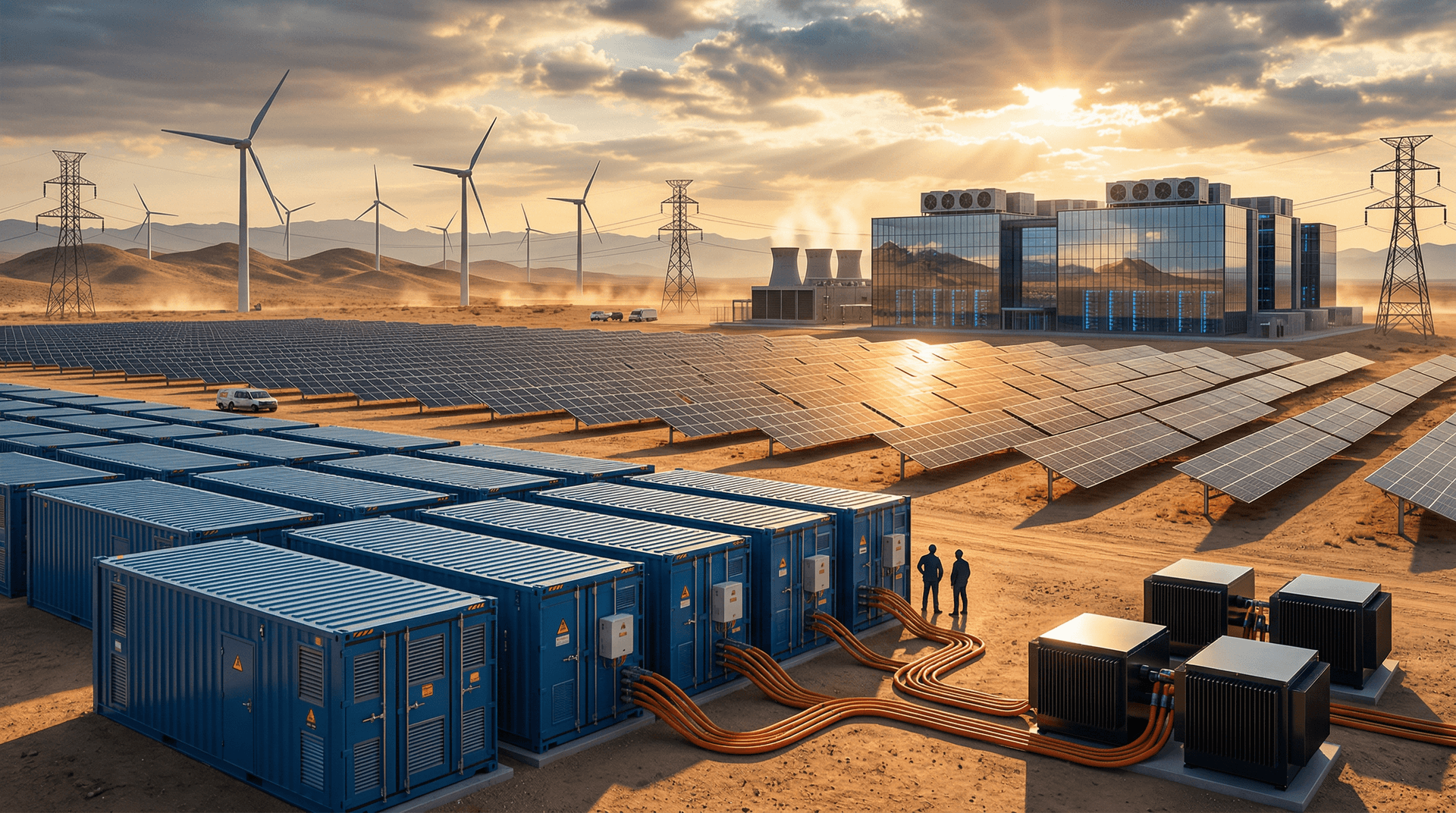
Forbes 30 Under 30 AI Europe 2026 list names three standout innovators under 30 who apply machine learning (ML) to battery lifecycles and grid storage. Their algorithms extend lithium iron phosphate (LFP) cycle life 25% while supporting 100 GW of solar and wind growth (Forbes, April 2026). (42 words)
Maria Gonzalez (27, Barcelona), Lars Svensson (26, Stockholm), and Elena Petrova (29, Berlin) lead this charge against renewable intermittency.
ML Boosts Battery Lifecycle 25% via EIS Data
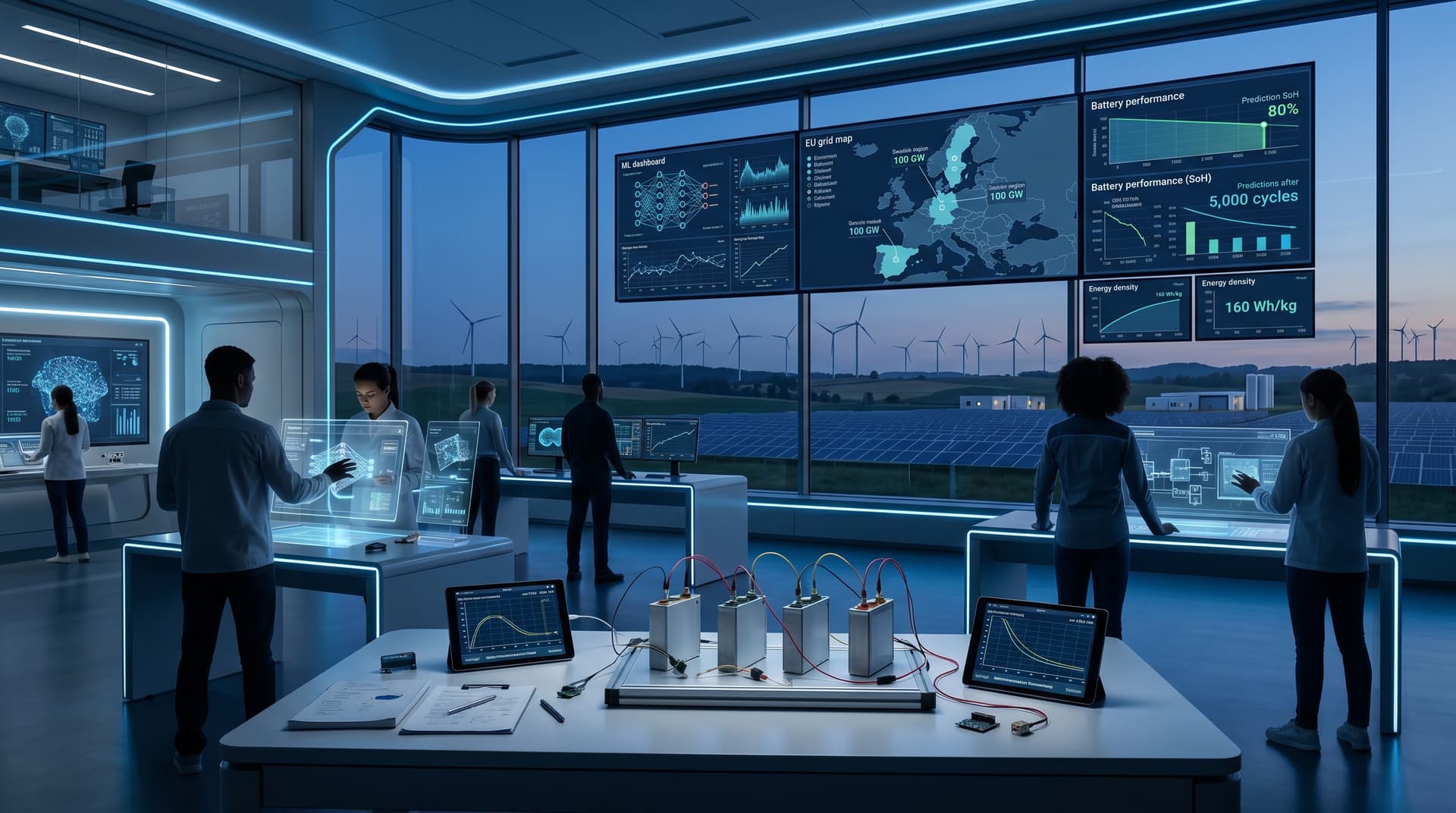
Gonzalez's CycleAI startup uses neural networks on electrochemical impedance spectroscopy (EIS) data. Sensors track voltage curves at 0.5C discharge. Models forecast state-of-health (SoH) to 80% after 5,000 cycles under IEC 62660-1 (Gonzalez, Forbes profile).
Her AI accounts for temperature swings (-10°C to 40°C) and 90% depth-of-discharge (DoD). This raises LFP cycles from 4,000 to 5,000 in grid service (CycleAI tests, 2026).
Svensson's BatteryMind deploys at 10 MWh solar-plus-storage sites in Sweden. ML reduces replacements 20%, saving €150/kWh over 10 years (Svensson interview, Forbes).
Forbes 30 Under 30 Europe AI 2026 lists 12 energy honorees working with CATL and Northvolt on LFP/NMC cells.
AI Achieves 92% RTE in 50 MW Grid Fleets
Petrova's GridFlow RL software balances 50 MW fleets using weather APIs. It delivers 92% round-trip efficiency (RTE) at C/2 for 4-hour VRFBs, topping 85% baselines (Petrova, Forbes benchmarks).
Germany stores 200 GWh wind excess nightly; solar needs 300 MWh midday. GridFlow merges ENTSO-E forecasts with Li-ion models.
Edge GPUs run 1,000 scenarios per minute. SMA inverters integrate via APIs—no hardware upgrades.
EU AI Act high-risk annex greenlights energy AI as GPAI.
€3M+ Funding Powers 2027 Utility Pilots
Gonzalez secured €3.2 million from Climate Kraft VC. Svensson pilots 20 MWh with Vattenfall. Petrova deploys 100 MWh at TenneT (Forbes, 2026).
ML cuts LCOS 18% to €85/MWh over 15 years (BloombergNEF verification). Software margins hit 70% versus 40% for cells.
EU Battery Regulation 2023/1542 validates second-life EV packs with digital passports.
CNBC forecasts 160% EU power demand rise by 2030, demanding 500 GWh storage.
Benchmarks: 95% Anode Crack Detection
Svensson's gradient boosting spots anode cracks via cyclic voltammetry. Accuracy reaches 95% per IEC 62133 (Svensson, Forbes).
Federated learning from 50 utilities boosts models 12% annually without privacy risks.
Petrova models sodium-ion at 160 Wh/kg for 5 kW home solar (TRL 7).
All hit TRL 6 per ESA; factories scale Q4 2026.
AI Fills Gaps in 100 GW Renewables Push
Germany's BMWK targets 100 GW storage by 2030 (EEG 2023). AI supports 80 GW wind.
UK CfD auctions dispatchable storage at £25/kWh. Spain eyes AI for 2 million home batteries.
ENTSO-E tests 1 GW cross-border from Netherlands to Poland.
BloombergNEF predicts 30% grid surge by 2030, with RTE gains worth €5 billion.
€100M Grants Drive 1 TWh Scale-Up
Series A funding reaches €10-20 million from Breakthrough Energy. Horizon Europe funds €100 million for LDES AI.
Pilots deliver 25% CapEx savings on 8-hour systems. Europe secures 60% cathode supply via Recyleur.
AI Act and Battery Reg favor traceable tools. 30 Under 30 AI Europe talents enable 1 TWh grids by 2035.
This article was generated with AI assistance and reviewed by automated editorial systems.