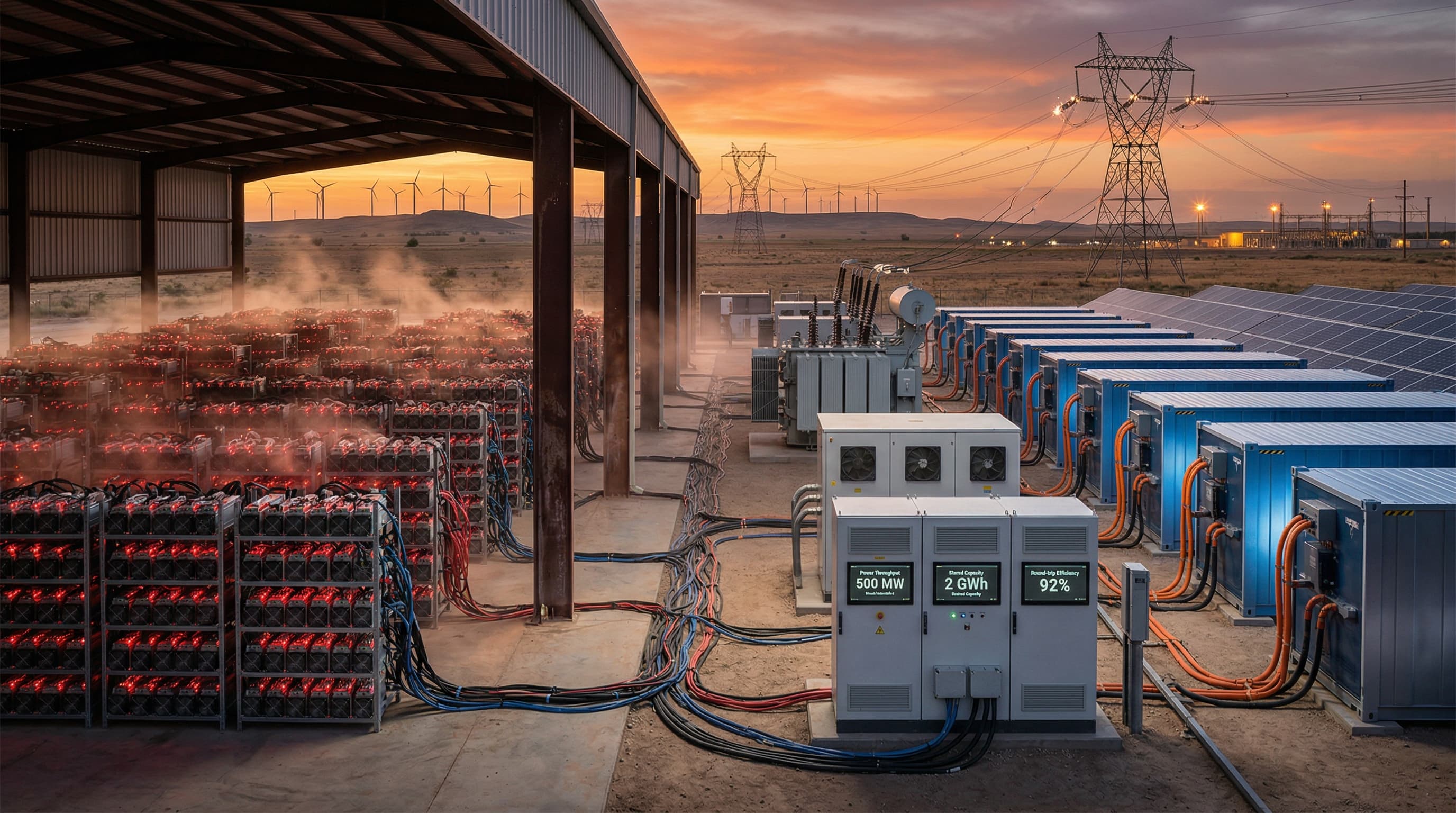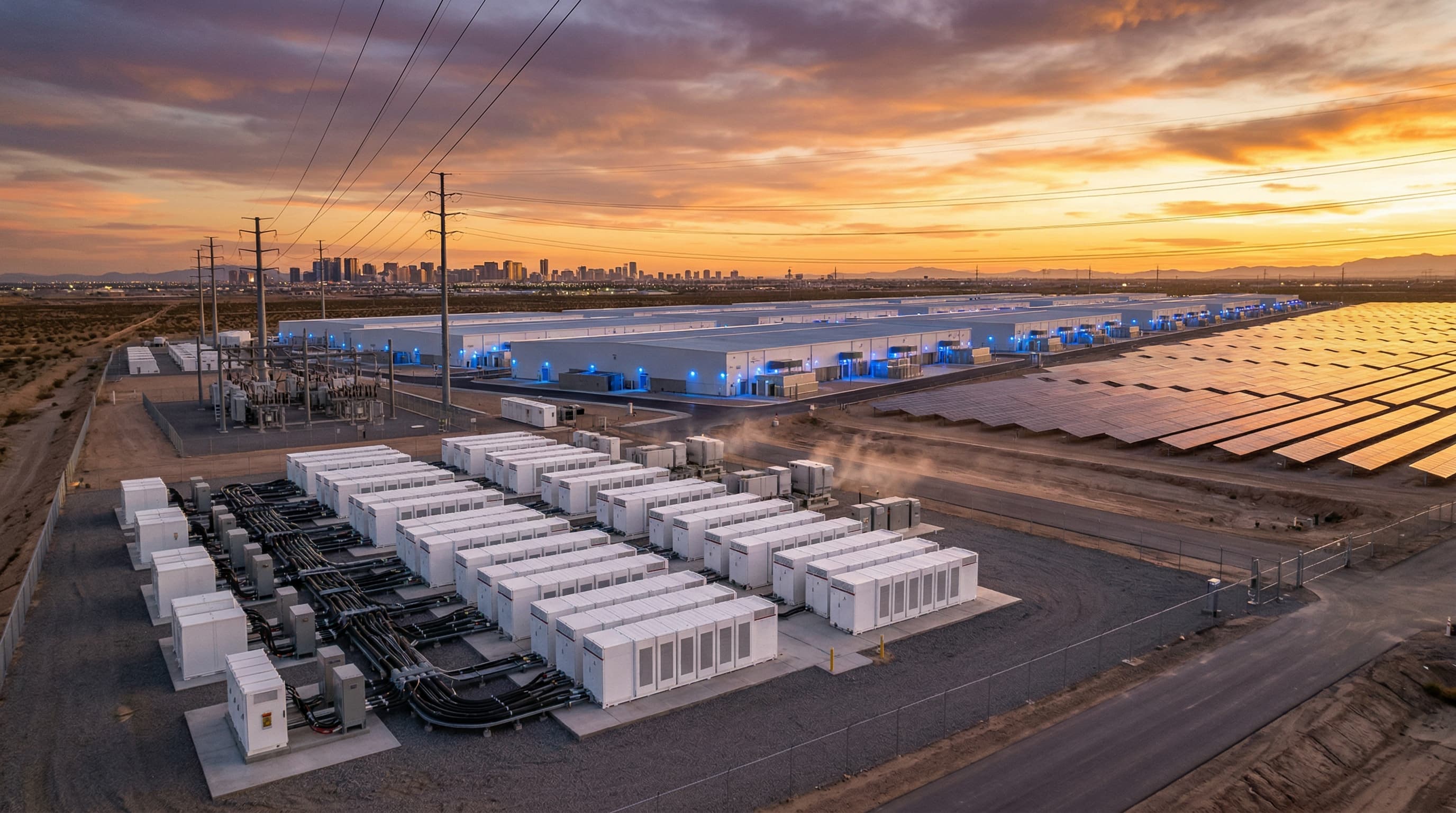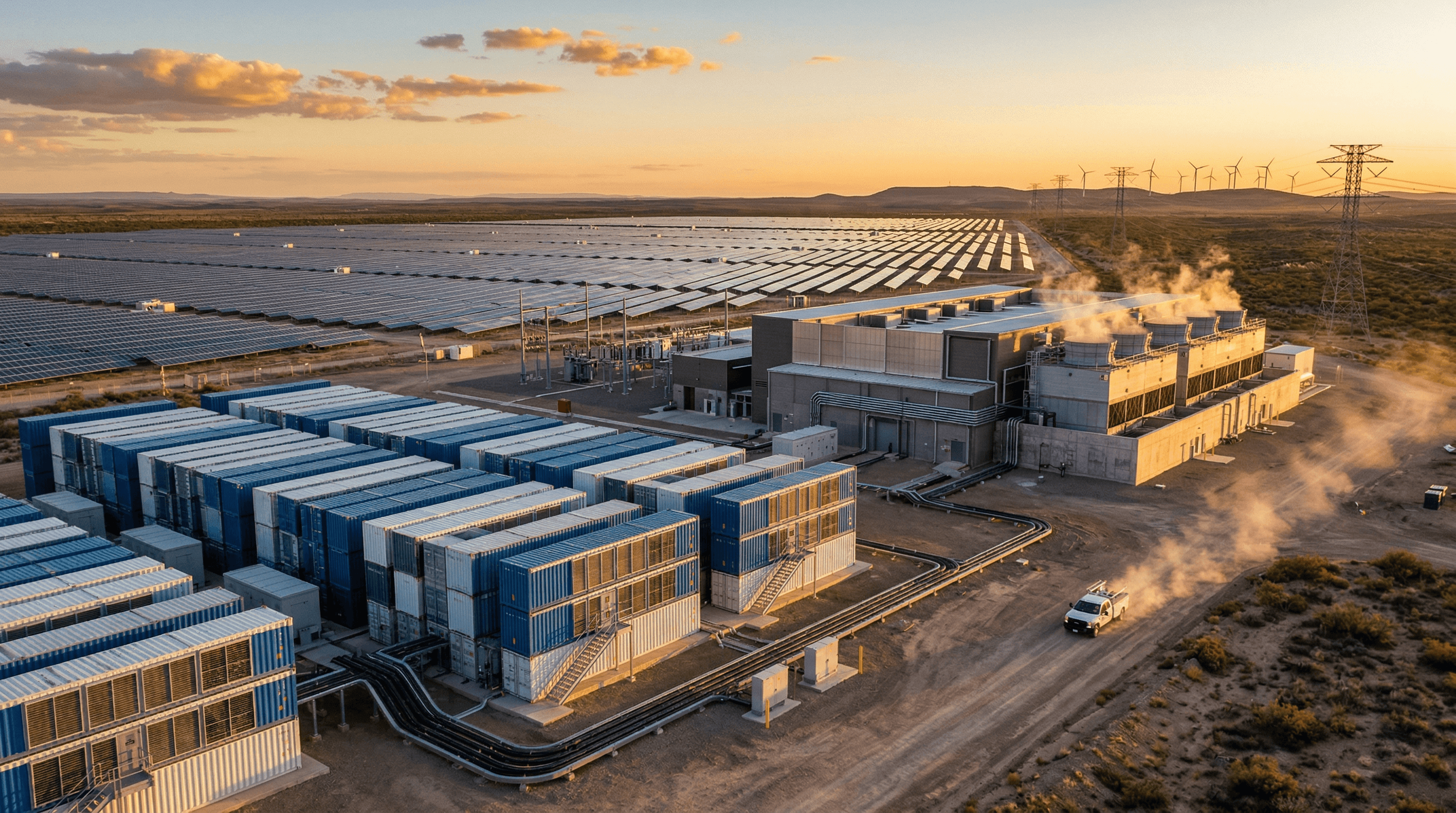
Utilities accelerate grid storage deployments. OpenAI's ChatGPT consumes 1.5 GWh daily, enough to power 50,000 US households, per Austin American-Statesman citing OpenAI data. AI workloads strain grids. Batteries manage peaks effectively.
Data centers consumed 460 TWh globally in 2024, per International Energy Agency. BloombergNEF projects AI demand reaching 1,000 TWh annually by 2028, or 4% of global electricity. Texas grids face 20% load growth from hyperscalers, per ERCOT filings.
AI Electricity Demand Accelerates Grid Storage Needs
ChatGPT processed 1.8 billion queries daily in Q1 2025, per OpenAI transparency report. Each query uses 2.9 Wh, totaling 1.5 GWh daily. GPT-5 training consumed 25 GWh last month, per Austin American-Statesman.
NVIDIA H100 GPUs draw 700 W each. A 10,000-unit cluster requires 7 MW continuously. Cooling adds 40% overhead, per Uptime Institute benchmarks, raising total to 10 MW. Data centers now account for 2% of US electricity, per EIA.
Microsoft and Google plan 100 GW new data center capacity by 2030, per Wood Mackenzie analysis. This equals 10% of current US generation capacity. Peaks clash with evening solar curtailment, per NREL duck curve studies.
Grid Challenges Intensify with AI Loads
ERCOT reported 15 GW data center load on April 9, 2025 - 15% of peak demand. California ISO imported 2 GW during spikes, per grid operator logs. FERC Order 2023 mandates storage for new interconnects, requiring 10-20% firm capacity.
Renewables generated 45% of US power in 2024, per EIA. Solar peaks midday. Evening duck curve ramps hit 50 GW/hour in California and Texas, per CAISO data.
Batteries discharged 5 GWh to shave Texas peaks last week, per ERCOT dashboard. Utilities now require 4-hour grid storage for 20% of new data center approvals, per FERC dockets.
Grid Storage Technologies Emerge for AI Peaks
Lithium-ion leads short-duration storage with 15 GW/60 GWh deployed globally by Q1 2025, per Rho Motion. Specs include 250 Wh/kg, 700 Wh/L, 5,000 cycles at 80% depth of discharge (DoD), and USD 140/kWh installed cost. Round-trip efficiency reaches 90% at 0.25C discharge, per IEC 62619 standards. Fluence shipped 2.5 GW to Virginia AI hubs last quarter.
Form Energy's iron-air batteries target 100-hour discharge at USD 20/kWh levelized cost of storage (LCOS), with 250 Wh/kg, 200 Wh/L, and 100 cycles. Microsoft backs 1.5 GW/150 GWh Texas project, commissioning in 2027. Pilot tests show 75% RTE at low C-rates, per company whitepaper.
Invinity's vanadium flow batteries offer 8-12 hours at 85% round-trip efficiency (RTE). Specs: 30 Wh/kg, 40 Wh/L, 20,000 cycles. Their 100 MW/1 GWh California system serves Google's data center, with 0.1C discharge rates.
CATL sodium-ion batteries hit USD 80/kWh pack cost, 160 Wh/kg, 300 Wh/L, 5,000 cycles. QuantumScape solid-state pilots 50 MW/200 MWh with PG&E: 500 Wh/kg, 1,000 Wh/L, 10,000 cycles at 90% DoD, per Nature Energy study.
Key Grid Storage Projects Scale Up
Tesla Megapacks reached 50 GWh cumulative by Q1 2025. A 2 GW/8 GWh (4-hour) Texas site powers ExxonMobil AI operations. It discharges 4 GWh nightly at 90% efficiency over 5,000 cycles, per Tesla investor update.
NextEra deployed 1.2 GW/4.8 GWh Florida project, co-located with data centers. Frequency regulation earned USD 50 million in Q1 revenue, with LCOS at USD 120/kWh, per earnings call transcript.
BYD exports 500 MWh monthly LFP packs to US at USD 70/kWh. Lithium prices fell to USD 12,000/tonne after 2024 oversupply, per Benchmark Mineral Intelligence. Northvolt's 5 GWh Sweden factory supplies Vattenfall's TRL-9 4-hour systems, tested to IEC 62933.
Europe added 10 GWh under EU Battery Directive 2023/1542, focusing on recycling mandates.
Cost Trends and Market Forecast Drive Investments
Grid storage costs dropped 18% to USD 140/kWh installed in 2024, per BNEF. AI fuels USD 50 billion capex by 2028. Long-duration energy storage (LDES) LCOS targets USD 50/kWh by 2030, per McKinsey.
BlackRock invested USD 2 billion in Plus Power's 10 GWh pipeline. YieldCos deliver 8% returns. US Inflation Reduction Act (IRA) credits cover 50% of costs for domestic production.
Manufacturing scales to 500 GWh/year capacity. Nevada and Georgia gigafactories mitigate import risks through localization, per US DOE reports. Supply chain shifts reduce China reliance from 80% to 60% by 2027.
Strategic Implications for Grid Storage
AI mandates 200 GW/1 TWh grid storage by 2030, per IEA. Batteries integrate renewables and avoid USD 100 billion in fossil peaker plants. Utilities track Q2 deployments in Texas and Virginia for commercial-scale proof.