By Priya Mensah | April 11, 2026
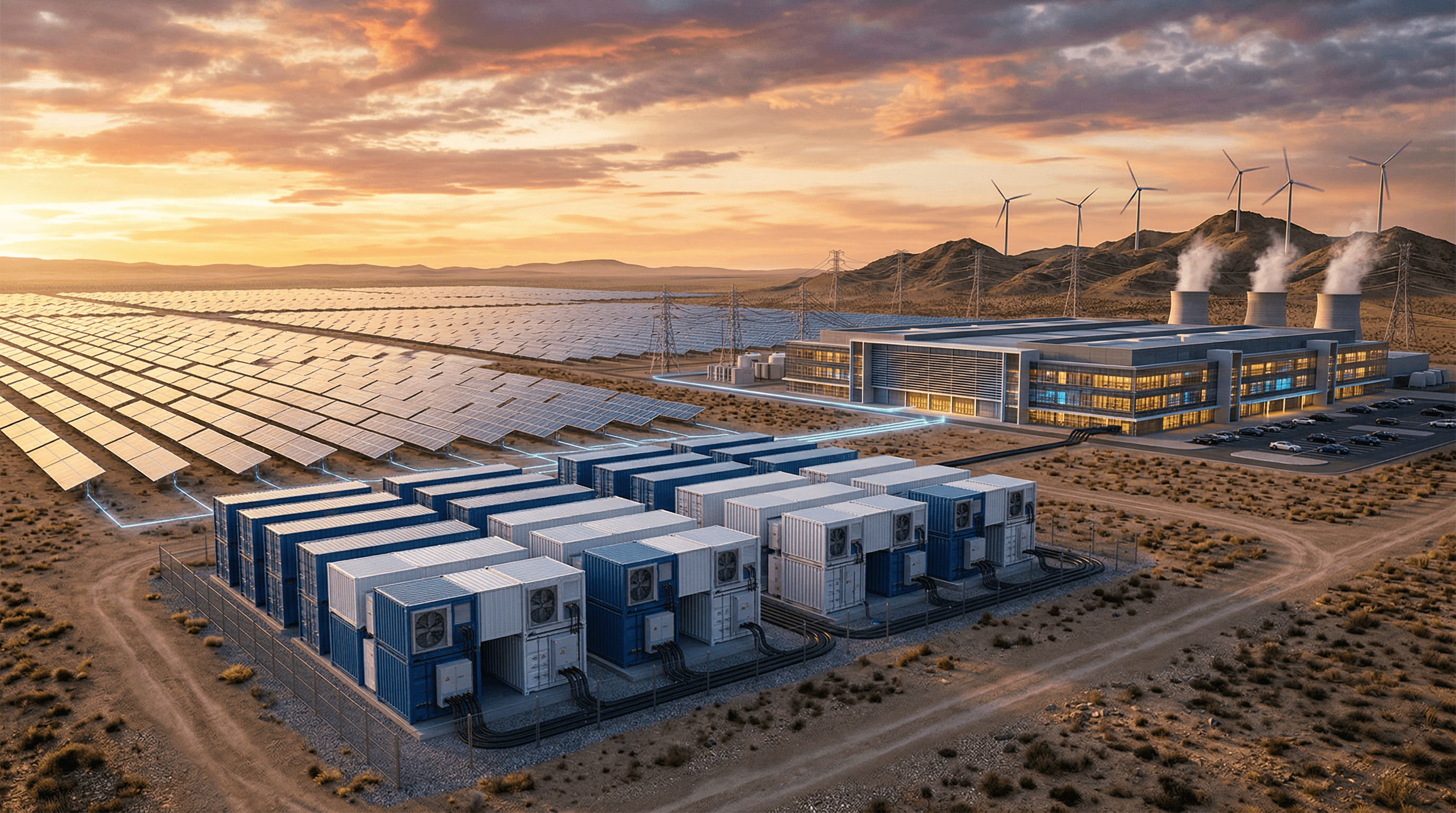
Amazon CEO Andy Jassy announced US$75 billion in AI capex on April 11, 2026, spurring demand for grid-scale batteries to power data center expansions amid surging AI compute needs.
Jassy shared the update during Amazon's Q1 2026 earnings call. AWS projects 25% revenue growth from AI services. Data centers consume 8% of US electricity, per US Energy Information Administration (EIA) data released April 11, 2026.
AI Training Escalates Power Demands
Large language models demand gigawatts of continuous power. Amazon plans 50 new data centers by 2027, each averaging 500 MW. BloombergNEF forecasts data centers will need 1,000 TWh annually by 2030, doubling current levels.
Renewables lag this growth. Solar and wind supply 40% of data center power in California, but intermittency requires storage. Lithium-ion grid-scale batteries achieve round-trip efficiency above 85% at 0.25C discharge, per National Renewable Energy Laboratory (NREL) benchmarks.
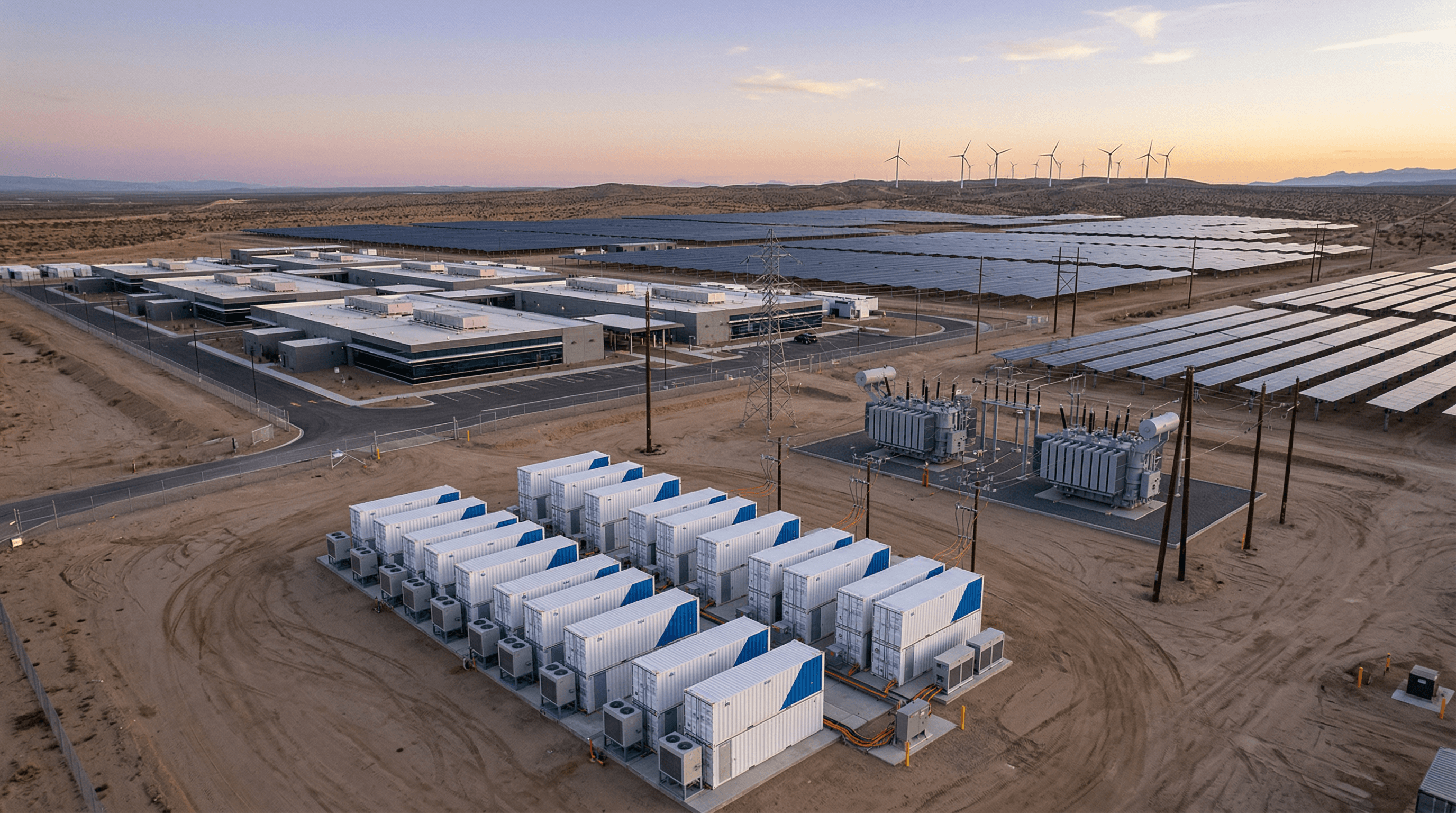
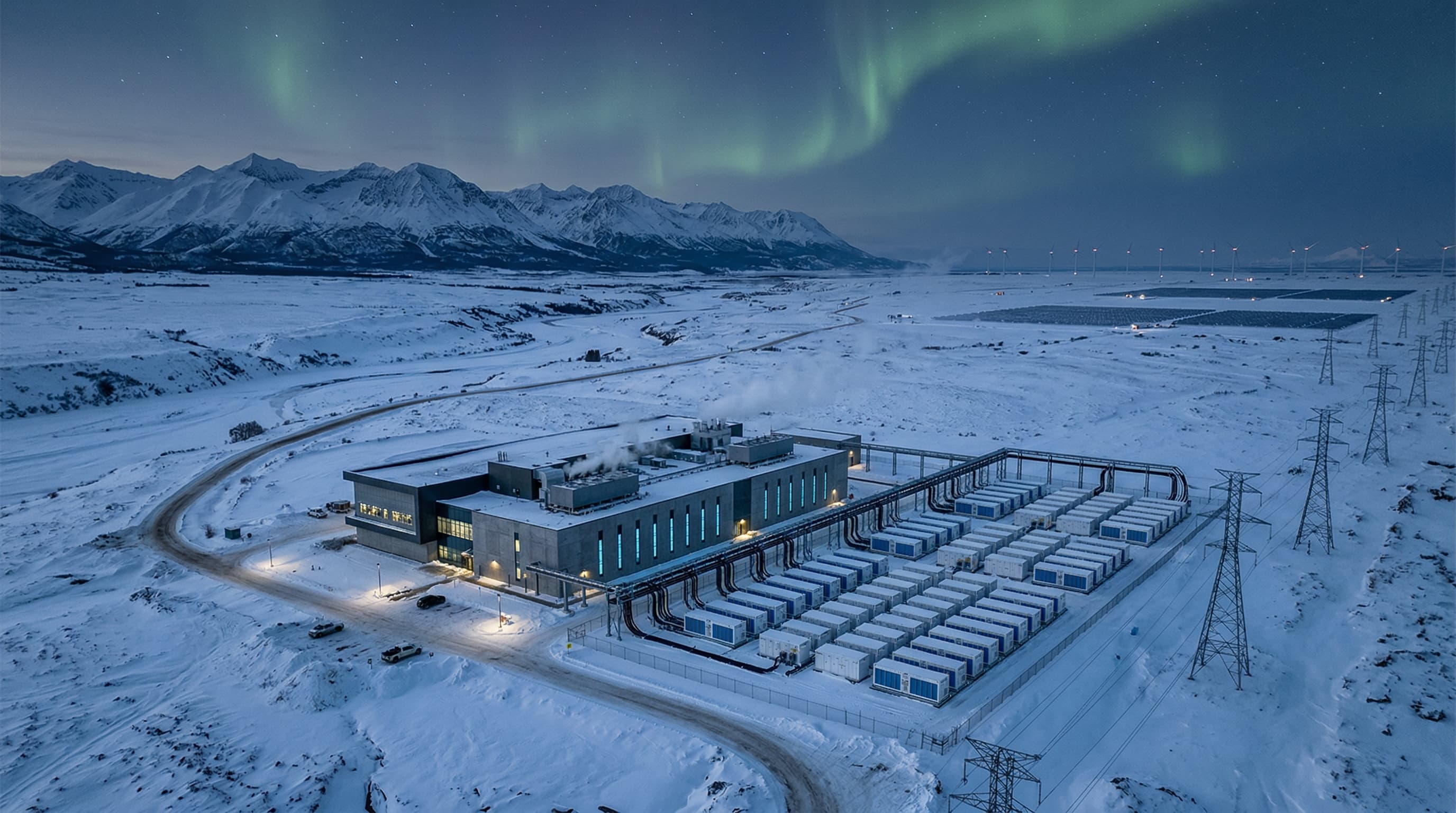
Amazon deploys 2 GWh of battery storage across US sites today. Jassy plans to triple this capacity within two years. These systems address grid constraints in Virginia and Texas data center hubs.
Grid-Scale Battery Technologies Advance
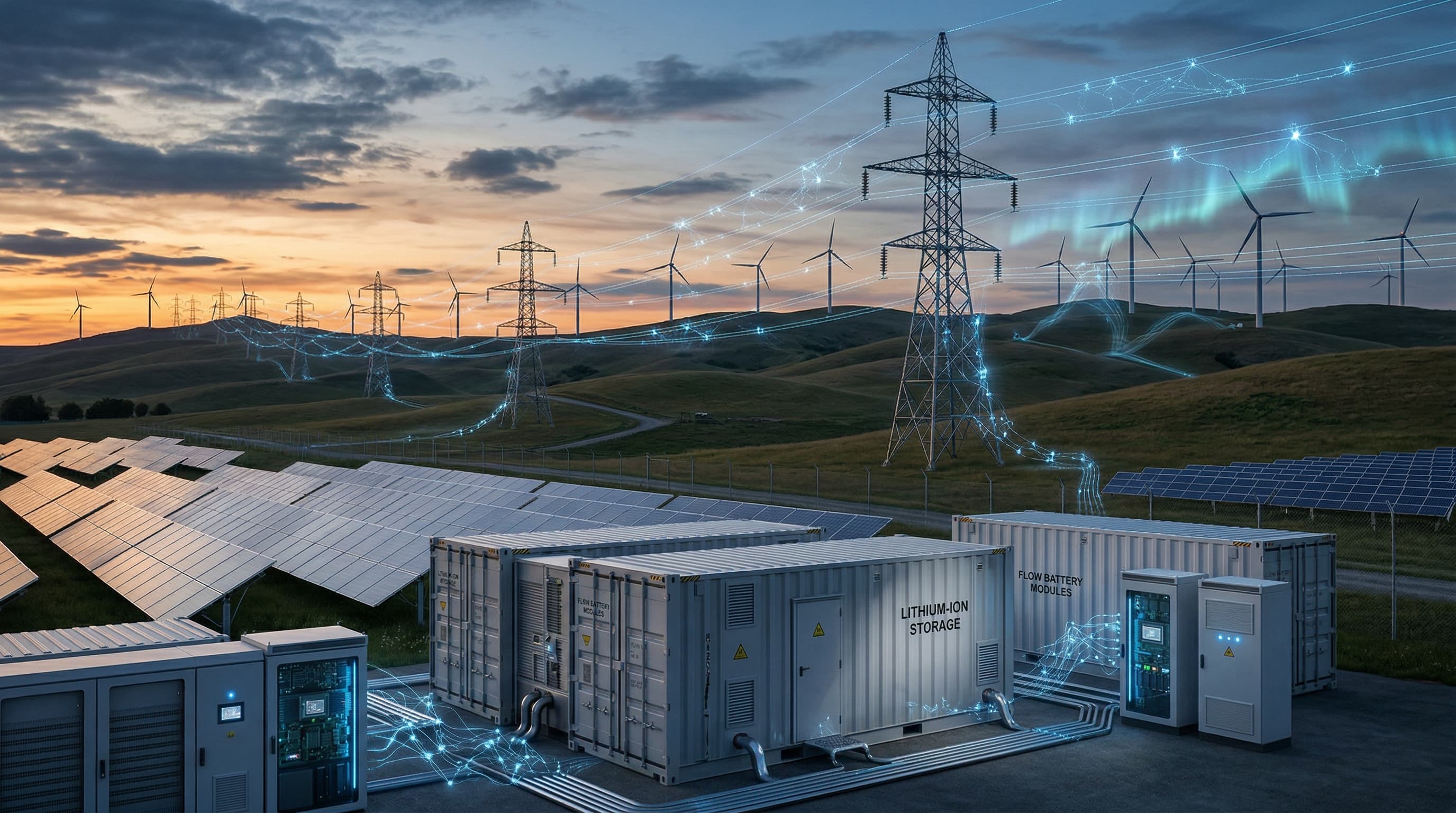
Lithium iron phosphate (LFP) batteries lead grid applications with 4-hour duration, 200 Wh/kg gravimetric energy density, 450 Wh/L volumetric density, and costs at US$132/kWh in 2025, per Wood Mackenzie. Fluence Energy supplies Amazon's commercial-scale 100 MW/400 MWh projects in Oregon.
Long-duration energy storage (LDES) targets 8-10 hour needs. Form Energy's iron-air batteries deliver 100-hour discharge at 50 Wh/kg and 100 Wh/L with US$20/kWh levelized cost of storage (LCOS). Amazon invested US$30 million in Form Energy last year to support 500 MW pilots.
Vanadium redox flow batteries scale effectively. Invinity Energy Systems partners with AWS on systems offering 30 Wh/kg, 35 Wh/L, 90% round-trip efficiency, and over 20,000 cycles with <1% degradation per year. These suit data centers' 24/7 baseload needs.
Commercialization Timelines Accelerate
Production scales align with Amazon's needs. CATL ramps LFP output to 500 GWh annually by 2027. BYD targets 300 GWh for grid packs from US factories operational since 2025.
Manufacturing readiness levels (MRL) reach 9 for LFP at commercial scale. NREL reports 95% capacity retention after 5,000 cycles at 80% depth of discharge (DoD) per IEC 62660-1 standards. Solid-state batteries lag at MRL 6, with grid viability in three years per QuantumScape.
Supply chains recover from 2025 shortages. Lithium prices fell 40% to US$12,000/tonne, per Benchmark Mineral Intelligence. Sub-US$100/kWh packs become feasible by 2028.
Market Projections and Competitors
Global grid-scale battery demand reaches 250 GWh in 2026, up 50% year-over-year, per Rystad Energy. Data centers claim 20% share, rivaling utility-scale solar pairings. Tesla Energy leads with 15 GWh deployed, but Amazon challenges this dominance.
Microsoft and Google follow suit. Microsoft secures 10.5 GW renewables plus 5 GWh storage through 2030. Google pursues 24/7 carbon-free energy with 2 GWh batteries in Finland.
Hyperscalers drive 70% of new US interconnections, per Grid Strategies LLC. FERC Order 2023 accelerates hybrid projects like 300 MW solar with 1.2 GWh storage.
Policy and Regional Dynamics
US Inflation Reduction Act (IRA) tax credits enhance viability. Investment tax credits cover 30-50% of battery costs for data center co-location. Texas mandates 5 GW storage by 2028.
EU Battery Regulation requires 16% recycled content by 2031. Amazon adds 500 MWh BESS to Irish data centers amid €10 billion grid upgrades.
China holds 80% manufacturing share and supplies US projects via Mexico to avoid tariffs.
The Bottom Line
Amazon's US$75 billion AI capex cements grid-scale batteries' role in data center reliability. Hyperscalers spur 100 GWh annual deployments by 2028. Track CATL production and Form Energy pilots for key milestones. This boom reshapes supply chains and drives LCOS below US$100/kWh.