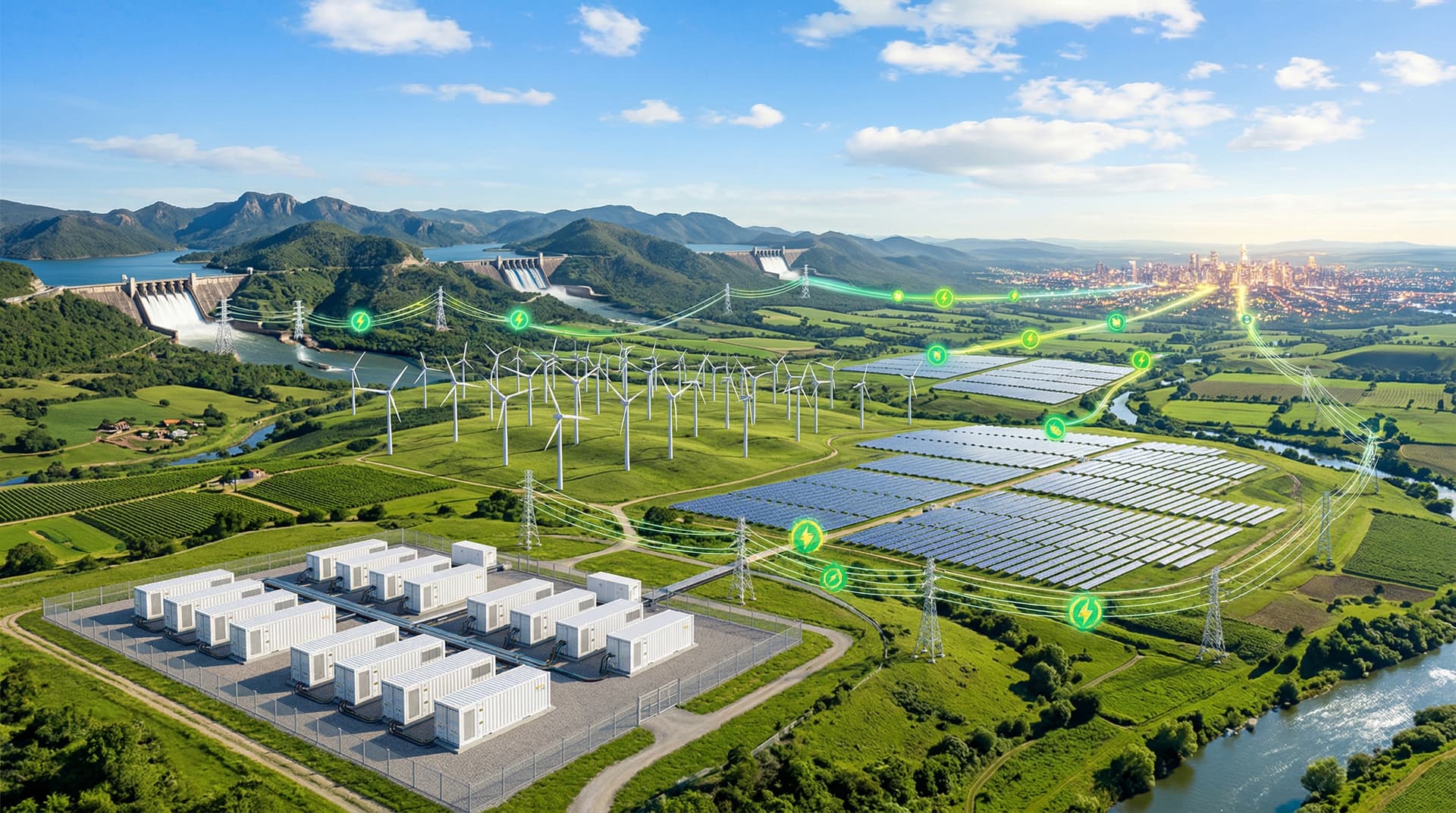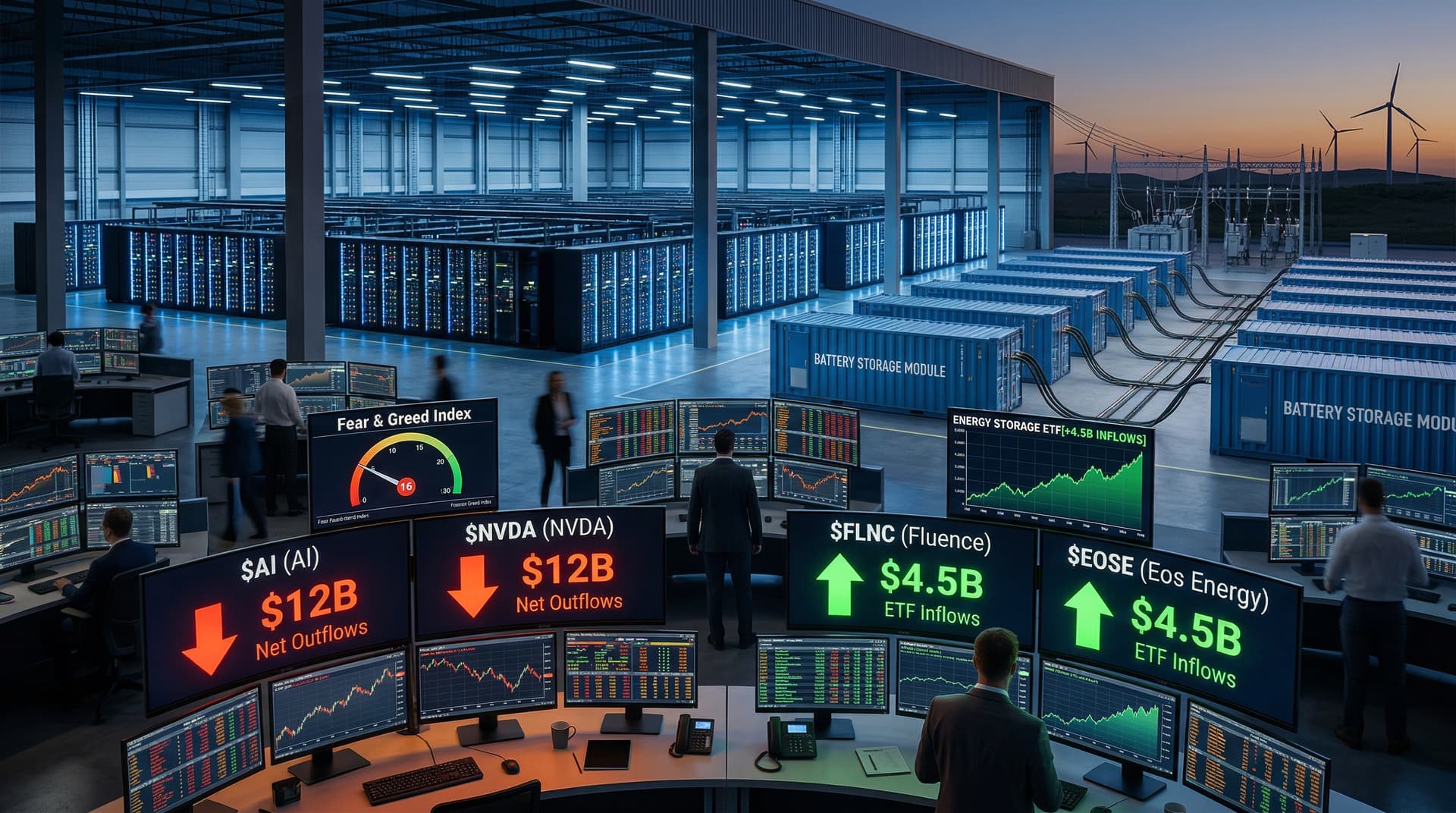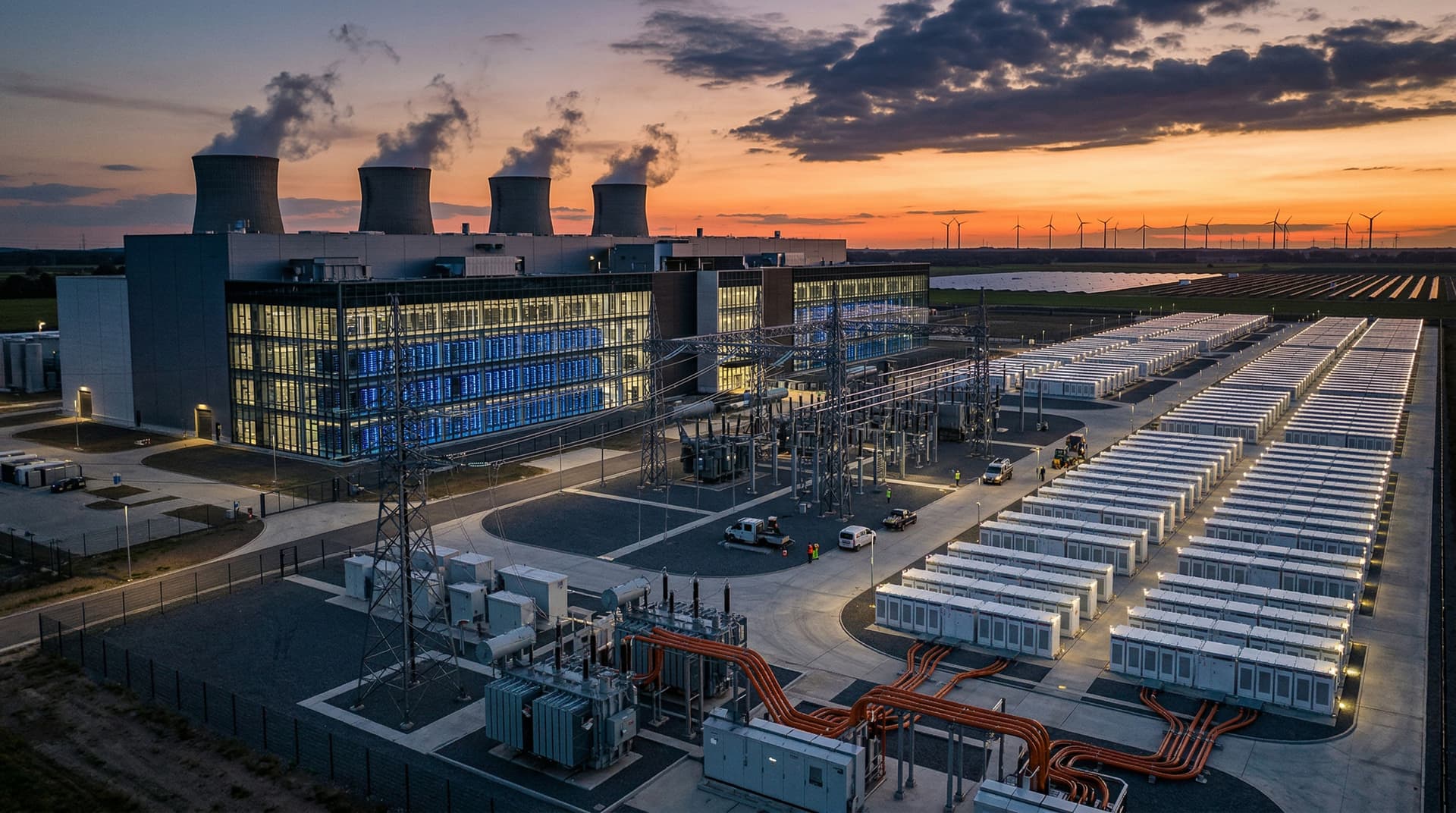
ACP reports U.S. developers added 2.8 GW of grid-scale battery storage in Q1 2026, up 25% from Q1 2025. AI data center co-locations accounted for 35% of new capacity. Developers cite USD 50/MWh ancillary service revenues as key drivers.
AI data centers consumed 4.5 GW across the Americas in Q1 2026, Wood Mackenzie reports. Hyperscalers expand rapidly. Battery storage co-locates with facilities to manage peaks.
AI Data Centers Drive Record Power Demand
Microsoft announced 5 GW of new AI data center capacity in Virginia on April 12, 2026. Projects target 2028 commissioning. Each site demands 500 MW grid connections.
Google deployed 1.2 GW of AI compute in EMEA last quarter, per company filings. Facilities require 24/7 power at 99.999% reliability. Downtime costs operators USD 10,000 per minute, IDC estimates.
EIA statistics record total U.S. data center load at 20 GW in 2025. Projections reach 35 GW by 2028. AI tripled average server power to 1 kW.
Co-location with data centers grew 40% year-over-year in Q1 2026, BloombergNEF data shows. Systems offer 4-hour duration at 200 MW scale.
Battery Storage Projects Meet Hyperscaler Needs
Tesla Energy commissioned a 300 MW / 1.2 GWh system at Meta's Texas data center on April 12, 2026. It delivers frequency regulation and arbitrage. Installed costs hit USD 180/kWh.
NextEra Energy won a 500 MW / 2 GWh contract for Amazon AWS in Oregon. Commissioning targets Q4 2026. Revenue stacks capacity payments and wholesale energy sales.
Fluence supplied 150 MW / 600 MWh to Google's Finland facility. Round-trip efficiency reached 92% under IEC 62619 standards. The project taps EU Battery Directive incentives covering 30% of capex.
Installed costs dropped to USD 165/kWh for 4-hour systems, NREL benchmarks indicate. Lithium iron phosphate (LFP) cells hold 60% market share at 160 Wh/kg energy density and 6,000 cycles. Sodium-ion pilots target 8-hour duration at 140 Wh/kg.
Policy Frameworks Boost Battery Storage Adoption
IRA Section 48 provides 30-50% investment tax credits for batteries through 2032. FERC Order 2023 accelerates interconnections. Data center RFPs now prioritize storage.
California's SB 100 requires 5 GW of storage by 2028. PG&E pairs 1 GW with data centers. ERCOT queued 800 MW for AI loads on April 12, 2026.
EU Net-Zero Industry Act funds EUR 40 billion in grid tech. Tenders aim for 10 GWh by 2027. China adds 30 GW annually.
Lawrence Berkeley Lab counts 150 GW in U.S. interconnection queues. Approval times fell to 18 months. Grid operators cluster data center loads.
Grid Upgrades Lag AI Data Center Demand
PJM's April 12, 2026, study identifies USD 5 billion in upgrades for 10 GW data center load. Batteries defer 40% of costs. Transmission capacity must double in key nodes.
MISO reports 12 GW queued, with batteries offsetting 3 GW thermal retirements. ISOs forecast 15% CAGR for AI growth through 2030. Wholesale prices rose 20% in demand zones.
Form Energy's 100-hour iron-air system (30 kWh/m³ density, 5,000 cycles) powers a 10 MW hyperscaler pilot in Georgia. Ambri's liquid metal batteries achieve USD 20/kWh LCOS.
GM and PG&E test 50 MW V2G with EV fleets for backup. Second-life batteries provide 20% capacity at USD 80/kWh.
Market Forecasts Signal Battery Storage Boom
Wood Mackenzie projects 120 GW global additions by 2030. Data centers drive 25%. Deployments hit 25 GW in 2026.
BNEF sees 4-hour lithium-ion LCOS at USD 120/MWh by 2028. Flow batteries reach USD 140/MWh for 10 hours. Supply chains secure 1.5 million tons LFP cathode material yearly.
Entergy issued RFPs for 2 GW on April 12, 2026. Models stack USD 80/MWh arbitrage and USD 30/MWh capacity.
PitchBook tracks USD 15 billion in Q1 2026 storage equity. YieldCos like Clearway buy 1 GW at 8x EBITDA.
The Bottom Line
AI data centers propel battery storage to 30 GW annual U.S. installs by 2028. Developers benefit from policy tailwinds, falling USD 165/kWh costs, and LFP supply chains. Grid upgrades unlock USD 500 billion in value.