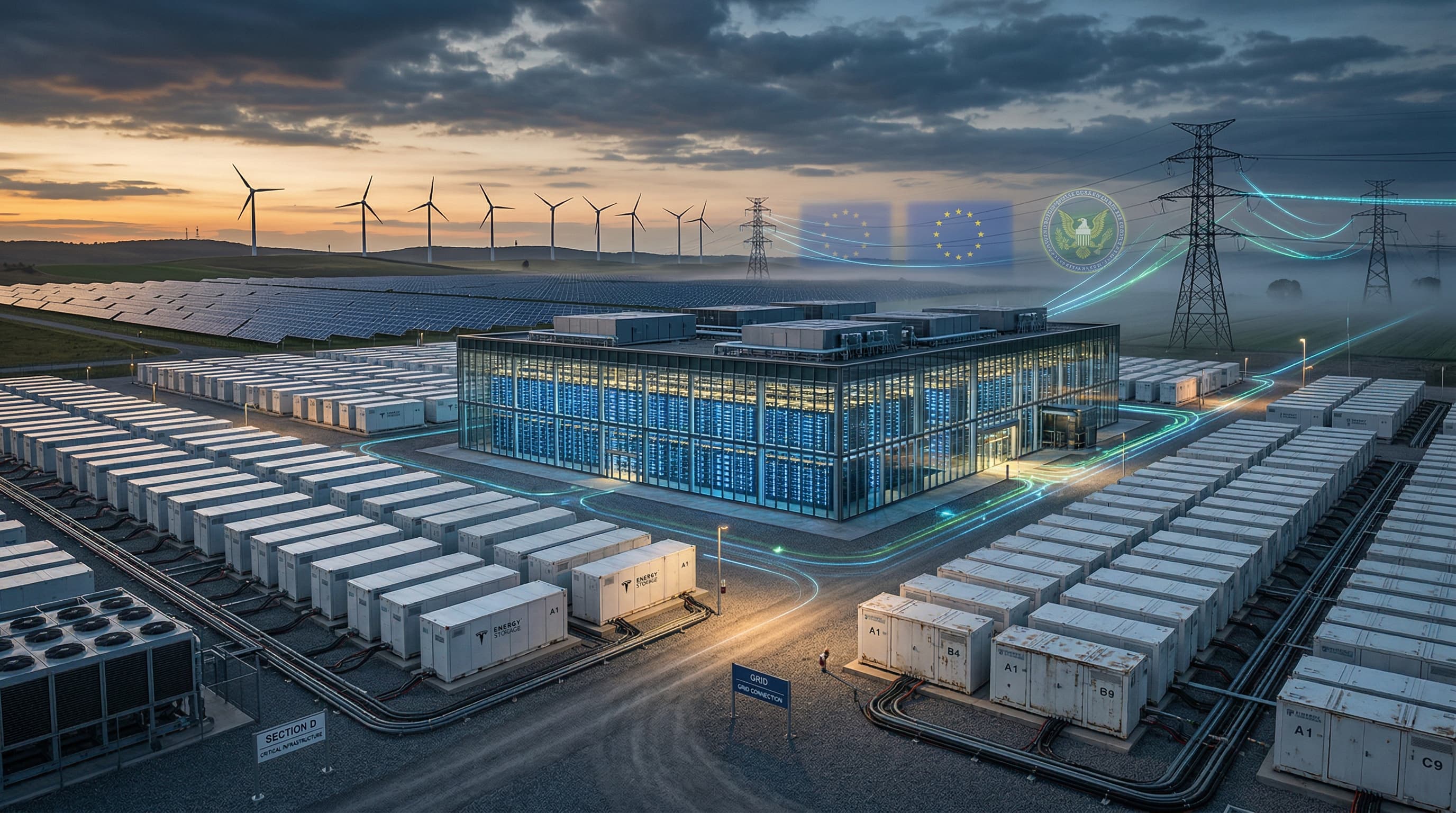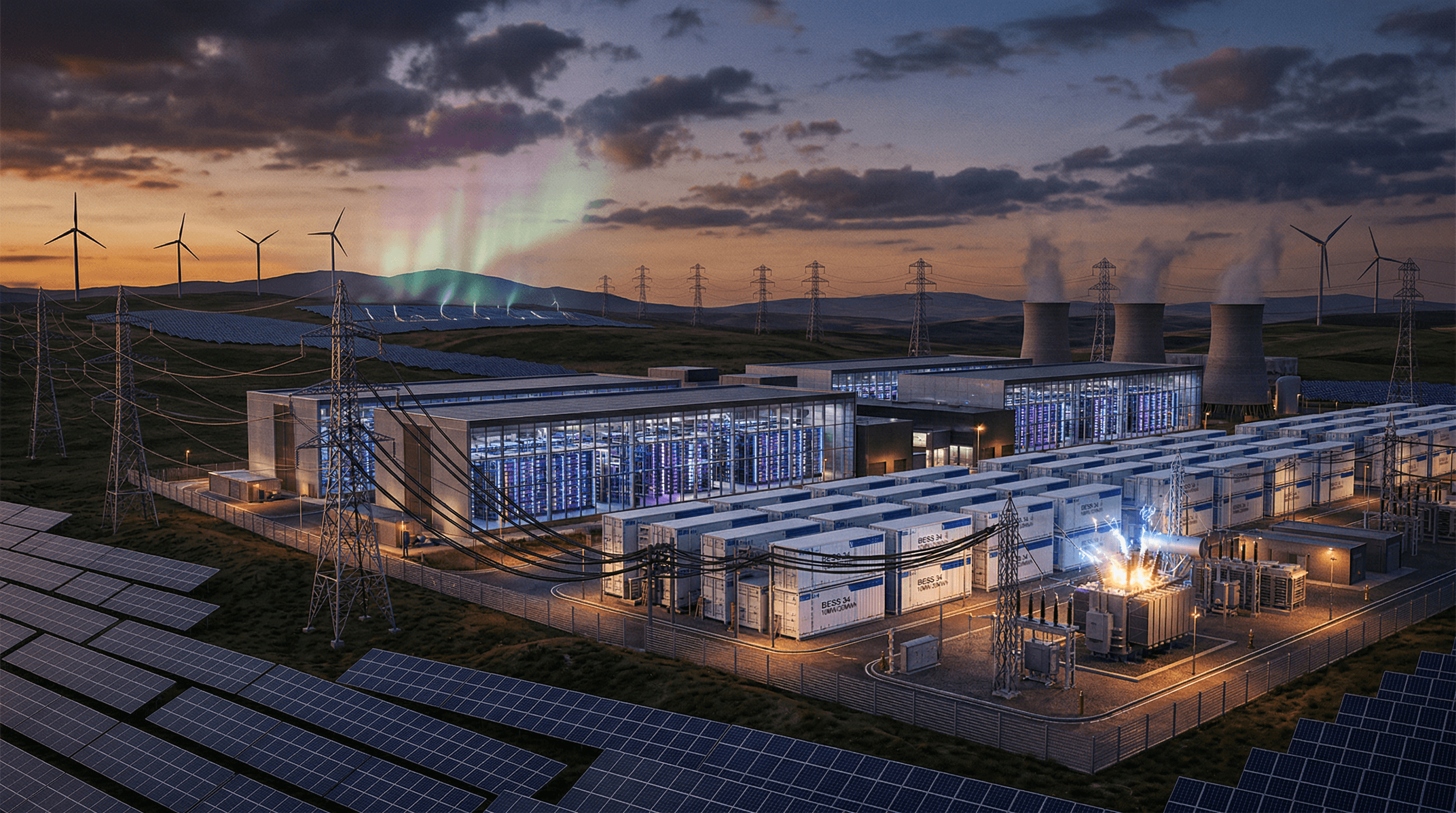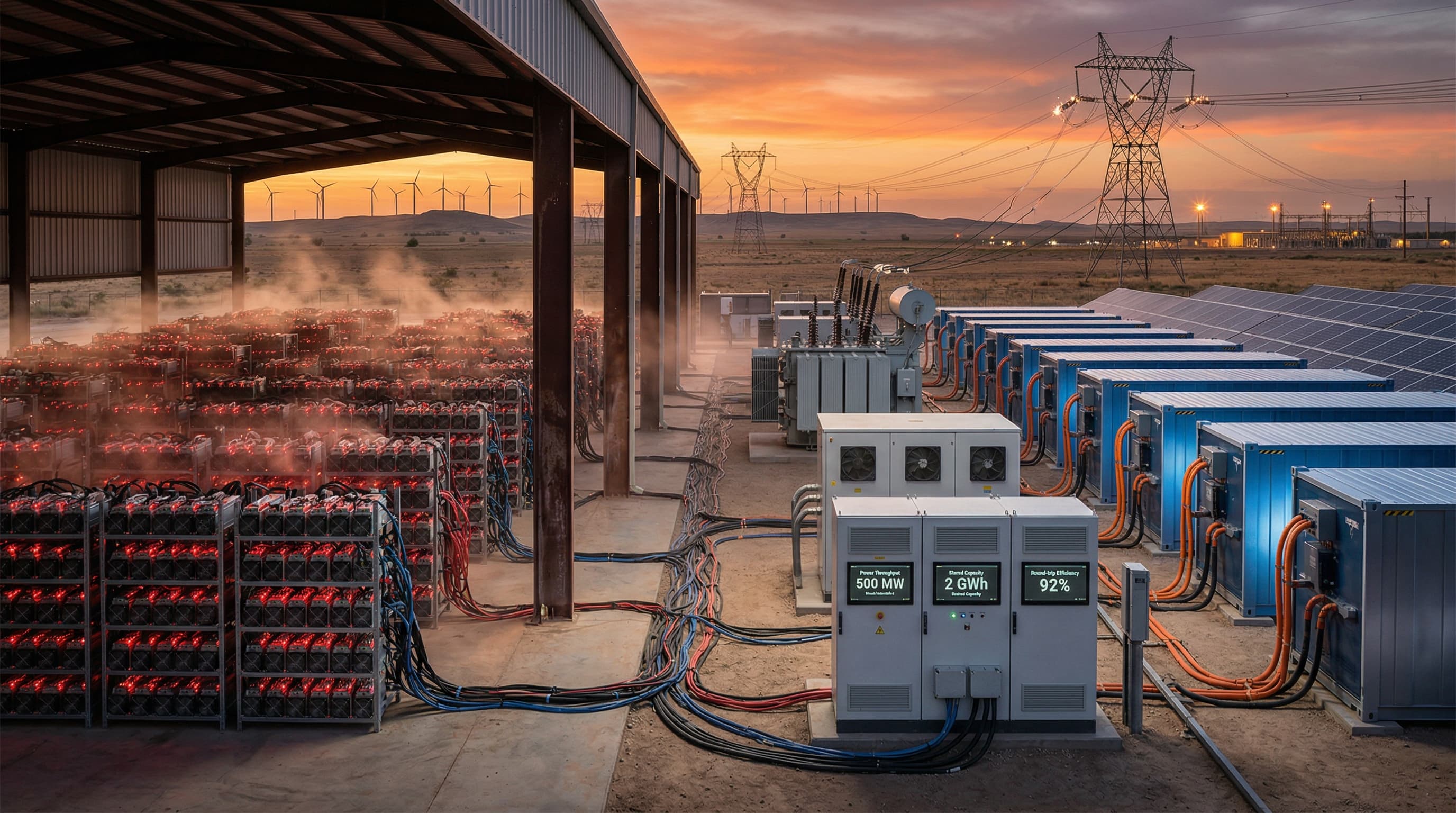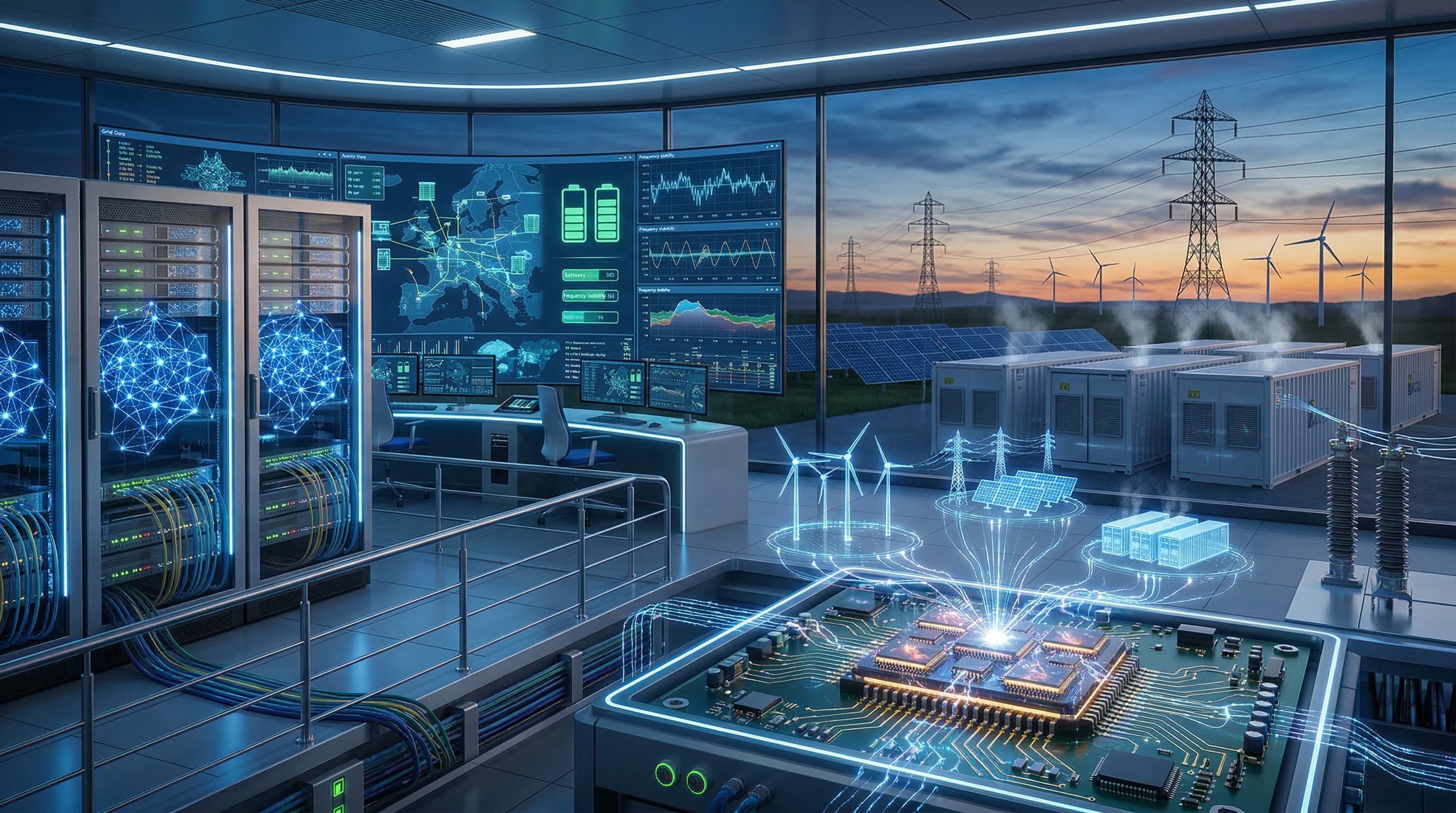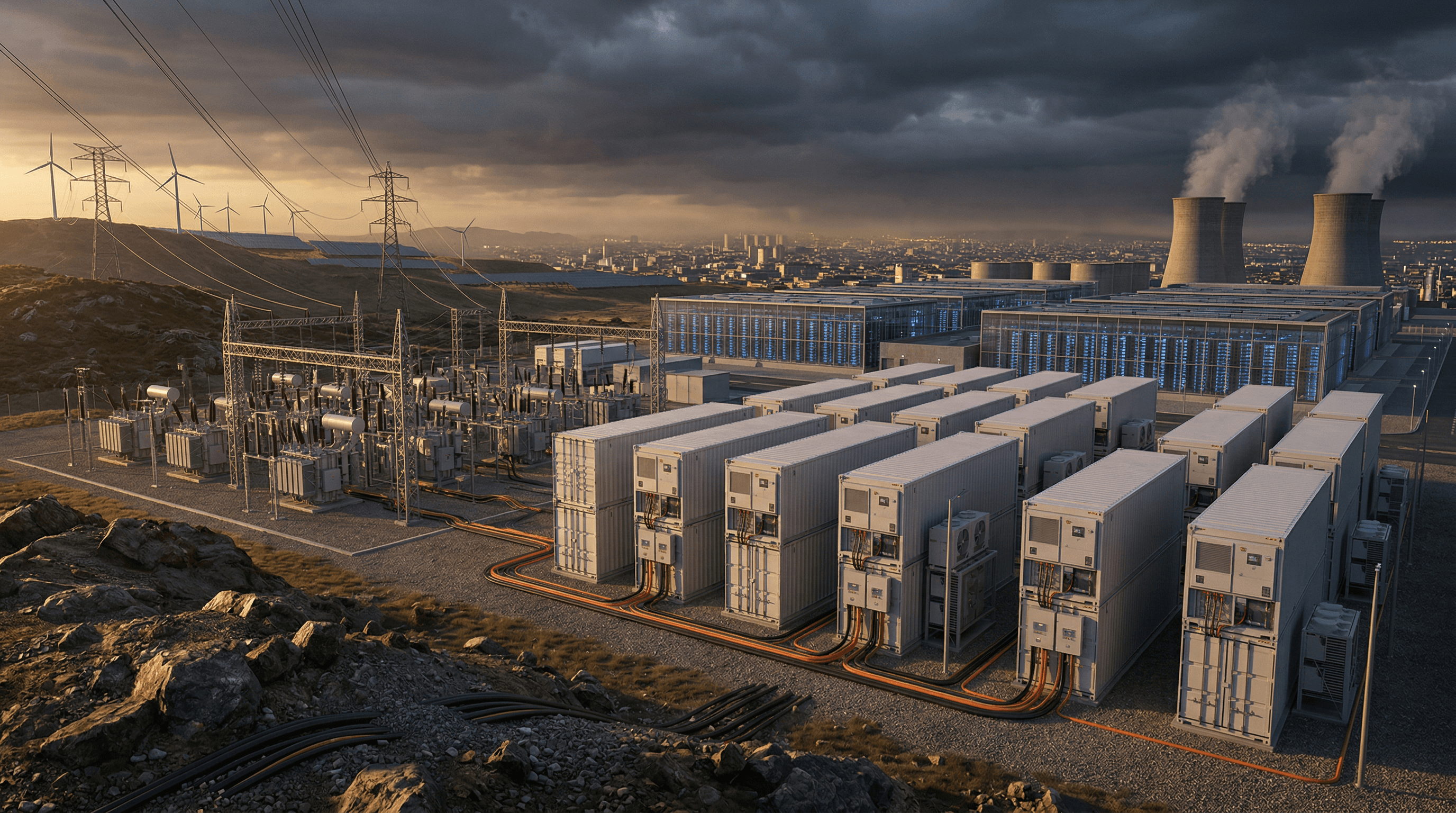
AI energy demands from data centers will consume 10% of global electricity by 2030. Brookings Institution released this projection in its April 10, 2026, report. Grid storage provides a critical solution.
The report, "Global Energy Demands in the AI Regulatory Environment," analyzes power needs for AI training and inference. AI workloads consumed 2% of world electricity in 2025, per International Energy Agency (IEA) data. Brookings forecasts a fivefold rise by 2030.
AI Power Consumption Projections
AI data centers used 460 TWh in 2025, matching Japan's annual electricity, IEA reports. Brookings projects 2,500 TWh by 2030, equivalent to the European Union's current output. Larger models and denser clusters drive growth.
Google and Microsoft plan 100 GW of new data center capacity by 2030, per US Energy Information Administration (EIA) filings. Each gigawatt trains models 10 times larger than 2023 GPT-4 equivalents. Cooling adds 40% to power draw.
Facilities peak at 500 MW during training, per operator data. Virginia and Texas grids saw 20% load increases from data centers since 2024, EIA confirms.
Grid Impacts and Reliability Risks
US grids face 50 GW of new AI demand by 2028, overloading transmission for legacy loads. PJM Interconnection warned of Mid-Atlantic shortfalls on April 5, 2026. Interventions curb blackout risks.
Europe's ENTSO-E projects 150 TWh extra by 2030, or 5% of supply. China's State Grid anticipates 300 GW additions, increasing coal use without storage.
Renewables worsen mismatches. Solar and wind supply 35% of US daytime power but fall 70% at night, National Renewable Energy Laboratory (NREL) 2026 data shows. AI needs 24/7 dispatchable storage.
Grid Storage as Linchpin Solution
Brookings recommends 500 GWh of global grid storage by 2030 for AI peaks. Lithium-ion batteries deliver 85% round-trip efficiency at 4-hour duration, NREL benchmarks state. Costs dropped to USD 132/kWh in 2025, Wood Mackenzie reports.
Long-duration energy storage (LDES) advances. Form Energy's iron-air batteries target 100-hour discharge at USD 20/kWh. A 1 GWh Minnesota pilot retained 95% calendar life after 5,000 cycles, March 2026 company data confirms.
Vehicle-to-grid (V2G) adds capacity. California Energy Commission models 200 GWh from EVs by 2030. Ford and GM launched pilots with 10,000 vehicles on April 8, 2026, at 50 kW discharge per unit.
Flow batteries fit data centers. ESS Inc. deployed a 2 MW/8 MWh vanadium system at a Microsoft Arizona site in March 2026. It achieves 99% efficiency over 12,000 cycles.
Policy Frameworks for AI Energy Demands
Brookings urges power efficiency standards in AI rules. EU AI Act updates from January 2026 mandate energy disclosures for high-risk models. US FERC Order 2026, issued March 15, prioritizes storage interconnections.
Incentives boost storage. US Inflation Reduction Act extensions fund USD 10 billion for data center batteries through 2032. Australia's Clean Energy Regulator approved AUD 500 million (USD 330 million) for 5 GWh LDES on April 9, 2026.
G7 energy ministers meet in May 2026 for AI power pacts, Brookings suggests. China mandates 100 GW storage for data centers.
Markets react. Fluence Energy shares rose 8% to USD 28 on the Brookings news. Tesla Energy backlog reached USD 15 billion in Q1 2026 earnings.
Commercialization Challenges
Lithium demand for AI batteries hits 1 million tonnes by 2030, doubling output, Benchmark Mineral Intelligence forecasts. CATL's sodium-ion offers 160 Wh/kg at 30% lower cost; 5 GWh production starts Q2 2026.
Grid upgrades cost USD 2 trillion by 2030, Brookings estimates. US transmission delays average 7 years, EIA data. Co-located microgrids reduce times to 18 months.
Hyperscalers invest. Amazon committed USD 4 billion to 10 GWh Virginia storage in February 2026. Google partners with Nevora on 50 MW/200 MWh systems for 90% renewable matching.
The Bottom Line on AI Energy Demands
Brookings projects AI energy demands at 2,500 TWh by 2030, transforming grids. 500 GWh storage at under USD 100/kWh unlocks USD 500 billion investments. Track FERC queues and EU AI Act enforcement.