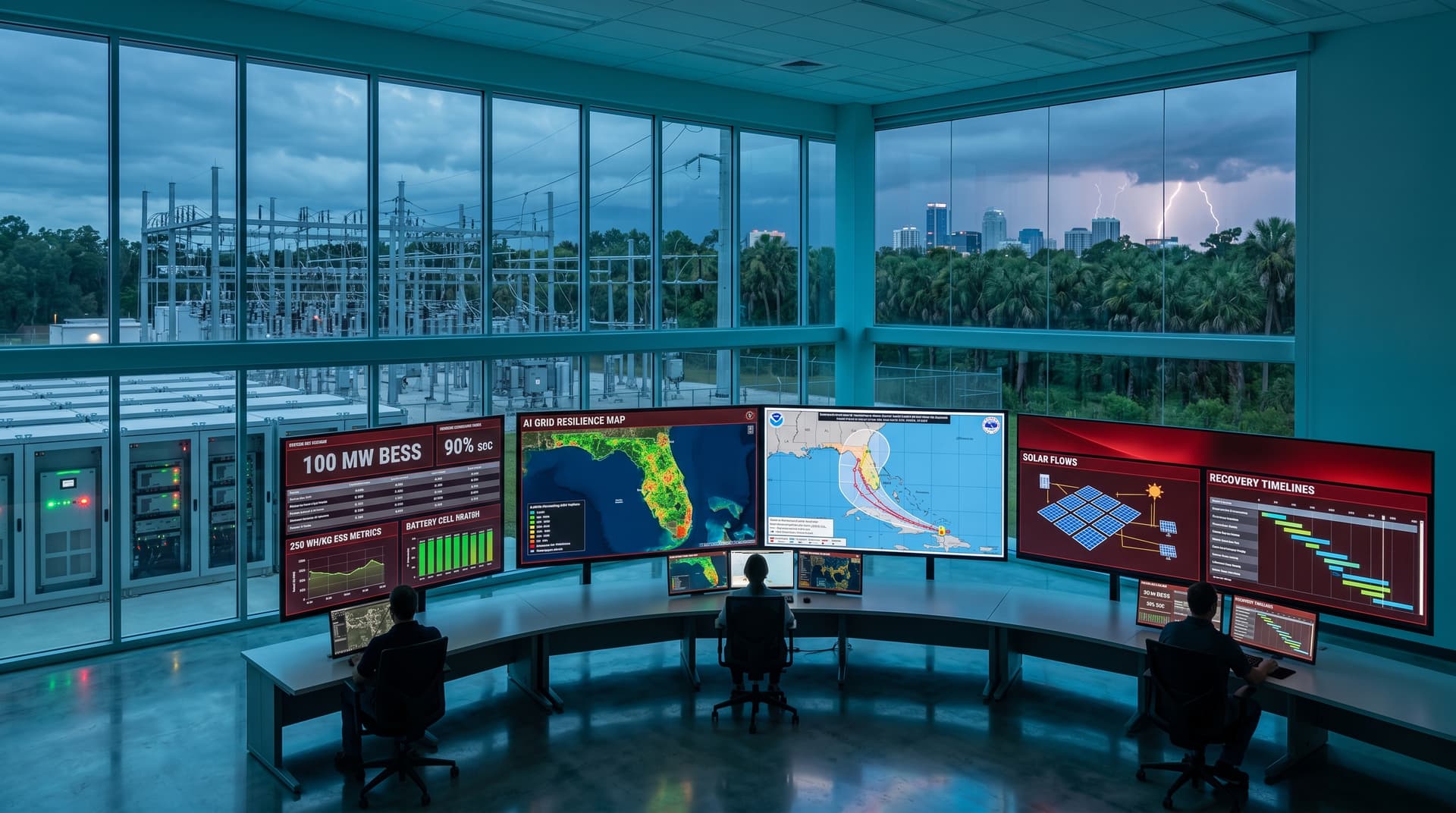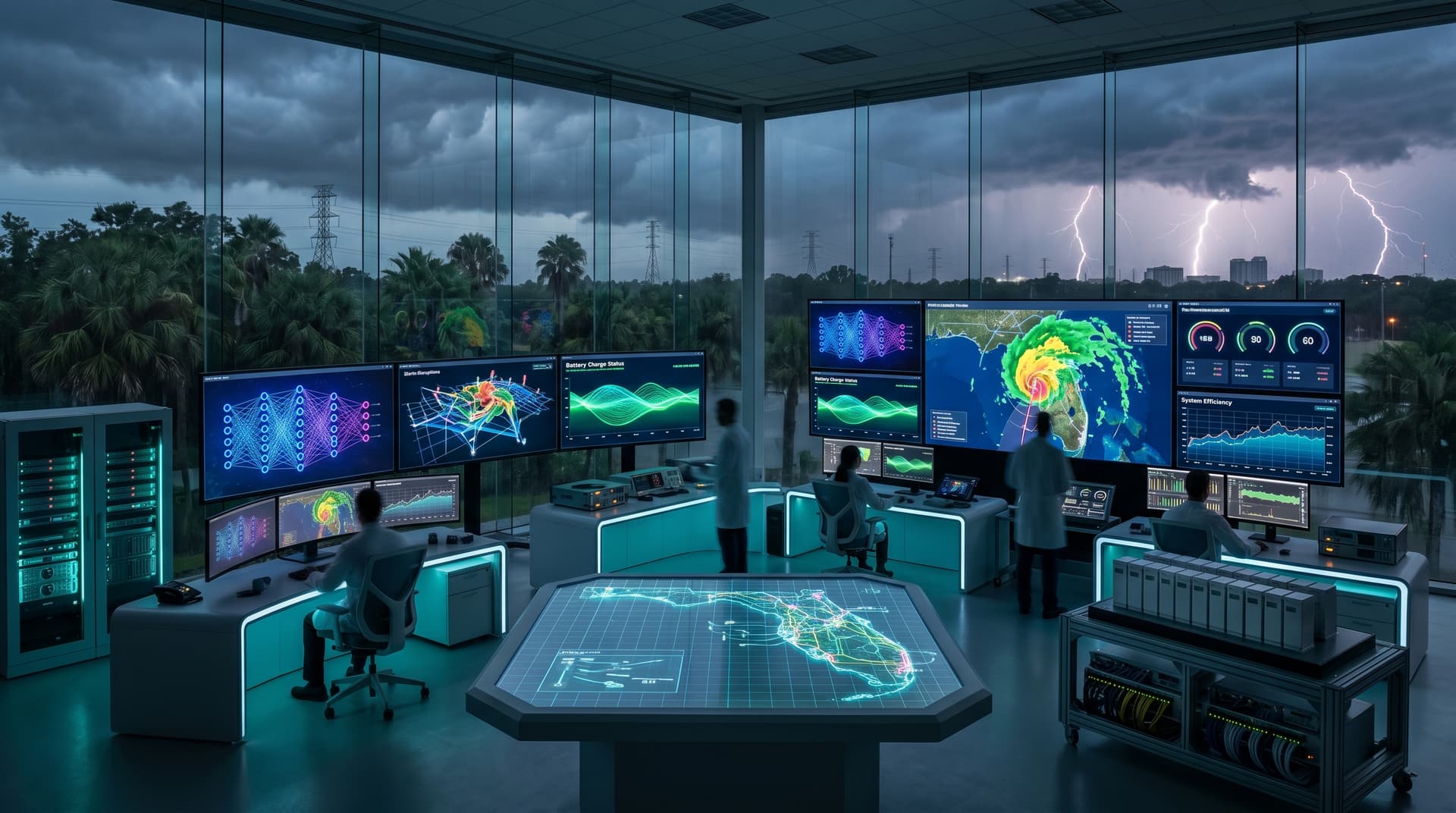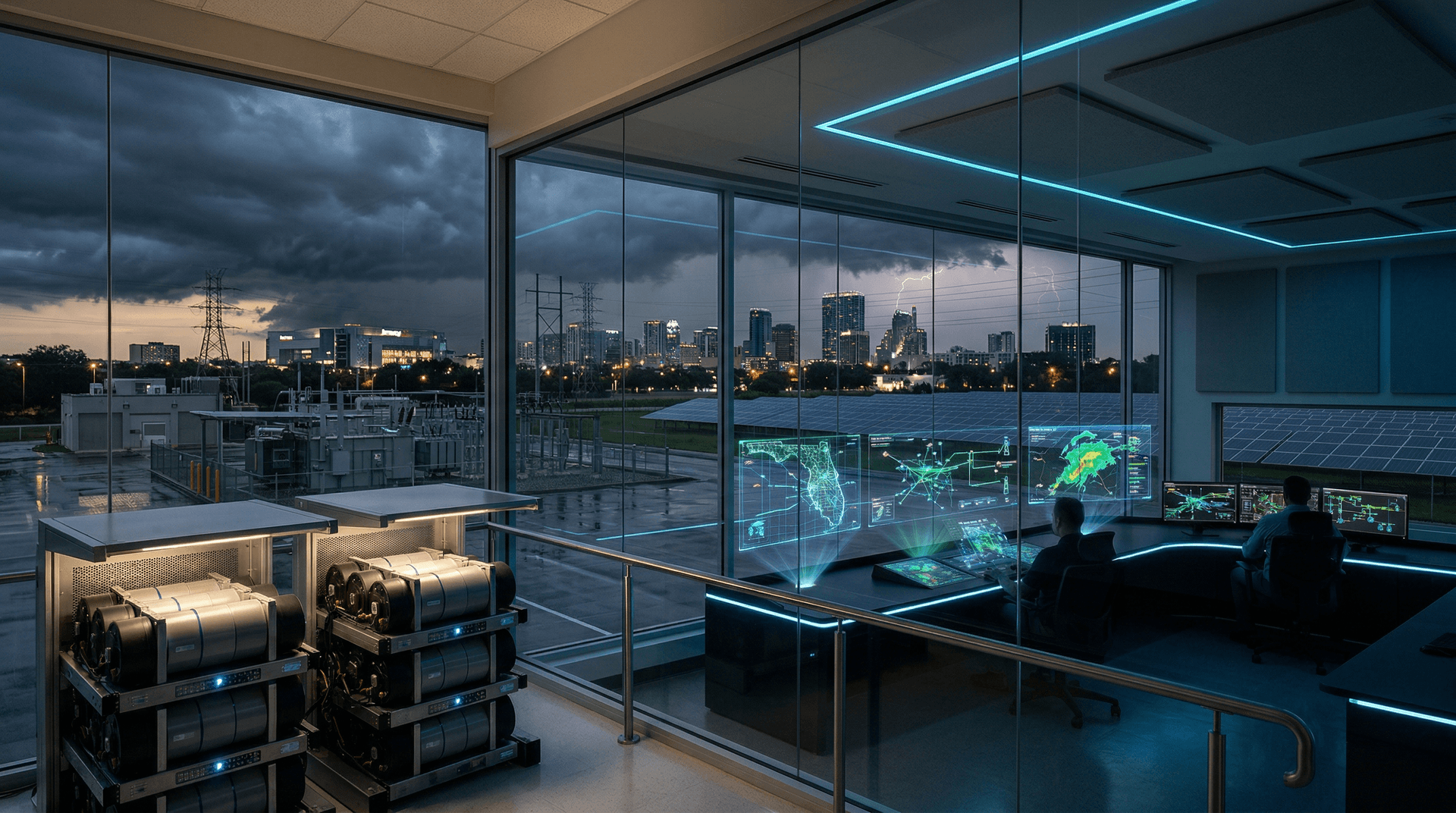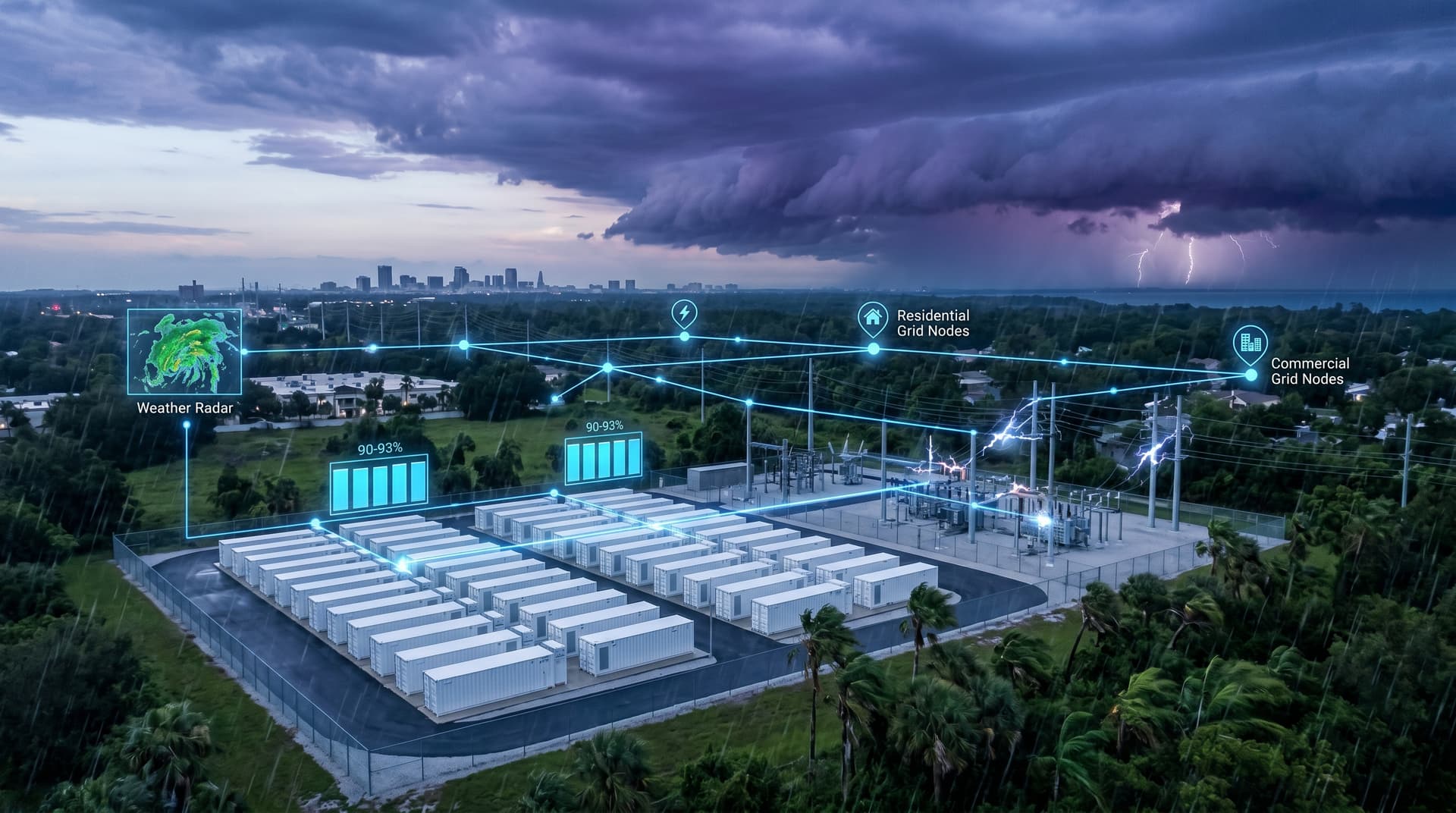
- Orlando lab deploys AI grid storage resilience on April 15, 2026.
- Lithium-ion batteries hit 85-95% RTE with AI-optimized dispatch.
- AI pre-charges storage 30-60 minutes before predicted outages.
By Finley Vance April 15, 2026
Orlando researchers deployed AI grid storage resilience on April 15, 2026. The system optimizes lithium-ion batteries for Florida hurricanes. It predicts outages 30-60 minutes ahead using NOAA data.
Grid operators achieve seconds-critical responses. Lithium-ion packs deliver 85-95% round-trip efficiency (RTE), according to NREL benchmarks.
Orlando Lab Pioneers AI Grid Storage Resilience
The Orlando facility tests utility-scale lithium-ion batteries. Specs include 150-250 Wh/kg energy density, 400-700 Wh/L volumetric density, 5,000-10,000 cycles at 80% depth of discharge, and LCOS of USD 0.15-0.25/kWh, per NREL's 2025 report.
AI processes real-time weather data from NOAA sensors. It adjusts charge cycles to preempt demand spikes during storms.
Developers pair AI with 2-4 hour storage durations that match hurricane profiles. NREL's AI for the Grid toolkit guides these optimizations (link).
Utility simulations confirm pre-storm pre-charging enables post-event islanding for hospitals.
AI Mechanisms Boost Grid Storage Resilience
Machine learning models forecast hurricane paths using NOAA data and grid sensors. Storage systems receive dispatch signals 30-60 minutes in advance.
Optimization algorithms stack revenue streams. Batteries provide frequency regulation and arbitrage. AI selects optimal services hourly.
Predictive maintenance uses vibration sensors feeding neural networks. Operators preempt faults and extend cycle life.
PNNL research validates this approach via digital twins of Florida blackouts (link).
Flow batteries offer long-duration energy storage alternatives. They provide 20-50 Wh/L, over 10,000 cycles, and LCOS of USD 0.20/kWh per DOE data. AI manages their slower responses. Hybrids combine lithium-ion speed with extended duration.
Florida Grids Face Hurricane Challenges
Florida Power & Light (FPL) manages extensive networks. Hurricanes topple lines and flood substations, delaying recovery for days.
AI-directed batteries backfeed neighborhoods. Microgrids auto-form around critical infrastructure.
FERC Order 841 opens wholesale markets to storage with over 85% RTE. Florida Senate Bill 1026 mandates 15% renewables by 2026, paired with storage.
AI aggregates rooftop solar and home batteries into virtual power plants (VPPs), per FPL pilots.
Revenue Streams Cut Costs
Projects stack capacity payments of USD 50,000-100,000/MW-year, per FERC filings, with arbitrage profits.
AI dispatch cuts levelized cost of storage (LCOS) by 10-20%, DOE pilots report.
Inflation Reduction Act (IRA) offers 50% investment tax credit (ITC) for storage, plus adders. Florida exempts property taxes on batteries.
AI models clear 100 MW interconnections without grid upgrades.
DOE invests USD 16 million in AI for power systems, targeting hurricane zones (link).
Market Trends Drive AI Adoption
EIA reports US utilities commission 5 GW storage annually. Florida contributes 10%. AI differentiates projects in competitive bids.
Japan deploys AI hybrids for typhoons. EMEA utilities target heatwaves with similar tech.
LDES technologies like Form Energy's iron-air batteries offer 50 Wh/kg, 100+ hours, over 5,000 cycles, and LCOS target of USD 0.05/kWh. They require AI controls.
Orlando pilots vehicle-to-grid (V2G), pre-charging EVs for peak discharge.
Domestic lithium refining stabilizes supply chains. AI forecasts deployment scales.
AI grid storage resilience equips utilities proactively. Orlando's model aids coastal operators. Storm recovery times drop to hours, slashing terawatt-hour costs. Utilities now issue RFPs for AI-ready systems.
This article was generated with AI assistance and reviewed by automated editorial systems.