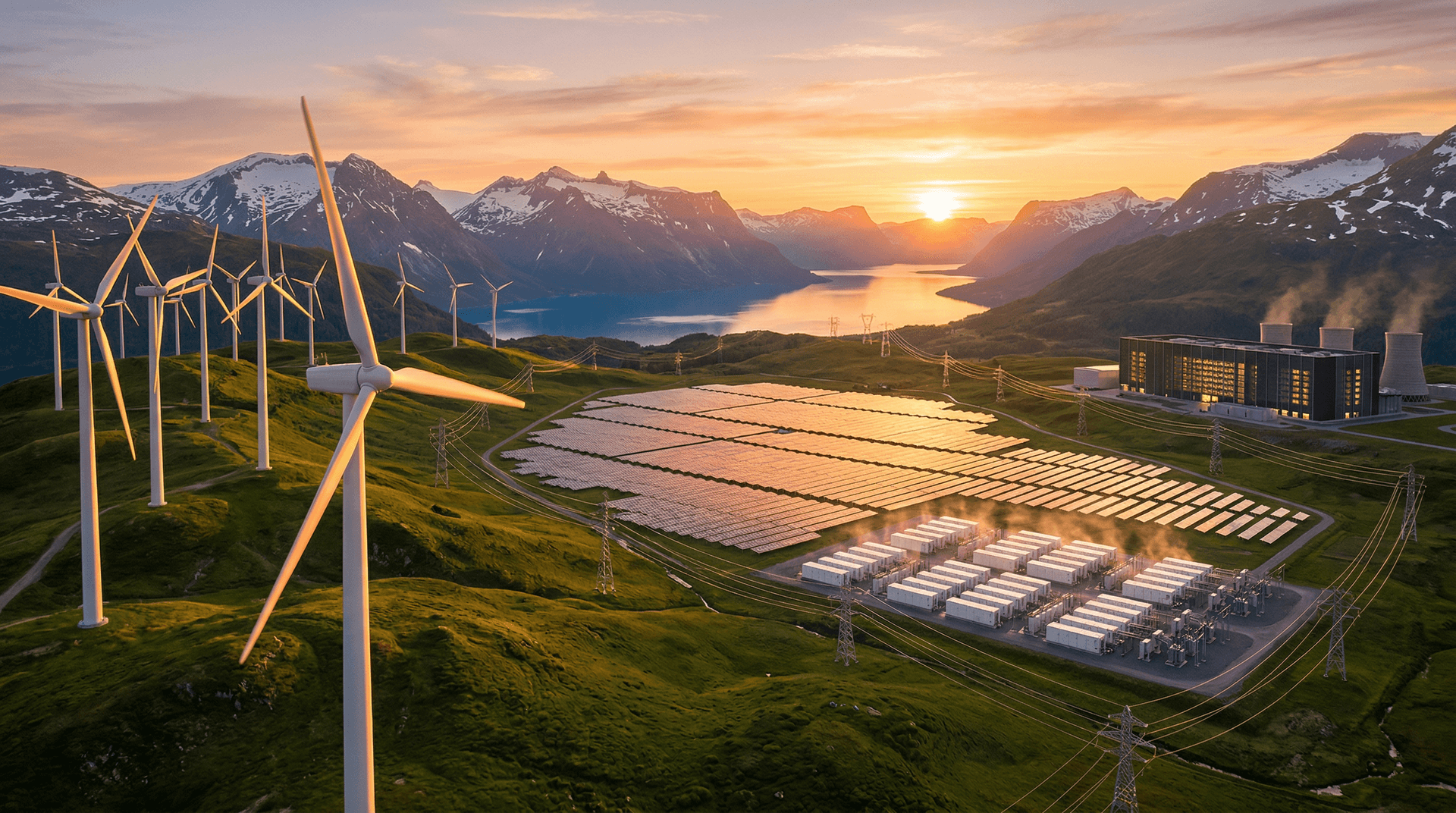
Grid storage demand for data centers surges amid the global AI arms race, which doubles power consumption to 945 TWh annually by 2026, per today's New York Times report. Tech firms lead solar-plus-storage deployments to balance intermittent renewables.
Data centers consumed 460 TWh in 2022, per the International Energy Agency (IEA). Projections show AI training and inference driving 160% growth through 2030. Grid operators deploy batteries for reliability.
Escalating Power Needs from AI Expansion
Hyperscalers like Microsoft and Google plan 100 GW of new data center capacity by 2030, per BloombergNEF. AI models demand constant, high-density power, unlike variable solar and wind output. Storage bridges this gap with four-hour dispatch windows.
US data centers require 35 GW today, up 12% year-over-year, per Electric Power Research Institute (EPRI) data released April 12, 2026. Europe totals 20 GW, constrained by grid queues. APAC leads at 45 GW.
Financial pressures mount as power costs hit USD 0.10/kWh in key markets. Companies secure power purchase agreements (PPAs) bundling renewables and storage to lock in rates below USD 0.05/kWh long-term.
Grid Storage Technologies Step Up for 24/7 Power
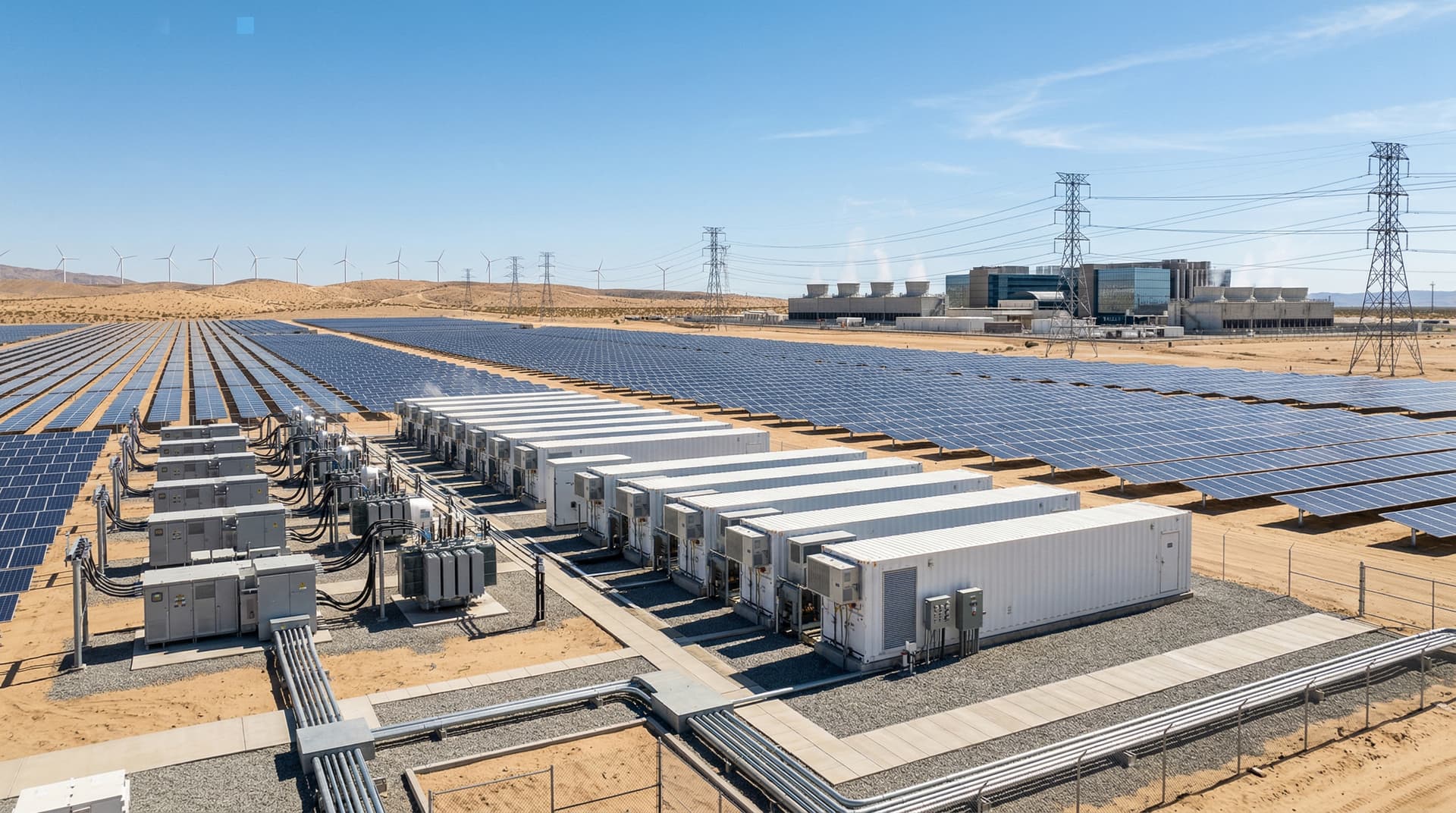
Lithium-ion batteries hold 90% market share, delivering 85-90% round-trip efficiency. Projects dispatch during evening peaks when AI workloads spike. Developers pair them with solar farms for hybrid economics.
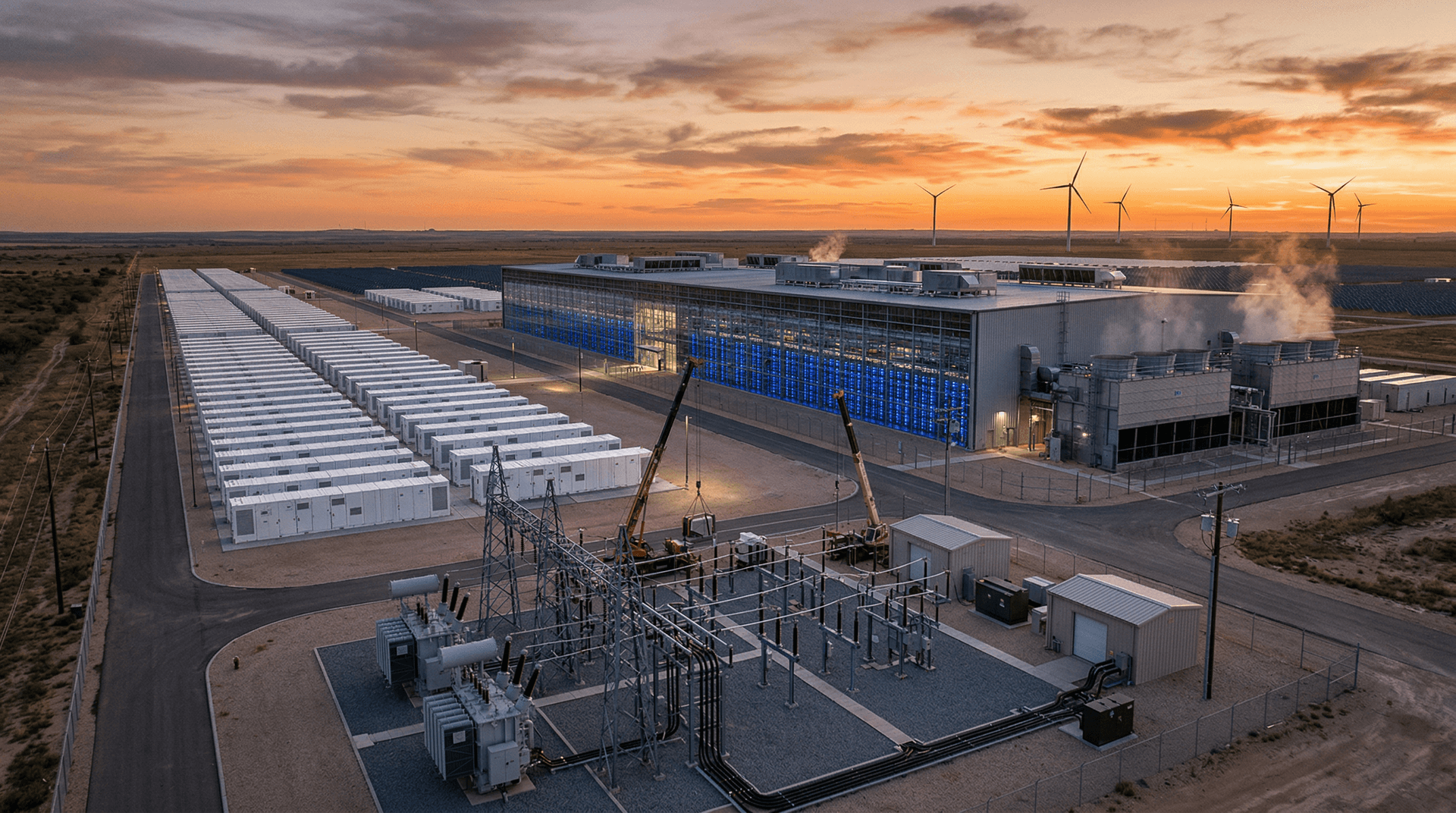
Microsoft commissioned a 500 MW / 2 GWh solar-plus-storage facility in Texas on April 1, 2026. The system cuts curtailment by 25% and provides 1,000 MWh daily to its AI data center, per company filings with ERCOT.
Flow batteries emerge for longer durations. Form Energy's iron-air systems target 100-hour discharge at USD 20/kWh LCOS. A 100 MW pilot powers an AWS data center in Virginia, operational since March 2026.
Real-World Integration: Solar, Wind, and Batteries
Hybrid projects reduce grid strain. A 1.2 GW wind-plus-storage farm in Oklahoma delivers firm power to Oracle's AI cluster. Storage captures 30% of generation, dispatching at 95% capacity factor during low-wind periods, per Wood Mackenzie analysis.
Curtailment drops 40% in California with 5 GWh of new storage online in Q1 2026. PG&E data shows batteries absorbing excess solar, then exporting to data centers at peak tariffs. This pattern repeats across ERCOT and PJM.
Economics favor hybrids. Solar-plus-four-hour storage achieves USD 35/MWh LCOS, beating gas peakers at USD 55/MWh, per National Renewable Energy Laboratory (NREL) models updated April 10, 2026.
Policy Frameworks Accelerate Deployments
US Inflation Reduction Act (IRA) offers 30-50% investment tax credits for storage over 3 hours. FERC Order 2023 streamlines interconnections, cutting queues from 5 years to 18 months. Nevada mandates 2 GW storage by 2028.
EU Net-Zero Industry Act subsidizes 10 GWh annual deployments. China requires 30% storage co-location with renewables, boosting sodium-ion adoption. Global pipelines reach 500 GW through 2030.
Funding flows in. Blackstone invested USD 2 billion in a 1 GW portfolio on April 8, 2026. Rivian partners with Tesla for 800 MWh second-life EV batteries at its Illinois data center.
Grid Reliability During High AI Loads
AI data centers draw 100 MW per site, rivaling small cities. Storage maintains frequency response in seconds. A February 2026 ERCOT event showed batteries supplying 2 GW ancillary services, preventing blackouts.
Interconnection backlogs ease with 50 GW queued storage. Developers prioritize sites near fiber and renewables. Arizona Public Service approved 300 MW / 1.2 GWh for Meta on April 5, 2026.
Challenges persist. Lithium supply chains strain at USD 12,000/tonne. Sodium-ion scales at 20% lower cost, per CATL Q1 earnings.
Financing the Storage Buildout
Project IRRs hit 12-15% with IRA boosts. Google PPAs average 15 years at USD 40/MWh. Debt markets price storage at 4.5% yields, down from 6% in 2025.
M&A surges. NextEra acquired 1.5 GWh assets for USD 1.2 billion. Venture funding targets LDES at USD 5 billion YTD, per PitchBook data.
The Bottom Line
The AI arms race transforms grid storage from niche to necessity. Renewables plus batteries deliver reliable power at falling costs, enabling 24/7 AI without fossil reliance. Expect 100 GW deployments by 2030, reshaping energy systems worldwide.